•
•
•
•
•
•
•
•
•
•
•
•
•
•
•
•
•
•
•
•
•
•
•
•
•
•
•
•
•
•
•
•
•


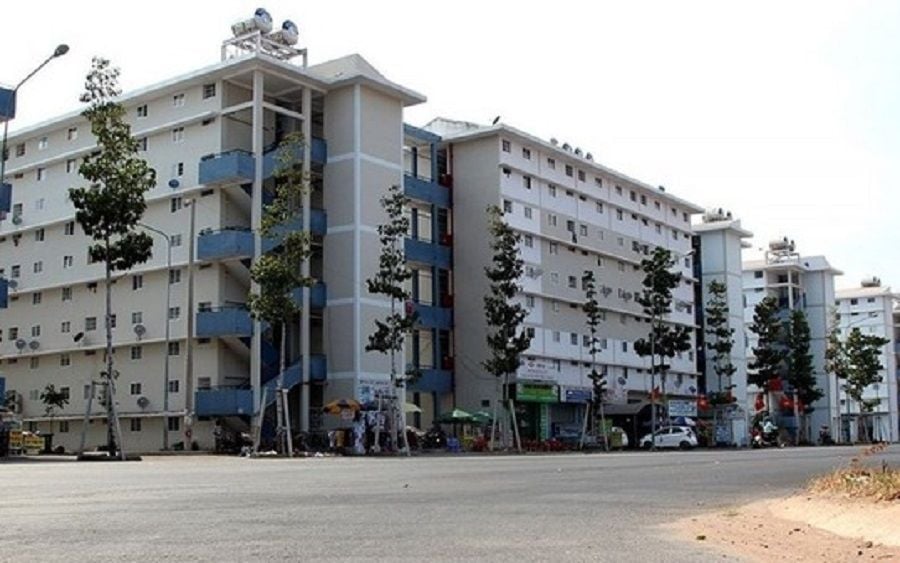
Social housing development for low-income people and industrial workers is both a welfare issue and a driver of economic and social development.
Among the city’s 918,000 workers in export processing zones and industrial parks, only 19,500 housing units are completed or currently underway. Nine completed dormitory projects offer 1,619 apartments, meeting more than 8,900 beds. Four ongoing projects add over 2,800 apartments, delivering more than 10,600 additional beds, for a total of about 19,500 beds, while demand remains short by more than 727,000 beds.
The figures were announced by Lê Văn Thinh, Deputy Secretary of the Party Committee and Deputy Head of the Management Board of Export Processing Zones and Industrial Parks (HEPZA), at a policy conference on interest-rate support for industrial zones organized by HFIC and related bodies.
While the supply-demand gap for workers’ housing is not new, placing it at the center of a city-level policy conference signals a shift from welfare delivery toward manufacturing infrastructure. The central government’s direction is also explicit: on January 12, 2026, the Government issued Resolution 07/NQ-CP, assigning Ho Chi Minh City to complete more than 194,000 social housing units in 2025–2030, the highest target in the country. In 2026 alone, the target is 28,500 units.
Thinh said developing social housing for low-income people and industrial workers is a political resolve of the Party and the State, and a key task of the political system, contributing to increased investment and consumption and ensuring social progress and equity.
Within this context, the conference introduced HFIC’s loan package and launched three policy tools intended to narrow the gap between demand of more than 727,000 beds and current supply.
Worker dormitory projects are among those supported with subsidized interest under the stimulus program. Loans can be up to VND 200 billion per project, with interest subsidies of up to 100% for seven years. The support is designed to improve project profitability and make private investment more attractive in social housing and dormitories, where margins are thin and capital turnover is long.
Thinh said the Ho Chi Minh City investment-stimulation loan program is expected to create new momentum to support enterprises in investing in machinery, equipment, green transformation, and digital transformation, placing worker housing within the same policy framework.
Phạm Đăng Hồ, Head of Urban Development, outlined policies and legal guidelines on investment in social housing and worker dormitories, including approval procedures, investor conditions, and capital-recovery mechanisms. The Department of Construction’s direct involvement indicates the city is addressing worker housing through an interagency approach rather than relying on a single agency.
The Ho Chi Minh City management board of export processing zones and industrial parks committed to reserving up to 10% of serviced land in new industrial zones to attract investment in worker-dormitory projects.
Thinh said that in new industrial zones, the city will plan serviced land to attract investment in worker dormitory projects to meet workers’ housing needs, help workers feel secure, and support long-term retention with companies.
The approach is intended to be structural—moving away from worker dormitories developing independently within industrial-zone fences. Serviced land within the zones is expected to align housing with plant planning, reduce commuting costs, and improve worker retention.
The presence of financial partners and banks at the conference, along with commitments to offer tailored and flexible packages suited to each enterprise’s scale and specificity, reflects a market shift toward worker housing as an investment backed by real demand and supported by policy and a legal framework.
Thinh also urged enterprises to share real-world challenges in accessing policies. He said feedback will be incorporated to refine processes for practicality and effectiveness, supported by a direct feedback mechanism between business and regulators.
While the HFIC-led package clarifies the investment framework for worker housing in industrial zones, practical questions remain—particularly how the “up to 10% serviced land” rule applies to existing industrial zones where 727,000 workers are currently employed without housing solutions.
With a target of 28,500 units in 2026, progress will be the key metric. The policy package links worker housing to production credit, land planning, legal procedures, and finance, positioning housing as part of production infrastructure rather than a separate issue.
With a target of 194,000 social housing units by 2030 and a 727,000-bed gap in industrial zones, the policy package aims to mobilize private sector involvement by presenting a tangible business case and turning target numbers into actual housing units.
Premium gym chains are entering a “golden era” that is ending or already in decline, as rising operating costs collide with shifting consumer preferences toward more flexible, community-based ways to exercise. Long-term memberships are shrinking, margins are pressured by higher rents and facility expenses, and competition from smaller, more personalized…