•
•
•
•
•
•
•
•
•
•
•
•
•
•
•
•
•
•
•
•
•
•
•
•
•
•
•
•
•
•
•
•
•


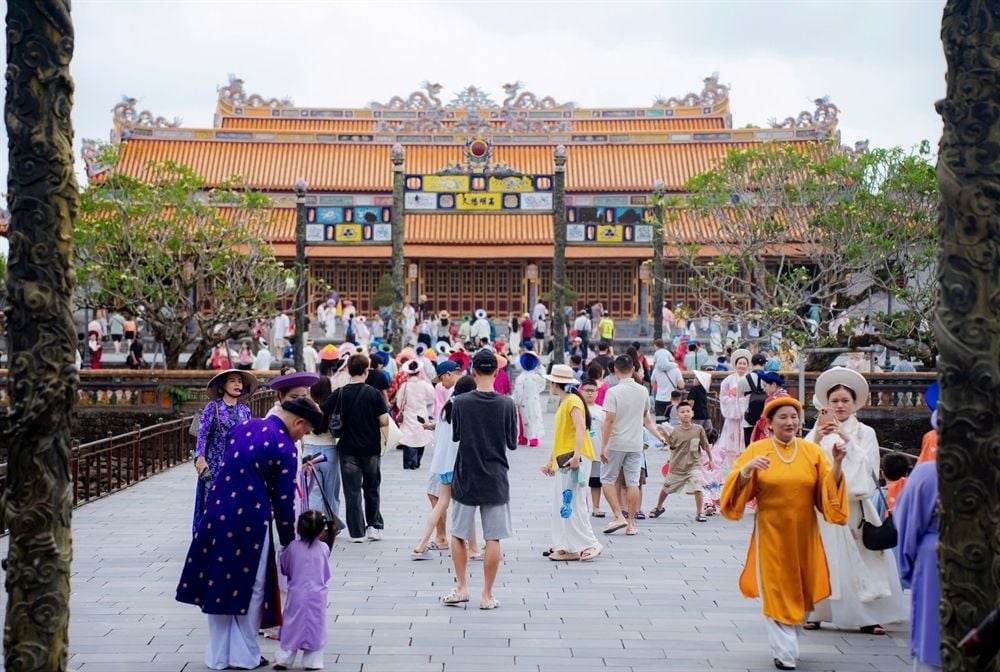
On the peak days of April 30 and May 1, Hue’s Complex of Monuments of the Imperial City saw a surge of visitors, mainly concentrated at Dai Noi Hue and the tombs of the Nguyen emperors. Notable structures such as Thai Hoa Palace, Dien Kien Trung, and Thai Mieu continued to attract visitors due to their architectural value and historical depth.
One highlight was the spike in admission revenue. On May 1, revenue from admission tickets exceeded 4.21 billion dong, higher than nearly 3.74 billion dong on April 30—both records for daily revenue to date.
In parallel with the growing number of visitors, online ticket purchases also advanced, with more than 1,000 online tickets sold on May 1. Shifting ticket sales online helps reduce crowding at the counters and improves the visitor experience during peak days.
In response to rising demand, the Hue Monuments Conservation Center actively encouraged visitors to use online ticket purchases through the official website. The approach helps optimize management and aligns with the digital transformation trend in tourism.
Not only during the 30/4–1/5 holiday, but earlier the Hung Kings’ Festival also saw strong visitor numbers. Over five days (April 24–28), Hue welcomed about 395,000 visitors, including nearly 98,700 international visitors. Tourism revenue for this period was about 958 billion dong.
Officials attribute the increase to a combination of heritage value, improved tourism conditions, and service enhancements. In addition to cultural assets such as Hue Court Music (Nhã Nhạc), Hue’s tourism environment is increasingly modern and safe. Attractions and venues have been upgraded, while security, sanitation, and food safety are maintained to support visitor confidence.
Softer factors also contribute, including the friendliness of local residents and improving service standards. Community-based and green tourism models have been implemented effectively, supporting a more sustainable destination image.
Digital transformation is being advanced with smart platforms like Hue-S, which supports visitors in looking up information, reporting incidents, and enhancing the overall experience. In addition, Hue Festival activities held year-round continue to refresh tourism products by linking heritage with contemporary life.
Hue cuisine—ranging from elaborate royal dishes to folk specialties—also adds to the overall visitor experience.
With a development orientation of “green – smart – sustainable,” Hue is gradually affirming its position as a distinctive tourism hub in central Vietnam. From heritage foundations to management and service innovation, the ancient capital is expected to maintain growth and expand the image of “Safe – Friendly – Quality – Attractive” for both domestic and international visitors.

Premium gym chains are entering a “golden era” that is ending or already in decline, as rising operating costs collide with shifting consumer preferences toward more flexible, community-based ways to exercise. Long-term memberships are shrinking, margins are pressured by higher rents and facility expenses, and competition from smaller, more personalized…