•
•
•
•
•
•
•
•
•
•
•
•
•
•
•
•
•
•
•
•
•
•
•
•
•
•
•
•
•
•
•
•
•


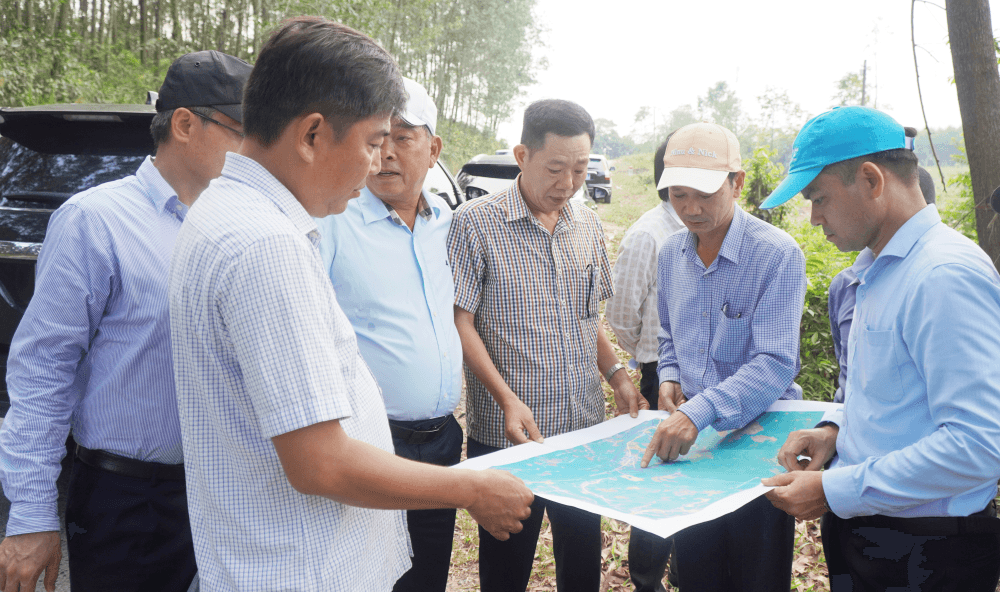
Hue’s People’s Committee has organized a meeting to advance the development of the Decree on special mechanisms and policies for the 2026–2030 period. The city’s Finance Department said that implementing mechanisms under Resolution 38/2021/QH15 has produced early positive results, particularly in mobilizing resources for infrastructure investment and supporting heritage preservation.
According to Hue’s Finance Department, several mechanisms have expanded local fiscal capacity. The policy allowing local debt to rise to 40% has increased borrowing capacity to about VND 3,500–4,000 billion per year, roughly doubling earlier levels. This has enabled multiple ODA projects to proceed and created room for new initiatives, including environmental water management and climate-adaptive urban development.
The city also cited revenue from import–export activities. The 70% share of incremental revenue from import–export activities in 2022–2024 generated around VND 120 billion for infrastructure investment, though its use depends on strict conditions.
Other revenue sources remain constrained. Revenue from selling public assets is still underutilized due to the pace of asset liquidation by central agencies. In contrast, heritage-related admission fees have been a bright spot: from 2022 to date, total revenue has approached VND 700 billion, with more than VND 634 billion allocated to restore and conserve nearly 70 heritage sites. The Hue Heritage Preservation Fund has mobilized about VND 8.3 billion to support preservation activities.
Despite progress, the implementation of special mechanisms still shows weaknesses. Some policies are not strong enough to create a breakthrough, and mobilizing social resources and exploiting public assets—especially land—remains difficult.
The city noted that heritage-related revenue continues to rely heavily on tourism while preservation needs are increasing. Legal issues also affect investment progress, including challenges in exploiting heritage assets, the PPP framework in culture, and limitations in land access, which in turn reduce the ability to attract strategic investors.
At the meeting, representatives from multiple departments provided suggestions to improve the proposal. They emphasized the need to clarify the list of key projects, link the special mechanisms to strategies for attracting large investors, and develop sustainable approaches to exploiting heritage value through preservation alongside cultural-industry development, including piloting PPP models in this area.
Based on practical assessment, Hue plans to propose adjustments and enhancements to make the mechanisms more advanced. For Resolution 38, the city proposes to maintain effective policies such as heritage-site admission fees and the Heritage Preservation Fund, while loosening conditions on revenue supplements from imports and exports.
Hue also suggested stopping some policies, including raising the debt ceiling, allocating current expenditures, and revenue from asset sales, on the grounds that new regulations will replace them or they are no longer suitable.
The city’s direction centers on three core groups: mobilizing resources, improving institutions, and strengthening decentralization and empowerment. Hue proposed increasing central-government budget support for key driving infrastructure projects, piloting carbon-finance and PPP in culture, and granting local authorities more land-management authority to exploit heritage and attract investment.
The proposal is being finalized quickly. Hue expects to seek input from relevant authorities in May–June 2026, with the dossier completed and submitted to the Government in July–October 2026.
Deputy Chairman Ha Van Tuan acknowledged contributions and urged relevant units to continue reviewing and refining the proposal. He called for alignment with Party, National Assembly, and Government resolutions, and for linking the policy to concrete resources to spur growth.
Hue also said it should review planning management to better match local strengths, assess the performance of funds and existing policies, and maximize the advantages of its heritage-city status and key development hubs, including Chan May–Lang Co, Tam Giang–Cau Hai, and Bach Ma, to support rapid and sustainable development in the coming period.







Premium gym chains are entering a “golden era” that is ending or already in decline, as rising operating costs collide with shifting consumer preferences toward more flexible, community-based ways to exercise. Long-term memberships are shrinking, margins are pressured by higher rents and facility expenses, and competition from smaller, more personalized…




