•
•
•
•
•
•
•
•
•
•
•
•
•
•
•
•
•
•
•
•
•
•
•
•
•
•
•
•
•
•
•
•
•


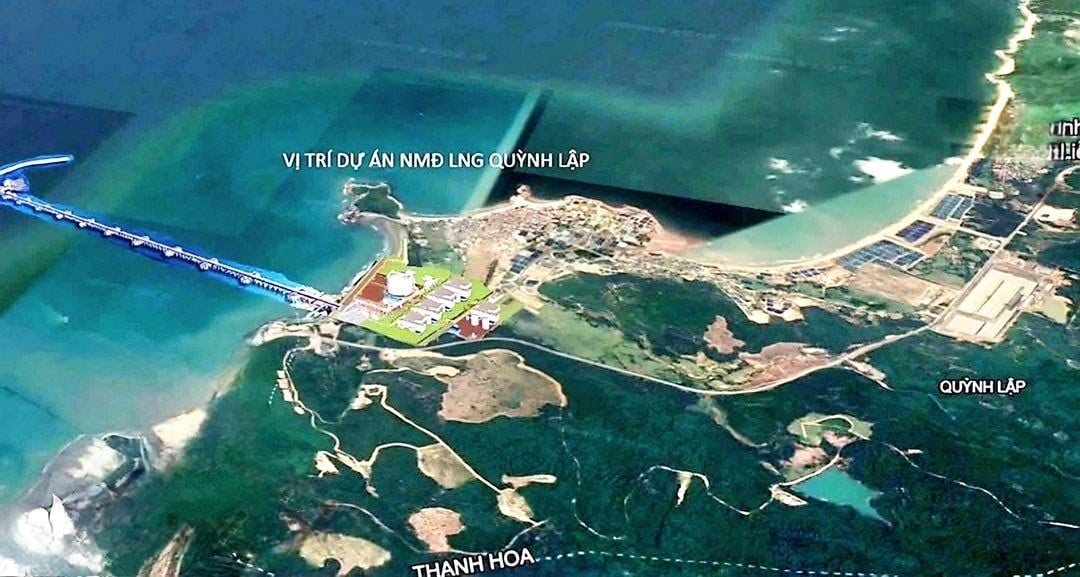
The Board of Directors of Vietnam Oil and Gas Power Corporation (PV Power) has approved a resolution to contribute 51% of its charter capital to establish Quỳnh Lập LNG Power Joint Stock Company.
The move follows Nghệ An Province’s approval of the investment policy on February 12, 2026, and the issuance of the investment registration certificate in March 2026 for the joint venture involving PV Power, SK Innovation of Korea, and Ngh An Sugar Industry Limited Company (NASU).
PV Power signed a contract to reserve gas-turbine and generator equipment with GE Vernova on March 10, 2026. Land clearance and site grading were essentially completed in April 2026, ahead of the project’s official launch ceremony and the start of technical infrastructure works scheduled for May 18, 2026.
At present, the investor consortium is negotiating with consulting firms to finalize the feasibility study and prepare the 1/500-scale detailed planning dossier required for the project.
The LNG Quỳnh Lập project has a total investment of 59,372 billion VND (about USD 2.3 billion). The plant’s designed capacity is 1,500 MW, comprising two 750 MW units.
The project includes LNG storage tanks with a capacity of 250,000 m3 and a fully integrated regasification system.
Once operational, the facility is expected to consume about 1.15 million tons of imported LNG annually to support power generation, contributing additional supply to the national power system.
The project will be implemented on a land area of 152.88 hectares in Ward Tan Mai. The onshore portion covers more than 57 hectares (about 37.2%), while the remaining area on the sea is allocated for port infrastructure.
Under the cooperation framework, SK Innovation will provide energy solutions and has an agreement to jointly develop an AI data center and local digital infrastructure.
The project’s deployment is expected to support Nghệ An in ranking second nationwide in attracting foreign direct investment (FDI) and to align with the generation mix schedule under Power Plan VIII.




Premium gym chains are entering a “golden era” that is ending or already in decline, as rising operating costs collide with shifting consumer preferences toward more flexible, community-based ways to exercise. Long-term memberships are shrinking, margins are pressured by higher rents and facility expenses, and competition from smaller, more personalized…



