•
•
•
•
•
•
•
•
•
•
•
•
•
•
•
•
•
•
•
•
•
•
•
•
•
•
•
•
•
•
•
•
•


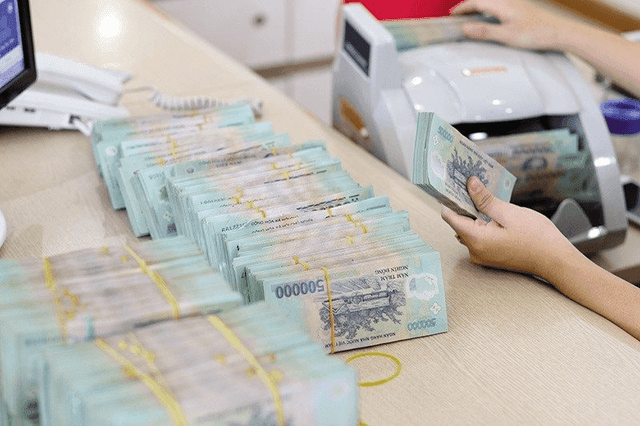
In 2026, the government aims for two-digit economic growth, setting the groundwork for the next stage of development. Prime Minister Le Minh Hung said the country needs resolute policy management to ensure rapid and sustainable growth, with an average GDP growth target of over 10% per year for 2026-2031 serving as the basis for long-term strategies.
To achieve this, the banking sector—described as the main channel for capital—will play a special role in mobilizing and allocating resources effectively.
In the early months of 2026, the State Bank of Vietnam (SBV) kept key policy rates unchanged to allow credit institutions to access funds from the SBV at low cost to support the economy. The SBV also required banks to continually publish lending rates on their websites to inform customers when applying for loans.
Despite these measures, interest rates edged up in early 2026 as banks faced competition from other investment channels.
On April 9, SBV Governor Pham Duc An chaired a meeting with banks focused on interest rates. Banks agreed, with high consensus, to implement directions from the government, the Prime Minister, and the SBV to reduce market rates and support enterprises and people.
Following the meeting, a wave of rate cuts spread across the banking system. To date, about 29 banks have cut deposit rates, mainly for maturities beyond six months.
Pham Chi Quang, Director of the Monetary Policy Department, said that reducing deposit rates would help banks gradually optimize input costs. This, in turn, is expected to create more room to cut lending rates, supporting individuals and businesses in production and business activities and helping the country meet the growth targets set by the Party and Government.
From the banks’ perspective, Phung Thi Binh, Deputy General Director of Agribank, said maintaining reasonable rates is important given the economy’s difficulties. Agribank has implemented measures including lowering lending rates and restructuring debt maturities to help businesses and households stabilize production and business activities.
“Rate cuts are not only about sharing difficulties but also about guiding capital to productive sectors and growth drivers,” Binh said.
At BIDV, Deputy General Director Lai Tien Quan said the bank has reduced both deposit and lending rates by 0.5% per year for short-, medium-, and long-term loans. BIDV has also continued favorable credit packages for priority sectors such as food production, supply chains, and energy, with rates lower by 1% to 1.5% compared with standard loans.
To sustain low rates over time, BIDV said it is cutting internal costs, optimizing processes, and accelerating digital transformation to shorten loan approval times and improve customers’ access to capital.
Experts said the broad-based rate cuts across banks reflect alignment with policy directions and can strengthen business and household confidence in access to capital. In a period when the economy is working to maintain its recovery momentum, they noted that continuing to use rate policy effectively alongside synchronized policy measures will be important for supporting growth in the near term.
Source: Ha Chi, The Banking Times







Premium gym chains are entering a “golden era” that is ending or already in decline, as rising operating costs collide with shifting consumer preferences toward more flexible, community-based ways to exercise. Long-term memberships are shrinking, margins are pressured by higher rents and facility expenses, and competition from smaller, more personalized…


