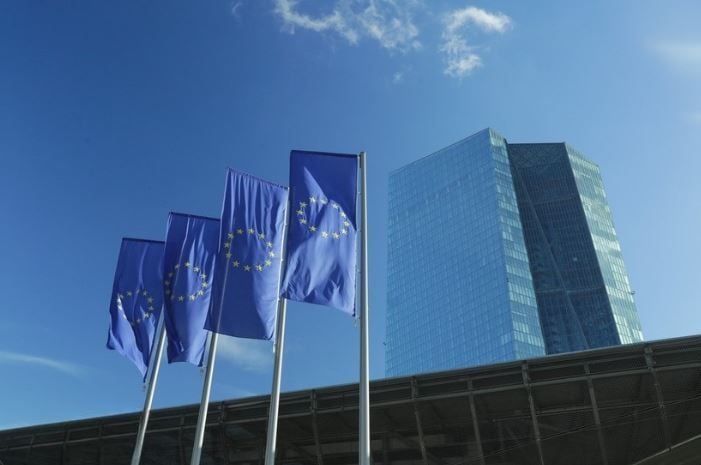
European Central Bank (ECB) is expected to keep interest rates unchanged at this week's meeting as it weighs whether the inflationary pressures from the Middle East conflict are temporary or beginning to weigh on economic growth. Economist Carsten Brzeski from ING said that the policy stance of keeping rates at current levels before the conflict is no longer appropriate. According to Brzeski, the ECB has returned to crisis-management mode, shifting emphasis from long-term forecasts to real-time developments. Nevertheless, analysts expect the central bank to refrain from any changes at the meeting on April 30. The deposit rate is expected to remain at 2%, the level in place since June last year, while monitoring the war situation.
Even though the Hormuz Strait remains closed to oil shipments, economists note that energy prices have not risen as rapidly as after the 2022 Russia-Ukraine conflict, and supply chains have not faced similar disruptions.
Despite criticism for raising rates too slowly in 2022, ECB policymakers have shown they are not in a rush to act.
In a Financial Times interview last week, Martins Kazaks, Governor of the Latvian central bank and a Governing Council member, said the bank still has the data-gathering capability to form a clear view.
An interest-rate increase at this time would be seen as adding more pressure to an economy that is already weak in the euro area, especially for key manufacturers facing an energy shock.
A weekly survey published last week showed euro-area business activity in April contracted for the first time in 16 months due to the conflict.