•
•
•
•
•
•
•
•
•
•
•
•
•
•
•
•
•
•
•
•
•
•
•
•
•
•
•
•
•
•
•
•
•


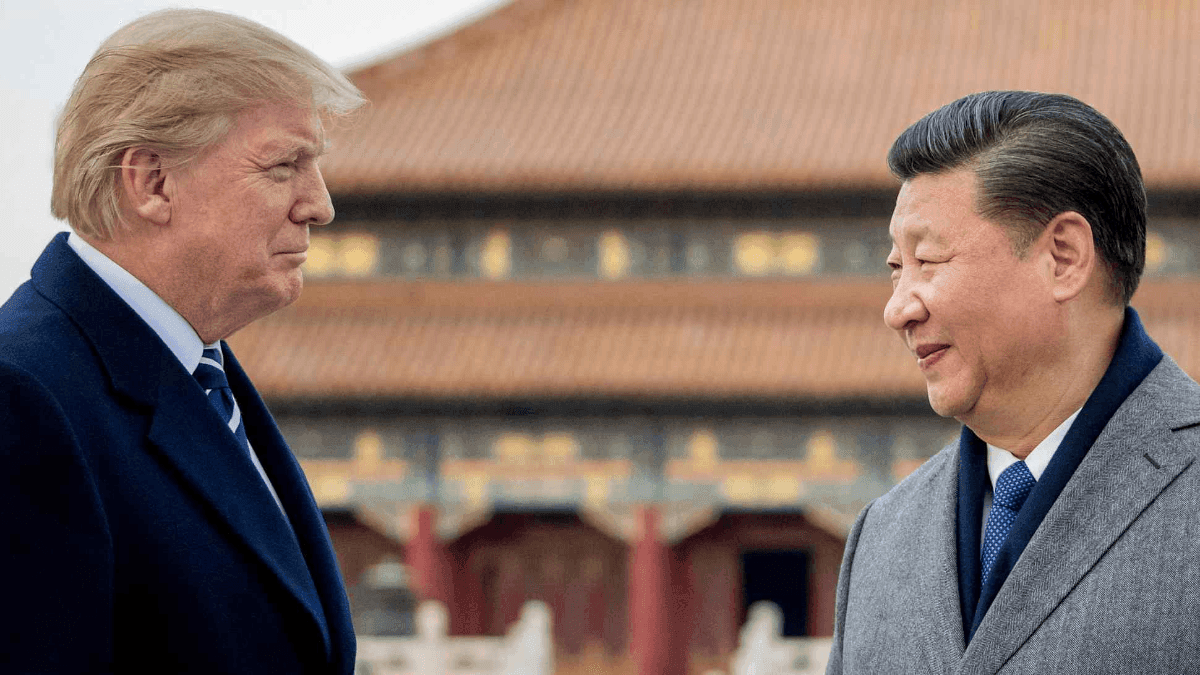
President Donald Trump’s upcoming meeting with Chinese President Xi Jinping in Beijing this week is expected to take place on Thursday and Friday, after an earlier schedule at the end of March was postponed. The talks are set against a backdrop of ongoing trade tensions and a worsening Iran-related situation that could complicate U.S.-China economic cooperation.
Experts say China is entering the meeting with several objectives: maintaining the trade ceasefire with the United States, limiting the impact of Washington’s economic coercion tools, and strengthening its own instruments. They also note that the Iran conflict and the U.S. blockade of Iranian ports have highlighted vulnerabilities and strengths that both sides could seek to leverage in negotiations.
Drew Thompson, a senior fellow at the S. Rajaratnam School of International Studies at Nanyang Technological University (NTU) in Singapore, said he is skeptical that the two countries can—or want to—trade off economic and security interests that differ significantly enough to reach an agreement satisfying both leaders.
Sean Stein, president of the U.S.-China Business Council, told Nikkei Asia that U.S. firms have been invited to participate in the trip. He added that if the visit is rescheduled again, the political impact would be “much larger” than before.
David Zhang, a macroeconomic analyst at Trivium China, said Beijing is not approaching the meeting with overly optimistic expectations. He said China’s core goal is to maintain the trade ceasefire, cool tensions, and limit the risk of external shocks while the Chinese economy undergoes a difficult transition.
Zhang pointed to China’s growth target for this year of 4.5–5%, described as the lowest in many decades. He noted that the new five-year plan emphasizes high-tech development and a significant boost to personal consumption, even as the economy remains under pressure from a prolonged downturn in the real estate sector.
Exports remain a key pillar. In 2025, exports helped China achieve a record trade surplus of $1.2 trillion, even as direct trade between China and the U.S. trends downward.
Zhang said the U.S. has tools to restrain and economically pressure China in the short term, while hindering long-term development in China’s technology sector. He said Beijing wants Washington to set aside those coercive tools permanently, or at least prevent them from escalating, citing dozens of ongoing anti-dumping and anti-subsidy investigations.
In the most recent Trump-Xi meeting in Busan, Korea, in October last year, the U.S. agreed to tariff reductions and China pledged to buy U.S. soybeans. The two sides also agreed to pause retaliatory measures for one year, including Beijing’s export controls on rare earths.
While the trade ceasefire remains in place, analysts describe the path ahead as risky.
Technology tensions have not cooled. Beijing rejected Meta’s bid to acquire Manus, an AI company founded by Chinese developers, while the White House publicly accused China of stealing intellectual property from U.S. AI labs on an industrial scale.
At sea, tensions are also reported across multiple hotspots, from the Taiwan Strait to the Panama Canal, where Hong Kong-based CK Hutchison was compelled to withdraw from port concessions.
In the Middle East, Iran’s pressure on shipping through the Hormuz Strait, combined with U.S. port blockades, threatens energy-trade flows between China and the region. Last year, the Middle East supplied about half of China’s oil and a third of its LNG imports.
Another flashpoint is U.S. allegations that China supported Iran with materials and technology. Days before Trump’s planned visit, China’s Ministry of Commerce urged domestic firms not to comply with U.S. sanctions targeting Iranian-linked Chinese refineries.
Lynn Kuok of the Asia Center at Brookings said developments around Iran pose real risks to U.S.-China economic relations. She warned that if the U.S. continues to blockade Iran’s ports and coastal areas while more information emerges about China’s active support for Iran, the trade ceasefire could face pressure and potentially lead to a new round of escalation.
Kuok also argued that both powers have incentives to prolong the ceasefire: Beijing wants economic stability, while Washington needs time to address supply-chain dependence and also benefits politically from stabilizing the U.S. economy. She said Washington could encourage Beijing to use its influence with Tehran to help cool tensions and restore navigation through the Hormuz Strait.
Analysts say Xi may still enter the meeting with confidence, citing China’s resilience to economic shocks from conflict. Strategic oil reserves are estimated to be larger than the combined reserves of the U.S., Japan, and Europe.
They also point to changes in U.S. policy that have reduced a key pressure lever. Since last year’s summit in Korea, the Trump administration has lost a key mechanism to apply pressure on China: reciprocal tariffs under the International Emergency Economic Powers Act (IEEPA). In February, the U.S. Supreme Court rejected the legal basis for these tariffs, forcing the White House to adjust its strategy.
Subsequently, the Trump administration temporarily imposed a global 10% tariff under another act and opened investigations into what Washington sees as unfair practices and overcapacity in China and other countries. However, last week a trade court again ruled against Trump’s global tariffs, though a broad prohibition has not yet been issued.
Stein said the U.S. is overestimating its leverage and underestimating China’s advantages. He argued that tariff leverage is waning over time and that export controls—and their economic significance—are weakening as China continues to innovate in high-tech fields. He said the visit could therefore produce fewer concrete deals to announce.
Analysts say both sides appear to want to avoid repeating last year’s escalation spiral. Top U.S. and Chinese negotiators had prepared for a summit during the March meeting in Paris, including an idea to establish a “Trade Council” to steer bilateral trade and investment.
After the talks, George Chen of The Asia Group said the discussions showed a degree of trust and progress in managing U.S.-China economic relations. He suggested Washington is ready to welcome Chinese investment in manufacturing, but with conditions.
Analysts also predict Trump’s trip could yield some easier-to-announce “wins,” such as aircraft orders and soybeans. Kuok said the Trump administration is pursuing standout deals that can be framed as domestic political victories before the midterm elections, especially given economic pressure from tariffs and the Iran conflict.
Premium gym chains are entering a “golden era” that is ending or already in decline, as rising operating costs collide with shifting consumer preferences toward more flexible, community-based ways to exercise. Long-term memberships are shrinking, margins are pressured by higher rents and facility expenses, and competition from smaller, more personalized…