•
•
•
•
•
•
•
•
•
•
•
•
•
•
•
•
•
•
•
•
•
•
•
•
•
•
•
•
•
•
•
•
•


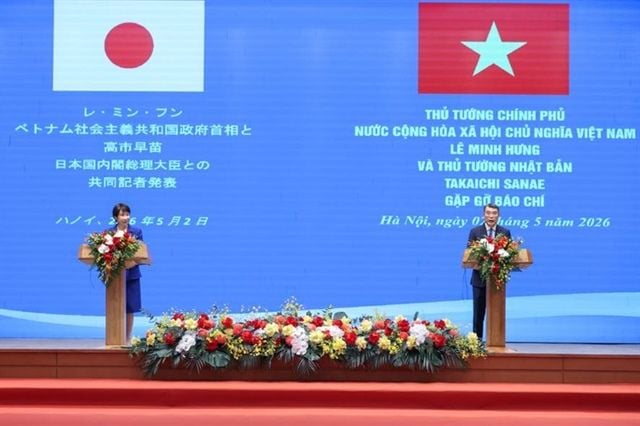
On the morning of May 2, Vietnam’s Prime Minister Lê Minh Hưng and Japan’s Prime Minister Takaichi Sanae held a press conference at the Government Office to announce the results of their talks. The leaders outlined five areas of cooperation and set specific targets across political, economic, and technical fields.
The two sides reaffirmed political trust and agreed to continue practical cooperation in defense, security, diplomacy, and international forums. They will use effective ministerial-level mechanisms for diplomacy, trade, industry, energy, and science and technology, and continue the 2+2 dialogue between deputy foreign and defense ministers.
They also agreed to implement defense-security cooperation agreements, bolster maritime law enforcement, address post-war issues, expand cybersecurity cooperation, support UN peacekeeping, and counter transnational crime.
Vietnam and Japan pledged to strengthen economic cooperation, including economic security and sustainable agriculture. They agreed to move toward Japan’s investment in Vietnam reaching 5 billion USD per year and two-way trade reaching 60 billion USD by 2030.
The leaders said they will encourage Japanese firms to invest in high-technology projects with technology transfer, support Vietnamese firms to invest and operate in Japan, and enable participation in Japanese government investment projects. They also agreed to promote market access for agricultural products, initially green-skinned pomelo and Japanese wine.
Additional cooperation areas include expanding official development assistance, energy security, food security, diversifying supply chains, and strengthening strategic autonomy.
The leaders agreed to concretize science-and-technology cooperation, green transition, digital transformation, AI, and semiconductors. They will prioritize training high-quality human resources and promote joint research in semiconductors, AI, and space technology.
They also agreed to organize the 2026 Joint Committee on S&T Cooperation and hold public-private technology exchange events.
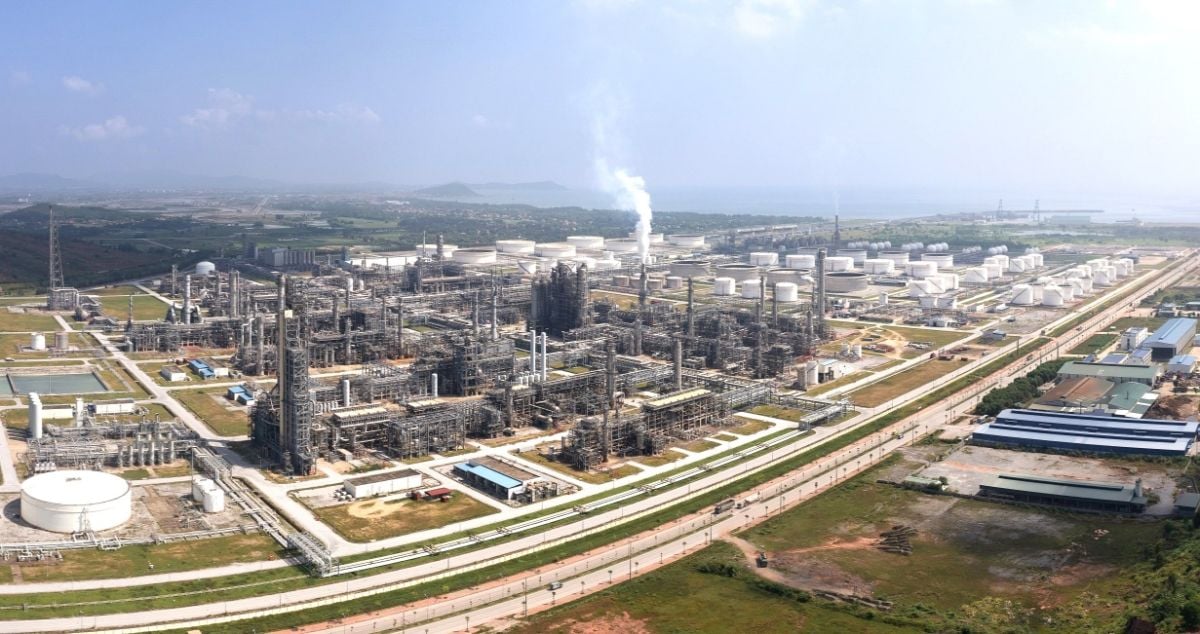
Under the POWER ASIA initiative, both sides will advance projects to support energy and resource resilience in Asia. Japan will arrange crude oil supply for the Nghi Son refinery.
Vietnam and Japan committed to deeper people-to-people and regional cooperation through local-government links and cooperation in labor, health, culture, and tourism. A Vietnam–Japan Local Cooperation Forum is planned for 2026.
Prime Minister Hưng welcomed Japan’s inclusion of Vietnam among 24 attractive destinations for Japanese visitors and Japan’s commitment to facilitating Vietnamese residents in Japan.
The two sides reaffirmed coordination in international and regional forums and on issues of mutual concern. They emphasized peaceful resolution of disputes in the South China Sea in accordance with UNCLOS 1982.
The meeting was described as a reunion of valued friends. Prime Minister Hưng said the visit is a milestone and a driver for new cooperation opportunities, noting Vietnam’s role as a key partner for Japan in ODA, investments, and trade. He also highlighted 2025 achievements in ODA, two-way trade, and investment.
During the talks, the leaders signed six documents covering space technology, information and communications, irrigation, disaster-resilient infrastructure, climate change, and low-carbon growth. They agreed to move forward on priority cooperation in science and technology, innovation, digital transformation, and economic security.
Prime Minister Hưng invited Prime Minister Sanae to Phu Quoc for APEC 2027. Vietnam will also participate in GREEN EXPO 2027 in Yokohama, Japan.



Premium gym chains are entering a “golden era” that is ending or already in decline, as rising operating costs collide with shifting consumer preferences toward more flexible, community-based ways to exercise. Long-term memberships are shrinking, margins are pressured by higher rents and facility expenses, and competition from smaller, more personalized…