•
•
•
•
•
•
•
•
•
•
•
•
•
•
•
•
•
•
•
•
•
•
•
•
•
•
•
•
•
•
•
•
•


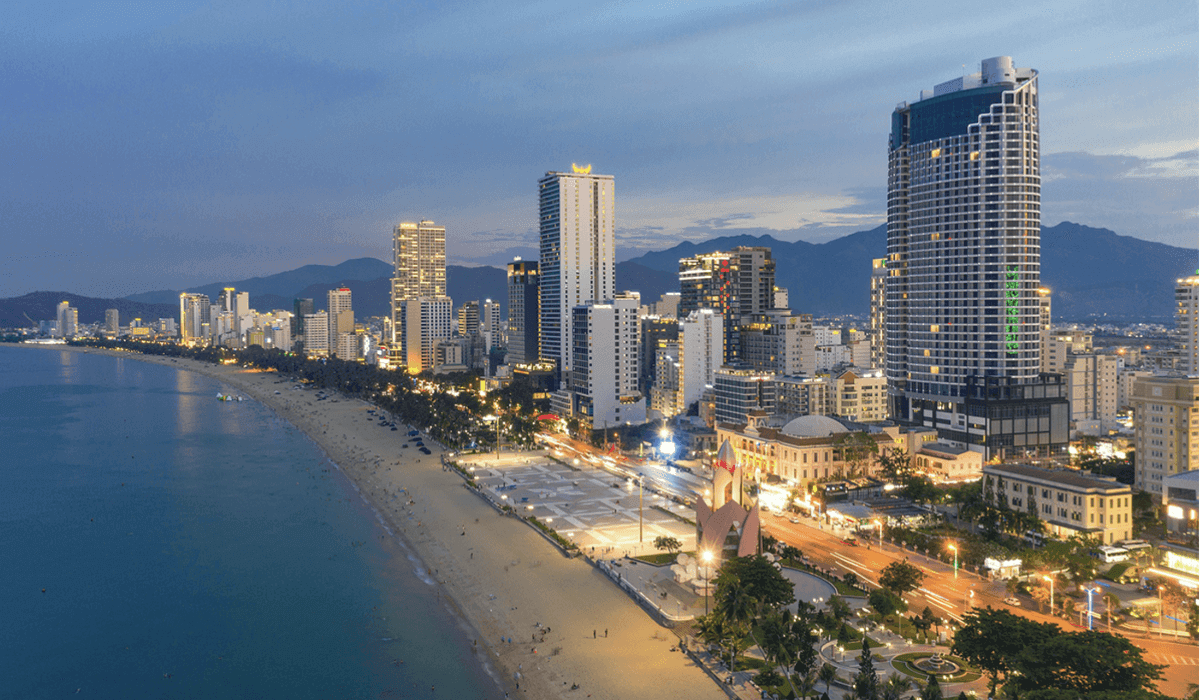
On April 28, 2026, Standing Deputy Prime Minister Pham Gia Tuc signed Decision 757/QĐ-TTg approving the master planning task for Khanh Hoa city to 2050, with a vision to 2075. The planning aims to build and develop Khanh Hoa into a Type I urban area and a modern, smart, green, and sustainable centrally administered city, serving as a major growth pole for the country and an international coastal gateway with high competitiveness. The plan also emphasizes balanced development between the economy, society, and the environment, including resource protection, climate-change adaptation, and preservation of the coastal city’s identity.
Under the approved planning task, Khanh Hoa is expected to function as a national center for economy, culture, science-technology, and international trade for the country, as well as for the South Central Coastal region and the Central Highlands. It is also positioned as a regional growth pole and a key development engine, with roles including marine economic development, high-tech industry, logistics, high-quality services, clean energy, science-technology and innovation. The city is intended to connect coastal, interregional, and international economic corridors.
The plan further identifies Khanh Hoa as an international coastal services and tourism center, and a nucleus for tourism, resorts, conferences, and events at both regional and national levels. It also highlights the city’s strategically important position in organizing coastal space development nationally, with a development direction toward modern, smart, green, and sustainable urban growth.
The master plan requires research to define Khanh Hoa’s position in the new context—not only as a regional center, but also as an international maritime economic gateway. It focuses on strengthening connections with Tây Nguyên via the expressway corridor and with coastal cities, and proposes solutions for Khanh Hoa to become a true growth pole with spillover effects, supporting the country’s high-quality maritime services and tourism economy.
The planning task calls for a thorough review of ongoing projects to ensure continuity, avoid interrupting investment resources, and decisively adjust contents that no longer align with the city’s goal of becoming a centrally governed unit and meeting green and smart city standards.
The plan proposes forming new growth poles—such as an airport city, a seaport city, and an innovation area—using a compact TOD (transit-oriented development) model to reduce pressure on the existing urban center. It also sets out an integrated transport system anchored by high-speed rail, an international airport (Cam Ranh International Airport, Van Phong, Thanh Son), and deep-water ports. Functional zones are to be prioritized around transport hubs to optimize land value.
The master plan requires study of multi-story urban models and multi-layer space use, including efficient exploitation of underground and elevated spaces in key centers. Space organization is to be linked to TOD development near transit hubs and high-speed rail stations. The city identity is to be shaped around “Sea – River – Mountain” through a multifunction green infrastructure system, including protection of bay views and ecological corridors.
The plan includes identifying landscape axes and travel/ecological corridors connecting from the Western mountains (Khanh Vinh, Khanh Son) to the sea via major river corridors (including Cai Nha Trang and the Dinh River). It also calls for solutions to increase water-surface value and leverage coastal, sea, and bay advantages (Van Phong, Nha Trang, Cam Ranh, Vinh Hy), while preserving Cham cultural sites such as Po Nagar Towers.
In addition, it proposes an urban gateway system tied to regional connections through strategic hubs such as Cam Ranh International Airport, Van Phong deep-water port, Ca Na port, and major links to Tây Nguyên via the Khanh Hoa – Buon Ma Thuot expressway, as well as connections to Phu Yen and Lâm Đồng provinces.
The planning task calls for specialized centers for administration, healthcare, and regional-level education, alongside innovation and high-tech zones connected with logistics and primary infrastructure nodes to support balanced growth while conserving ecosystems. It also emphasizes shifting from traditional industry toward high-tech and clean energy, and building modern logistics centers linked to ports and airports.
Functional zones to be guided include the Van Phong Economic Zone, industrial zones, and national tourism zones, with strong linkages among ports, logistics hubs, green industrial zones, and international-level tourism hubs. These linkages are to be supported by modern transport infrastructure, including highways, high-speed rail, and water transport.
Rural development is to be treated as an integral part of the Type I city’s structure, serving as an ecological buffer zone, green corridor, and development reserve. The plan also highlights ensuring water security and biodiversity for the entire city.
The master plan sets out infrastructure strategies covering port systems and airports; roads and expressways; national and urban rail; waterways; drainage, pumping stations, and water plants; and directions for green energy development.
The planning task proposes a coordinated transport infrastructure system across five modes: road, rail, inland waterways, seaways, and aviation, to ensure intra- and inter-regional connectivity. It also calls for advanced urban transport models, particularly smart mobility, autonomous vehicles, sensor networks, and charging stations. The plan further examines the feasibility of mass transit and coastal rail lines to connect urban centers, functional zones, Van Phong port, and port complexes with green industrial zones and international tourism hubs, supported by modern transport networks.
Premium gym chains are entering a “golden era” that is ending or already in decline, as rising operating costs collide with shifting consumer preferences toward more flexible, community-based ways to exercise. Long-term memberships are shrinking, margins are pressured by higher rents and facility expenses, and competition from smaller, more personalized…