•
•
•
•
•
•
•
•
•
•
•
•
•
•
•
•
•
•
•
•
•
•
•
•
•
•
•
•
•
•
•
•
•


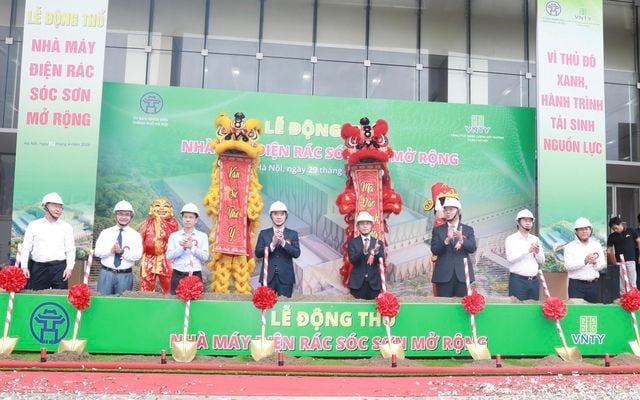
The Soc Son Waste-to-Energy Plant project has been restructured into a two-phase investment plan. Phase 1 will operate with an intake and processing capacity of about 5,000 tons of waste per day and a power generation capacity of 90 MW. Phase 2 will expand the plant’s treatment capacity by focusing on processing approximately 1,600 tons of landfilled waste per day, increasing total electricity generation capacity to 135 MW, and completing supporting technical infrastructure to bring the full plant into operation in Q4 2027.
Total investment is 12,999 billion VND (about 539 million USD), of which the expansion portion accounts for 5,830 billion VND.
At the groundbreaking ceremony, Hanoi Vice-Chairman Nguyen Xuan Luu said that shifting from traditional landfill to advanced waste-to-energy technology is an essential strategic requirement for building a capital city that is “bright, green, clean, beautiful, civilized and modern.”
Since the plant began operation, it has processed nearly 5 million tons of municipal waste for Hanoi and generated nearly 2 billion kWh of electricity. The plant currently receives and processes up to 5,000 tons of waste per day on average, accounting for nearly 70% of the city’s daily municipal waste generation.
To meet ongoing targets, Hanoi plans to continue implementing breakthroughs, including processing landfilled waste at the Nam Son Waste Treatment Complex. The city said this approach aims to gradually improve the environment, create development land, and support community needs, while raising living standards for residents in nearby areas.
According to Mr. Nguyen Xuan Luu, the expansion’s focus on landfilled waste reflects the city’s determination in environmental management and sustainable development for the capital.
City leaders urged the investor, construction contractors, and consulting and supervision units to concentrate maximum resources to promptly complete procedures in accordance with regulations. They also called for construction to be organized scientifically, safely, and with quality and progress aligned with committed timelines, while strictly complying with environmental protection and occupational safety regulations to minimize impacts on residents and ensure stable, continuous operation of the plant.
Hanoi’s departments—especially the Department of Agriculture and Environment, Construction, Finance, Industry and Trade, and Science and Technology—will coordinate to facilitate administrative procedures and resolve obstacles for the investor in a timely manner.
Local authorities in Trung Gia commune were asked to closely coordinate with the investor to complete procedures within their jurisdiction, ensure security in the project area, and continue supporting the livelihoods of residents near the Nam Son complex.
On behalf of the city leadership, Deputy Chairman Nguyen Xuan Luu acknowledged the support of residents in Trung Giã and expressed hope that they will continue to support the project to completion and successful commissioning, benefiting the common good.
“With the city’s determination, the investor’s efforts, and the people’s consensus, I believe the Soc Son Waste-to-Energy Plant expansion will be completed on schedule, becoming a flagship project in the environmental field and contributing to the improved quality of life of the capital’s residents,” said Deputy Chairman Luu.







Premium gym chains are entering a “golden era” that is ending or already in decline, as rising operating costs collide with shifting consumer preferences toward more flexible, community-based ways to exercise. Long-term memberships are shrinking, margins are pressured by higher rents and facility expenses, and competition from smaller, more personalized…