•
•
•
•
•
•
•
•
•
•
•
•
•
•
•
•
•
•
•
•
•
•
•
•
•
•
•
•
•
•
•
•
•


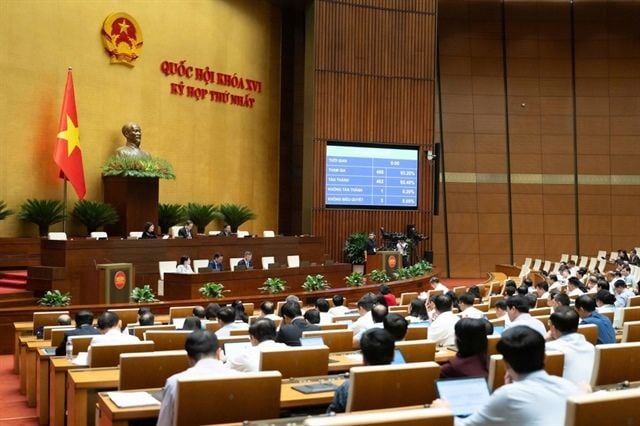
Open roads means creating corridors for new things, new development trends, and new growth drivers. By contrast, fixing the road requires identifying institutional sections that are overlapping, conflicting, and no longer fit development needs, then amending them.
At the opening session of the first meeting of the 16th National Assembly, General Secretary and President Tô Lâm urged that the law should not only regulate the present but also open paths for new models, new drivers of development, and new spaces for development. This aligns with the Politburo’s Conclusion 09-KL/TW dated March 10, 2026 on improving the structure of Vietnam’s legal system in the new era.
The message calls for a shift from a “tightly controlled” mindset to “creating conditions for development”; from risk-prevention-focused lawmaking to accepting controlled risk to seize greater development opportunities; and from merely following practice to proactively guiding practice.
The directives point to three major shifts in reforming law. First, move from a prohibitive mindset to conditional permission. Second, shift from issuing regulations to ease management toward designing an institutional framework that allows society, enterprises, and citizens to do, dare to do, and do correctly. Third, move from piecemeal lawmaking to building a coherent, transparent, stable yet flexible legal structure—so that the development aspirations of the 14th Congress can translate into real development capacity.
In practice, countries may have resources, ideas, and determination, but still be slowed by the “roughness” of institutional roads. One step can require many permissions, and one task can be constrained by multiple laws. For that reason, the call is not merely symbolic but a concrete agenda for the 16th National Assembly.
In that spirit, the National Assembly should prioritize removing institutional knots and enact open-door laws in five major areas.
Remove bottlenecks between public investment, private investment, PPP, land, planning, construction, bidding, and budgeting, while prioritizing the suite of laws on private sector development and the business environment. The article notes that this area has broad spillover effects to mobilize and liberate social resources. If bottlenecks persist, infrastructure, public services, and disbursement will slow, constraining social resources.
Eliminate legal barriers and prioritize open-door laws for science and technology, innovation, digital transformation, artificial intelligence, and new business models. The article frames this as foundational for new productivity, new growth models, and new competitiveness, warning that if laws always lag behind these sectors, Vietnam may lose competitive advantage from the outset.
Address bottlenecks in laws on organization, machinery, decentralization, and power with accountability. Revisions should aim for a leaner, more efficient apparatus by clarifying authorities and boundaries of responsibility to avoid hesitation.
Give due attention to bottlenecks in laws on culture, education, health, and social welfare. The article emphasizes that this is not only about spending, but about building human capital, social creativity, resilience, and national soft power—enabling culture to become an intrinsic resource, education to awaken human potential, and health to improve living standards.
Complete laws relating to resources, environment, energy, green transition, and sustainable development. The article states that global competition depends not only on growth rate, but also on growth quality, adaptability, and resilience.
The article argues that Parliament should view law not only as a tool to regulate individual sectors, but as an architectural framework for the country’s future. It concludes that if the 16th National Assembly embodies the spirit that “laws must open roads, create the future, and repair rough institutional roads,” the term can leave a distinctive legislative imprint—by building a better, more open, more feasible, and more inspiring legal system to support strong national development.
PGS-TS Bùi Hoài Sơn, Member, Committee on Culture and Social Affairs of the National Assembly






Premium gym chains are entering a “golden era” that is ending or already in decline, as rising operating costs collide with shifting consumer preferences toward more flexible, community-based ways to exercise. Long-term memberships are shrinking, margins are pressured by higher rents and facility expenses, and competition from smaller, more personalized…




