•
•
•
•
•
•
•
•
•
•
•
•
•
•
•
•
•
•
•
•
•
•
•
•
•
•
•
•
•
•
•
•
•


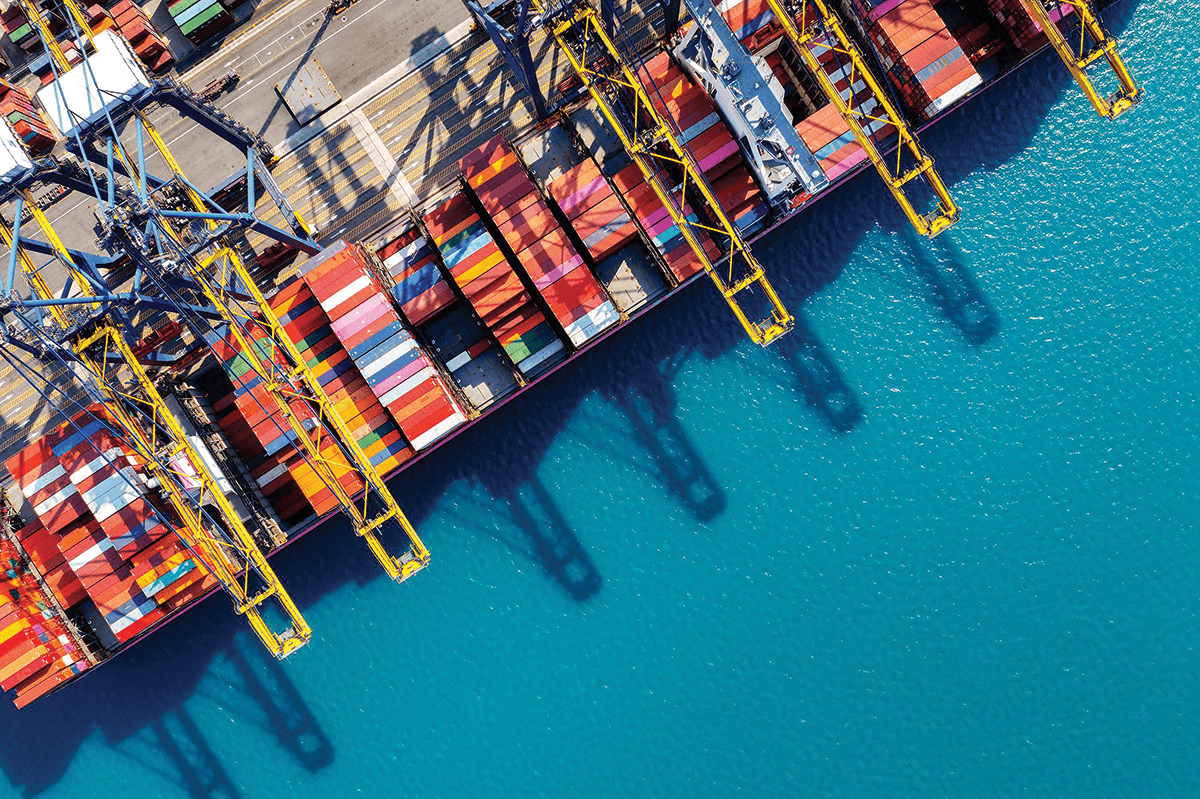
Vietnam’s rapid improvement in logistics infrastructure is strengthening its position as a new production hub, but high logistics costs and geopolitical risks are still forcing companies to restructure transport plans and diversify supply chains.
Vietnam’s logistics infrastructure is making clear progress, according to Bjoern Traemann, CEO of Kuehne+Nagel Vietnam. Citing data from the Vietnam Maritime Administration, he said container ports recorded double-digit growth, including a 21% increase in container throughput in 2024.
Traemann also pointed to the Long Thanh International Airport project, which is in an advanced development stage and is expected to strengthen Vietnam’s status as a regional aviation and goods hub when operational.
He said: “Vietnam has made strong progress in production-trade infrastructure, with investment in ports, expressways and airports rising rapidly.”
Beyond ports and airports, more than 100 new industrial zones are being built nationwide, many planned along major transport corridors. This is intended to improve connectivity between ports, airports and production centers, reflecting the government’s push for integrated supply-chain infrastructure and signaling investor confidence in Vietnam’s long-term role in Southeast Asia.
Despite infrastructure investment, businesses still face logistics cost challenges. Traemann said Vietnam’s logistics costs remain high compared with many developed markets, and that the main cause is structural rather than efficiency-related.
He argued that while ports, highways and airports have received significant investment, connectivity among seaports, inland waterways, rail, and industrial zones is still under development. As a result, goods often depend heavily on long-haul road transport, which can raise costs and reduce efficiency.
Traemann also noted that the logistics market is relatively fragmented, with many mid-sized and small suppliers, which makes optimization and network efficiency more difficult.
Global supply chains are also being affected by geopolitical conflicts. Traemann said higher energy prices, uncertainty around key shipping lanes, and disruptions at strategic chokepoints—such as the Strait of Hormuz or ships rerouting around the Cape of Good Hope—have increased transport costs, insurance costs and travel times on the Asia–Europe route.
He added that while Vietnam continues to record strong export growth due to supply-chain diversification, global disruptions can quickly lead to congestion, capacity constraints and cost volatility if not actively managed.
A DHL Vietnam representative said tensions in the Middle East are causing some short-term adjustments, especially in air cargo. However, DHL said its global network remains stable, and Asia–Europe routes continue to operate without significant disruption due to contingency plans and regional logistics hubs. Some routes are more constrained than usual, but the overall impact is described as mild.
According to the Global Connectedness Report (GCR), Vietnam remains one of the world’s most promising growth-trade markets, supported by strong FDI, strategic location and improving infrastructure. These fundamentals, DHL said, help exporters mitigate the impact of global shocks.
DHL said it is coordinating closely with customers, implementing alternative routing and multimodal transport to maintain continuous operations. It also emphasized the safety and security of goods, adding that current disruptions do not change the long-term outlook for global trade.
For exporters, the guidance is to work closely with logistics partners to understand alternative routing options. Diversifying supply chains to build resilience has accelerated since the pandemic and is expected to remain a top priority for global enterprises to ensure goods safety and business continuity.
In the context of ongoing risks to international shipping routes, companies are advised to avoid relying on any single route, carrier or operating model. The use of multimodal solutions (for example, sea–air) can help supply chains adapt quickly. Real-time visibility through tracking and predictive analytics is highlighted as a key factor in decision-making.
Kuehne+Nagel said it supports customers through proactive planning and a flexible network—coordinating with partners to secure capacity, adjust routes and balance cost, speed and reliability—to help maintain continuous operations and strengthen supply-chain resilience.






Premium gym chains are entering a “golden era” that is ending or already in decline, as rising operating costs collide with shifting consumer preferences toward more flexible, community-based ways to exercise. Long-term memberships are shrinking, margins are pressured by higher rents and facility expenses, and competition from smaller, more personalized…



