•
•
•
•
•
•
•
•
•
•
•
•
•
•
•
•
•
•
•
•
•
•
•
•
•
•
•
•
•
•
•
•
•


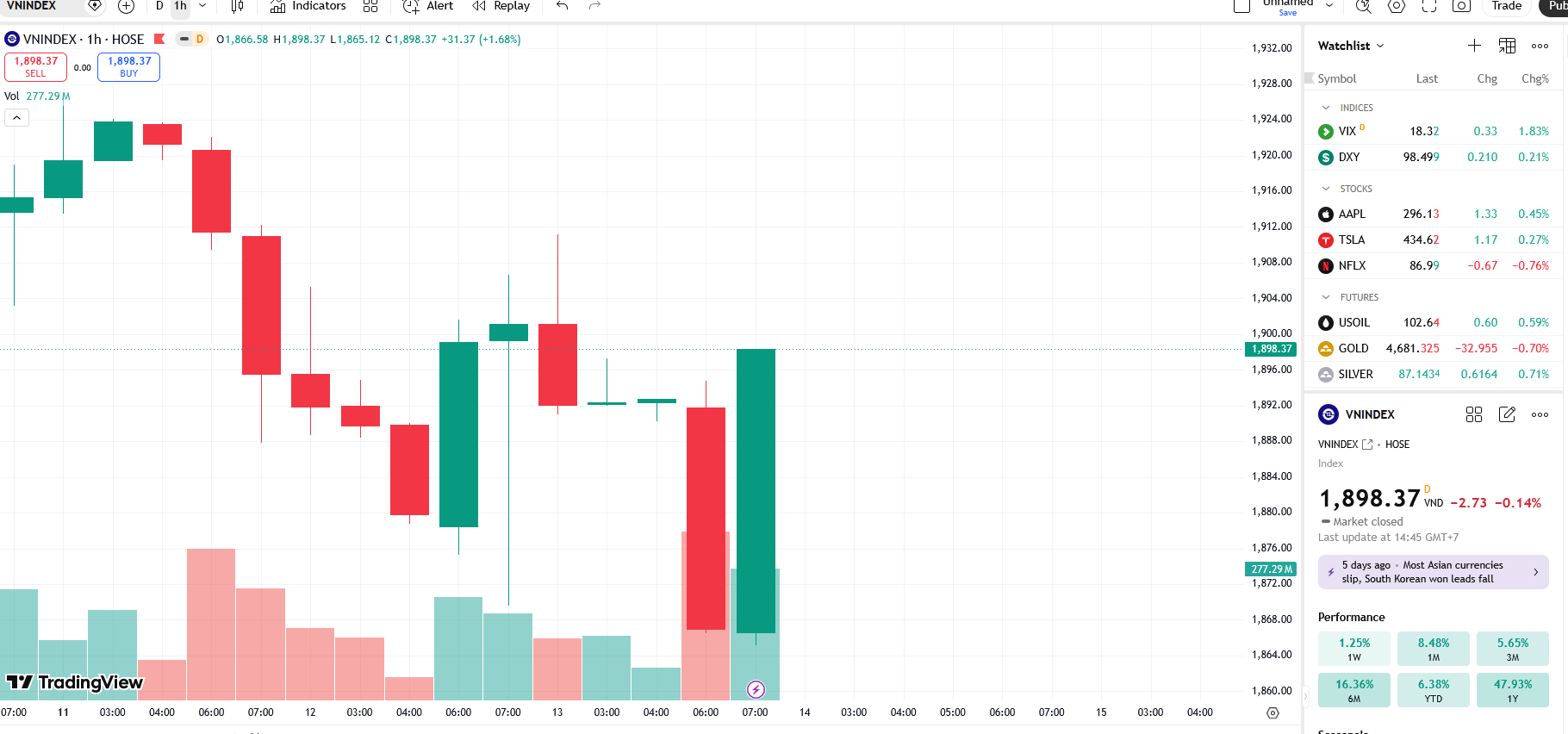
Market watchers expect the Vietnamese stock market to remain in a narrow range around recent highs, with a trading band roughly from 1,870–1,875 points to 1,925–1,945 points, BVSC said. The VN-Index closed down 2.73 points, or 0.14%, at 1,898.37. In contrast, the HNX-Index gained 1.34 points, or 0.53%, to 254.62.
Analysts said the market is likely to continue with limited momentum as large-cap stocks fail to sustain gains, resulting in occasional volatility. However, the rebound late in the session—after the VN-Index dipped toward the 1,870–1,875 support zone—suggests downside risk remains limited in the near term. Investors were advised to rebalance cash and equity to reasonable levels while maintaining existing short-term positions and using trailing stops.
Brokerage commentary was mixed but generally cautious. BVSC pointed to range-bound behavior around the old highs, with an implied band of 1,870–1,875 to 1,925–1,945. Other firms including BSC, SHS, TVS, and YSVN highlighted different support and resistance levels, with some expecting select sectors to lead and others warning of short-term consolidation near recent highs.
Overall, liquidity improved and money flowed into certain stocks, while foreign investors remained net sellers on the day.
Investors were encouraged to focus on high-conviction stocks consolidating near support levels. Sectors mentioned as areas of interest included securities, real estate, retail, fertilizers, rubber, and industrial parks.
Technical observations noted the VN-Index hovering near key support and resistance levels. Several analysts suggested selective accumulation in growth-oriented names across oil & gas, energy, banking, and related sectors.
Liquidity across the three exchanges rose to nearly 32,000 billion dong. Foreign investors were net sellers of about 1,515.5 billion dong, with net selling on matched trades at around 2,004.6 billion dong.
Market breadth reflected rotation, with 144 advancers and 168 decliners, indicating continued stock-specific leadership alongside sector divergence.
With the market showing signs of rotation and sector divergence, analysts said the near-term focus should remain on stock selection within consolidating areas near support. The late-session rebound toward the 1,870–1,875 zone was cited as a factor that may help limit downside risk, even as the broader market continues to trade within a relatively tight range.

Premium gym chains are entering a “golden era” that is ending or already in decline, as rising operating costs collide with shifting consumer preferences toward more flexible, community-based ways to exercise. Long-term memberships are shrinking, margins are pressured by higher rents and facility expenses, and competition from smaller, more personalized…