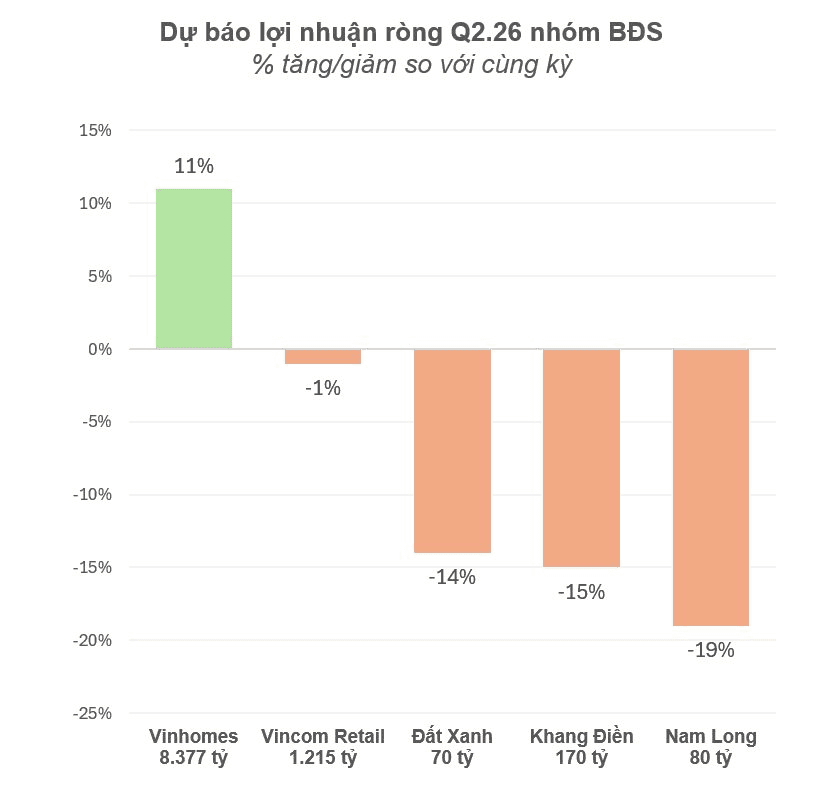
The second quarter of 2026 is expected to show clear divergence in profits among listed real estate companies as the market remains subdued under higher borrowing costs. Bank deposit rates have risen about 1-1.5 percentage points quarter-on-quarter, while lending rates in the real estate sector are around 13-14%, up about 2 percentage points from a year earlier. These conditions have constrained liquidity and kept investors cautious.
Several new projects, including Masterise Lumière Hanoi, Vinhomes Ha Long Xanh, and Vin Can Gio, have introduced buyer-support policies with fixed rates of 7-8% for the first two years. Despite these incentives, liquidity remains weak, as investors fear that rates could stay high for an extended period. In addition to interest rates, expectations around master planning in major cities, notably Hanoi’s 100-year plan, have slowed transactions. Analysts estimate that transaction prices at some apartment projects have fallen about 5% quarter-on-quarter. New sales activity by listed real estate companies has been lackluster, with new supply mainly coming from Vinhomes mega urban developments such as Ha Long Xanh, Can Gio, and Hai Van Bay. A large player still sees profit growth, supported by projects launched in 2024-2025 rather than new launches.
The overall environment remains challenging for real estate equities, with liquidity concerns and slower transaction activity weighing on near-term outlook. Profitability for some large players depends on deliveries from projects launched in prior years, while others face pressure from reduced new-volume deliveries and slower expansion of new launches.
According to MBS, second-quarter profits for real estate firms largely reflect contributions from projects launched in 2024-2025 rather than from new launches. While VHM is expected to see solid growth, many other listed developers are forecast to post weaker results in Q2. The report highlights that profit growth is concentrated among a few large players, with mid-sized firms prioritizing housing-oriented projects over expansive urban developments.