•
•
•
•
•
•
•
•
•
•
•
•
•
•
•
•
•
•
•
•
•
•
•
•
•
•
•
•
•
•
•
•
•


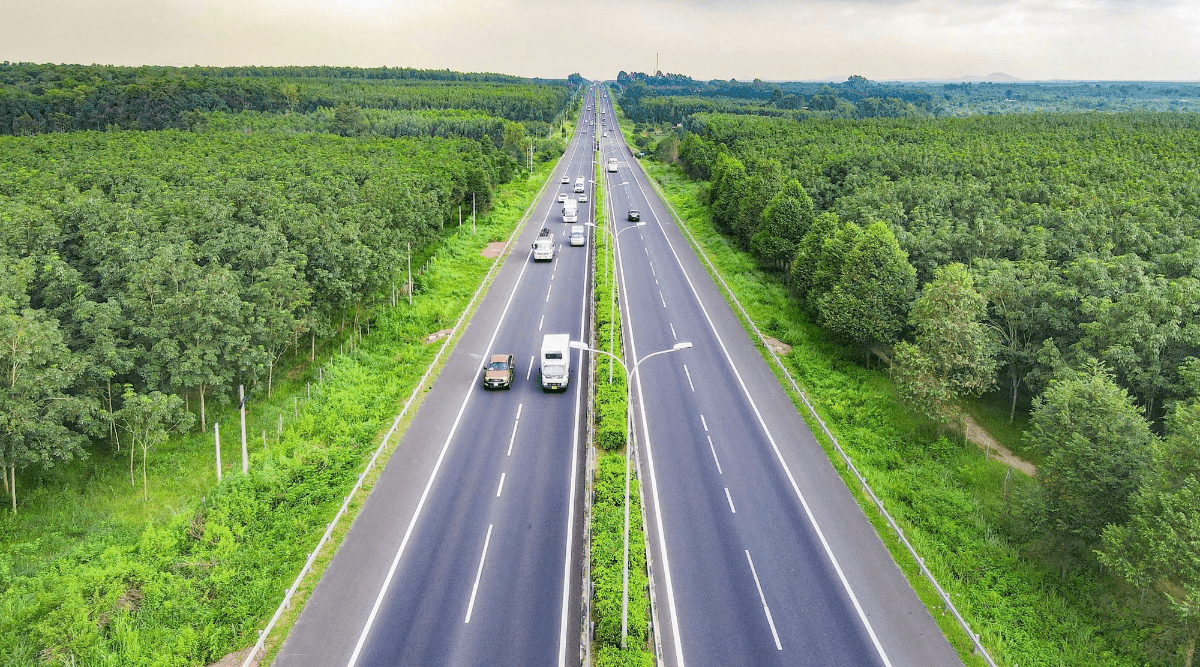
More than 3,800 kilometers of expressways have been put into operation nationwide. According to the Ministry of Construction's consolidated report on the road sector, to date the country has opened for traffic and technical clearance about 3,803 km of expressways, including 3,345 km of main routes and 458 km of junctions and bypass roads. Notably, road transport remains the leading mode in the transport system, accounting for about 70–75% of domestic freight and about 91% of passenger transport. The Ministry of Construction is directly managing key national highways with regional and international significance totaling about 4,875 km (20%); the remainder is managed by BOT investors or being handed over to investors for rehabilitation and upgrades. At the same time, more than 70% of the highway length, about 17,520 km, has been devolved to local authorities. Nationwide, 38 road infrastructure projects are underway, totaling about 2,111 km. Of these, the Ministry is implementing 8 projects (284 km), local authorities are implementing 29 projects (1,797 km), and Vietnam Expressway Development Investment Corporation (VEC) is implementing 1 project of 30 km. In addition, in the maritime and inland waterway sector, infrastructure continues to be invested and upgraded, helping throughput and transport to increase rapidly, from 706.1 million tons in 2021 to 955.5 million tons in 2025. Currently, the country has 309 ports with total quay length about 107 km, and 14 offshore oil and gas ports. The system of sea lanes, signals, and dikes has been relatively synchronously invested, meeting 100% of export-import and domestic transport needs. For inland waterways, the operating network covers about 25,108.6 km. Although for a long time not invested proportionately, this system has gradually formed key transport routes connecting important economic regions. Looking ahead, the Ministry will continue to review and完善 planning toward integration of marine and inland waterways; prioritize investment in gateway ports and key routes; and accelerate progress to ensure the quality of major port projects such as Gemalink Phase 2, Cai Mep Ha, Liên Chiểu, Lach Huyện and Hon Khoai. Alongside, decentralization and empowerment will be strengthened to enhance local management capacity. In the aviation field, the Ministry focuses on accelerating the progress of key projects to bring them into operation, including Long Thanh International Airport Phase 1; upgrading and expanding Ca Mau Airport; upgrading taxiways and runways at Vinh and Liên Khương airports; upgrading Phu Quoc International Airport to serve APEC 2027; and investing in taxiways and runway 2 at Phu Cat Airport. At the same time, the aviation system planning will continue to be completed in a synchronized, modern approach; the progress of key projects will be accelerated; decentralization will be strengthened to enhance local management capacity. The aviation sector is also oriented to develop strongly through expanding international flight networks, linked to logistics, digital transformation and green transition, and by improving airline capacity and fleet composition, thus providing a major driver for fast and sustainable economic growth in the coming period.

Premium gym chains are entering a “golden era” that is ending or already in decline, as rising operating costs collide with shifting consumer preferences toward more flexible, community-based ways to exercise. Long-term memberships are shrinking, margins are pressured by higher rents and facility expenses, and competition from smaller, more personalized…