•
•
•
•
•
•
•
•
•
•
•
•
•
•
•
•
•
•
•
•
•
•
•
•
•
•
•
•
•
•
•
•
•


Hanoi’s rapid urbanization in recent years has reshaped the capital’s landscape. But as high-rise towers become more densely packed and inner-city land banks shrink, “green space” is increasingly becoming a luxury. Residents are not only looking for housing, but also for a more balanced living environment where nature can support physical and mental well-being.
Statistics indicate that Hanoi’s population density is among the highest in the country, while per-capita green space remains below international standards. In the western area—where housing developments are expanding—internal green spaces are particularly limited.
Against the pressures of density, infrastructure demands, and environmental constraints, Duong Noi Urban Area is presented as a rare example of systematic ecological planning, designed to create a more complete green ecosystem.
Rather than focusing on “maximizing built area,” the project is described as being built on a sustainable ecological philosophy, aiming to balance architecture, landscape, and residents’ daily lives.
Covering up to 197 hectares, Duong Noi allocates about 53 hectares for greenery and water—nearly 30% of the total area. The project’s green-to-built-area ratio is described as higher than the regional average.
A central feature is Bach Hop Thuy Lake, sized at 12 hectares, described as the ecological core of the urban area. The lake is intended to help regulate the microclimate and is also described as having feng shui significance, contributing to a more “vital” living environment. Open water is also cited as helping reduce heat and increase natural humidity, supporting a more comfortable atmosphere year-round.
The Astronomy Park is positioned not only as a green space, but as an experiential area where education, entertainment, and community connection are combined. Landscape axes running through the area are intended to reduce the feeling of enclosure, improve openness, and connect sub-zones. The park is also described as hosting frequent activities, including weekly exercise and cultural events for nearby residents.
Duong Noi is described as a “city within a city,” with controlled concrete density and ecological experiences prioritized to support long-term living value. Each villa is presented as more than a residence—described as a “mini garden” that allows owners to design micro-landscapes, plant trees, and create personal relaxing spaces.
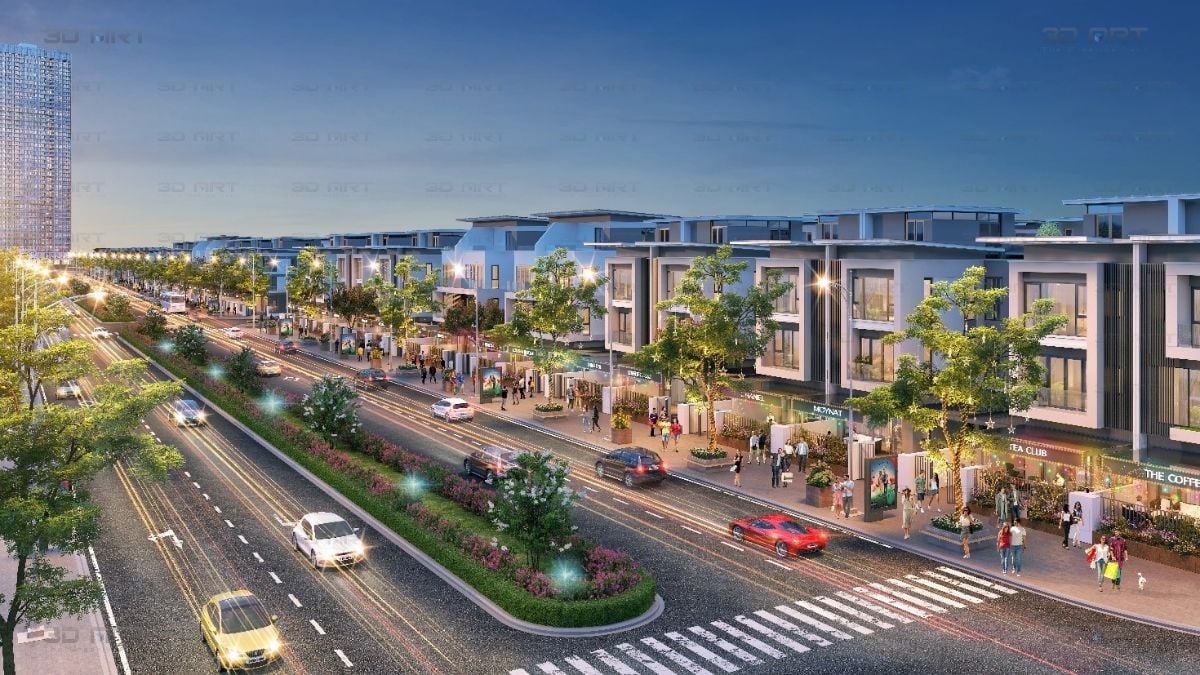
The project’s value proposition is also framed around commercial flow. While the villas can be viewed as luxury residences, the surrounding layout—particularly the rows of villas around the Astronomy Park and along major internal avenues—is described as evolving into active streets rather than purely residential zones.
These areas are said to host a range of services and amenities, including dining options, cafes, schools, bookstores, spas, and children’s play areas. The commercial atmosphere is described as not as loud as traditional commercial districts, but sufficiently lively to generate steady cash flow for owners.
The customer base is described as broad, creating natural foot traffic for nearby businesses. It is also characterized as having good spending power and willingness to pay for quality services. In addition to external visitors, the development’s tens of thousands of residents are cited as providing a stable local market.
From an investment perspective, the project is presented as offering advantages not found in every urban development. The combination of mature infrastructure and a formed resident community is described as helping reduce operating risk, allowing investors to generate cash flow without waiting long.
The developer is also described as offering sales policies intended to support customers during decision-making. Specifically, the payment schedule for Duong Noi villas is described as more flexible, helping investors and residents manage cash flow.
For buyers who transact before March 31, 2026, the article states they will receive special financial incentives: interest support for up to 36 months or early payment discounts of up to 10%, along with a spring gift valued at 500 million VND.
Premium gym chains are entering a “golden era” that is ending or already in decline, as rising operating costs collide with shifting consumer preferences toward more flexible, community-based ways to exercise. Long-term memberships are shrinking, margins are pressured by higher rents and facility expenses, and competition from smaller, more personalized…