•
•
•
•
•
•
•
•
•
•
•
•
•
•
•
•
•
•
•
•
•
•
•
•
•
•
•
•
•
•
•
•
•


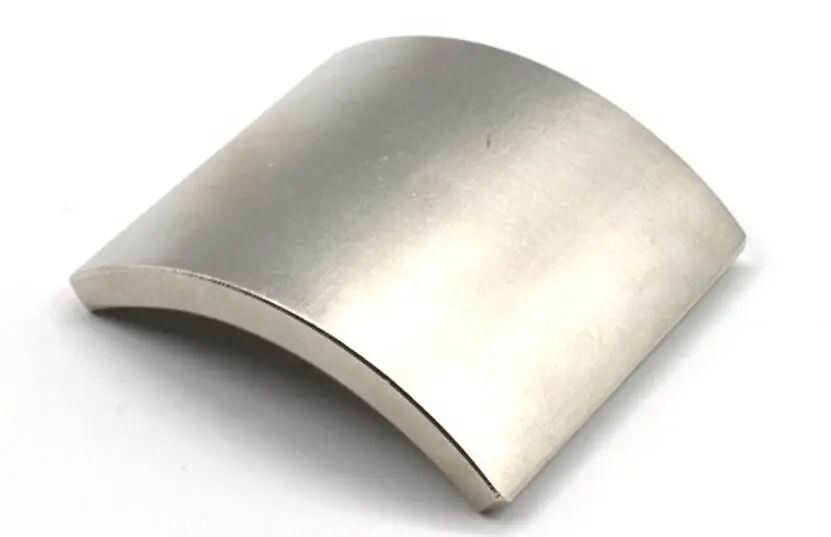
For a long time, attention in the tech world has focused on the “brain” of robots—AI model capabilities, computing power, and software generalization across environments. Morgan Stanley’s January assessment suggests the next cooling of the industry could instead come from the physical hardware side, where scaling production quickly shifts the bottleneck from software to the supply chain for hardware materials.
The bottleneck highlighted by Morgan Stanley centers on neodymium-iron-boron (NdFeB) permanent magnets. First developed in the 1980s, NdFeB is a core material for electric vehicles and wind-turbine equipment, valued for its high energy product. With humanoid-robot manufacturing expanding, NdFeB has become strategically important in a way not seen before.
In humanoid robots, NdFeB magnets are the core element that helps determine the weight, performance, and production limits of joint motors. A complex robot system, such as Tesla’s Optimus Gen2 line, would require about 42 independently controlled motion motors. Each device would consume an estimated 3.5 to 4 kg of high-performance NdFeB magnets—an amount of material mass described as equivalent to two electric cars combined.
Engineers have limited flexibility because robots require magnets that meet three stringent criteria: high energy density to avoid oversized joints; high magnetic resistance to withstand temperatures above 120°C due to motor rotation; and absolute uniformity in manufacturing.
Firgelli data cited in the article indicates that shifting just 200 grams at the ankle could force the system to bear an additional risk penalty of up to 1.3 kg due to a change in the center of gravity. These constraints make NdFeB an impractical substitute in the robot joint design.
Because NdFeB cannot be replaced easily, demand for the material is expected to trigger an unprecedented shock. The article contrasts this with the gradual transition from gasoline to electricity, arguing that the robot boom could be “stair-stepped” as total cost of ownership becomes cheaper than human labor.
Adamas Intelligence estimates that to produce hundreds of millions of robots per year, if copper expands threefold and lithium fourteenfold, NdFeB would require production capacity to expand by as much as 186 times.
The article describes a supply chain bottleneck tied to China’s dominance in separation and refining steps. While ore extraction and magnet production have been commercialized in many countries, the separation and purification step—extracting oxide into metal—remains dominated by China, with more than 90% of global market share.
The “two ends dispersed, middle concentrated” structure is attributed to prohibitively high capital investment, risks in stabilizing yields, severe shortages of metallurgical labor, and strict radiation-waste handling standards since 2011. In a supply-constrained environment, the article warns that a supply crisis could emerge if the core processing stage remains concentrated in China.
Looking to 2026, the article says these chemical and processing constraints will shape the industry’s survival pace. With supply not easily offset by elasticity, pricing power is expected to shift upstream, and Chinese magnetic-material producers are adjusting their strategies.
Chinese producers named in the article—Kim Lực Vĩnh Từ, Ninh Ba Vận Thăng, and Trung Khoa Tam Hoàn—have reportedly expanded downstream to capture distribution advantages. The article concludes that, in this environment, pricing power will help determine the timetable for how many robots can be produced in the future.
While AI software can make rapid progress after a few months of upgrades, the refining of mineral ore cannot skip steps. The article’s central point is that the robot industry’s future will be decided not only by advanced algorithms, but by the availability of magnets embedded inside robot joints.




Premium gym chains are entering a “golden era” that is ending or already in decline, as rising operating costs collide with shifting consumer preferences toward more flexible, community-based ways to exercise. Long-term memberships are shrinking, margins are pressured by higher rents and facility expenses, and competition from smaller, more personalized…