•
•
•
•
•
•
•
•
•
•
•
•
•
•
•
•
•
•
•
•
•
•
•
•
•
•
•
•
•
•
•
•
•


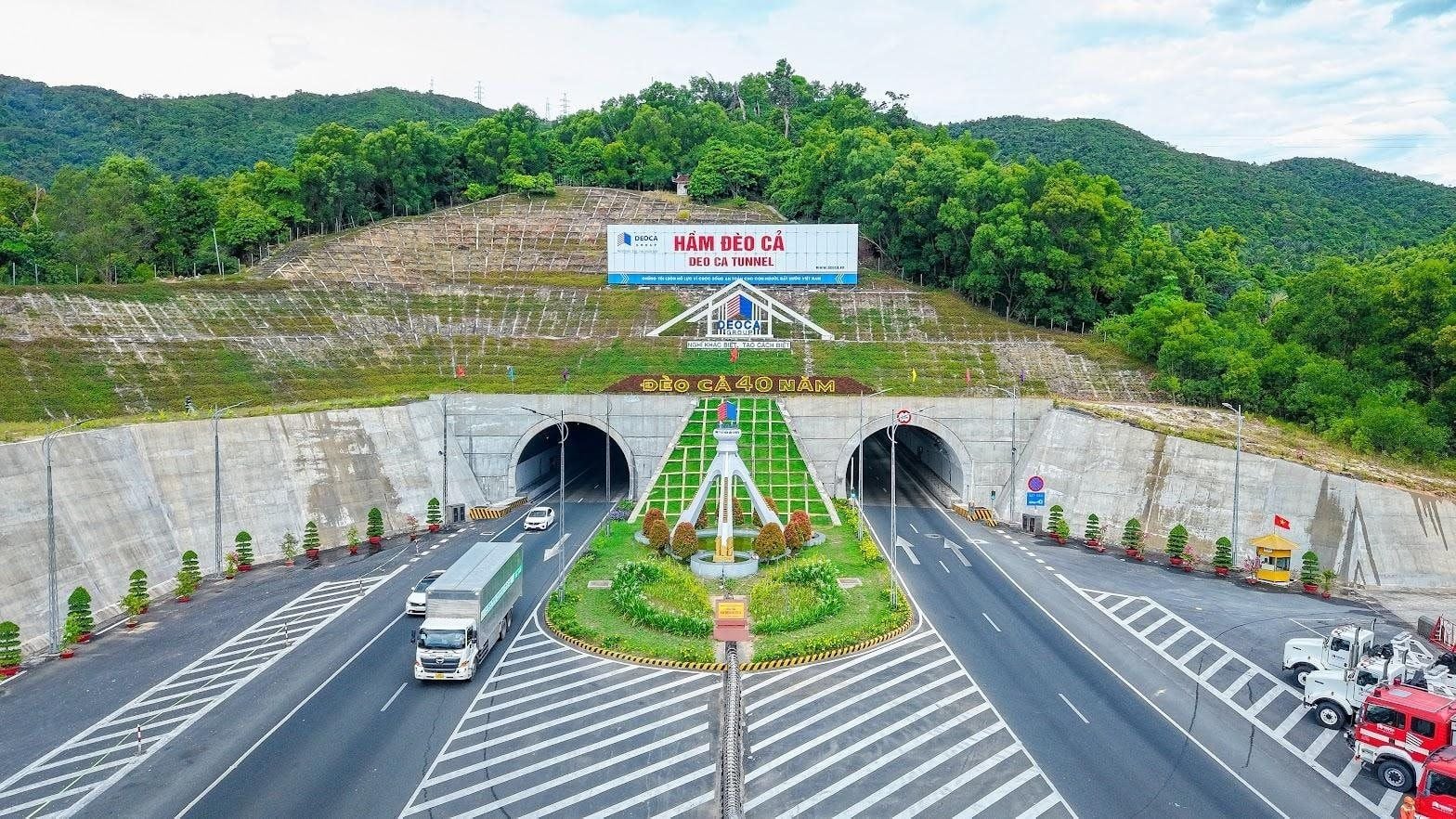
Transportation infrastructure not only connects development space but also determines the economy’s competitiveness. Against the backdrop of highway investment and key projects nationwide, Deo Ca Infrastructure Investment Joint Stock Company (HHV) is expanding its footprint across investment, construction, and operation and maintenance.
Vietnam has put more than 3,300 km of expressways into operation. In the 2026–2030 period, an additional more than 1,700 km of new expressways will be invested, while existing routes will be upgraded to higher standards.
As a private enterprise focused on highway infrastructure, HHV has participated in investment, construction, and management of operation and maintenance for nearly 670 km of expressways and national highways, and for over 40 km of road tunnels.
Key HHV projects include the Deo Ca – Co Ma tunnels, Cu Mong tunnel, Hai Van 2 tunnel, and Phu Gia – Phuoc Tuong tunnels, which help remove traffic black spots on dangerous mountain passes in Vietnam’s Central region. HHV has also contributed to completing the North–South expressway axis through projects such as the Bac Giang – Lang Son expressway and Cam Lam – Vinh Hao, Trung Luong – My Thuan.
Dong Dang – Tra Linh expressway Phase 1 has a total investment of 14,300 billion VND, with a length of over 93 km. The project includes 2 mountain-crossing tunnels and 64 bridges.
The site mobilizes more than 2,000 personnel and 900 machines, with 93 work fronts operating simultaneously. Some segments are expanding the roadbed from 17 m to 22 m in line with the Phase 2 completion scale.
To date, total output achieved equals 74% of the contract value. Under the plan, by May 19 the project will open a 62 km technical section from the Dong Dang border gate (Lang Son) to Dong Khe commune (Cao Bang).
In 2025, HHV completed the Quang Ngai – Hoai Nhon expressway, 88 km long, eight months ahead of schedule. The coastal road connecting Liên Chiểu port also completed a hollow-core girder structure three months ahead of requirement.
Currently, HHV is focusing resources on completing Phase 2 of the Nui Vung tunnel on the Cam Lâm – Vĩnh Hảo expressway and three mountain tunnels on the Quảng Ngãi – Hoài Nhơn expressway. The total contract value is around 600 billion VND.
In early 2026, HHV won the XL2 package of the Cam Lộ – La Sơn expressway expansion project worth more than 3,482 billion VND, along with a road project connecting the western belt of Da Nang to Chí Thạnh at more than 1,460 billion VND.
In the south, the Ho Chi Minh City – Trung Lương – Mỹ Thuận expressway expansion project is a key PPP project led by the Deo Ca Group in the investor consortium, with HHV responsible for a package worth over 1,000 billion VND.
Forecasts indicate that in 2026–2027, HHV’s backlog value is around 5,000 billion VND, providing a base for mid-term growth.
Alongside construction, HHV is strengthening its operation and maintenance business line, which is described as delivering stable and sustainable cash flow. In 2025, toll-collection traffic managed by HHV reached over 26.6 million vehicles, up 10% from 2024.
In early 2026, the HHV consortium won additional maintenance packages for North–South expressway infrastructure in the Quảng Ngãi – Hoài Nhơn, Quy Nhơn – Chí Thạnh, and Chí Thạnh – Vân Phong segments.
At the start of 2026, HHV also won more maintenance and infrastructure upkeep contracts for the North–South expressway segments: Quảng Ngãi – Hoài Nhơn, Quy Nhơn – Chí Thạnh, and Chí Thạnh – Vân Phong.
The company expects that in 2026, when central region expressways are completed and put into operation and directly connected to Cu Mong and Đèo Cả tunnels, there will be a synergistic effect that boosts traffic volumes on HHV-managed routes.
At the Đèo Cả tunnel, average daily traffic is about 9,500 vehicles, rising to nearly 20,000 vehicles per day during holidays. At the Cu Mong tunnel, average daily traffic is about 5,000 vehicles, increasing to around 9,000 during holidays.
On the Cam Lâm – Vĩnh Hảo route, average daily traffic is nearly 10,000 vehicles, but during holidays it often doubles or triples; during the 2026 Tet holiday, traffic exceeded 21,000 vehicles per day.
During Hung King’s Festival holidays and the long breaks around April 30 and May 1, travel demand is expected to rise sharply, with peak-day traffic increasing many times compared with normal days. HHV said information on traffic, system status, and potential risks is updated continuously and accurately.
To ensure safety and smooth operation of routes and tunnels, HHV organizes 24/24 shifts across the operations center, technical teams, fire protection and rescue (PCCC & CNCH), and patrols and maintenance.
HHV also cites standardized processes and accelerated technology adoption, including UAVs, alongside centralized control from the control center to on-site locations. The company said these measures help maintain stable operations and gradually raise service standards, supporting a cash flow base and growth targets.
For 2026, HHV targets consolidated revenue of 4,468 billion VND and net profit after tax of 766 billion VND, representing growth of 18% and 14%, respectively, from 2025.
For Q1, HHV expects consolidated revenue of about 907 billion VND, up 23% year-on-year. Net profit after tax is expected at around 217 billion VND, up more than 25% from Q1 2025.




Premium gym chains are entering a “golden era” that is ending or already in decline, as rising operating costs collide with shifting consumer preferences toward more flexible, community-based ways to exercise. Long-term memberships are shrinking, margins are pressured by higher rents and facility expenses, and competition from smaller, more personalized…




