•
•
•
•
•
•
•
•
•
•
•
•
•
•
•
•
•
•
•
•
•
•
•
•
•
•
•
•
•
•
•
•
•


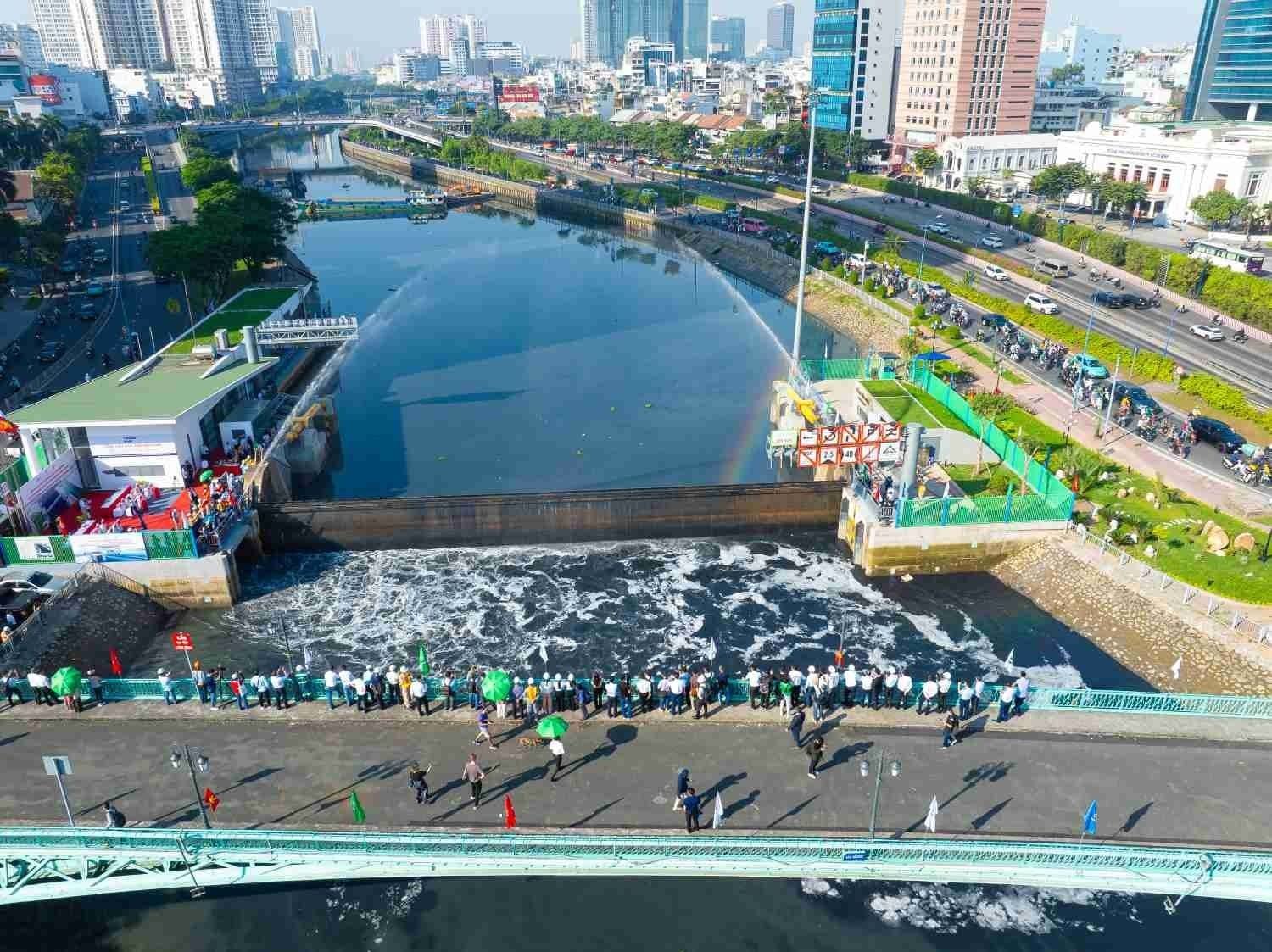
Exactly one decade after the groundbreaking on June 26, 2016, the Phase I flood-control project for the Saigon River area has reached completion at the main tide-control gates, with progress ranging from 89% to 99%. The project is set up for an integrated, synchronized operation in 2026.
The project, with an investment scale of nearly 10 trillion dong, is implemented under a Build-Transfer (BT) model. It is designed to control flooding over a 570 square-kilometer area and for about 6.5 million residents on the right bank of the Saigon River.
Initial plans targeted completion in 2018. However, procedural hurdles and land-based payment arrangements led to a pause starting in November 2020, after more than 90% of construction had been completed.
After the government issued Resolution 212/NQ-CP in July 2025 to address financial bottlenecks, the project officially restarted in early February 2026.
As of May 2026, progress across the six main flood-control gates and the 7.8-kilometer river dike system shows variation by component.
Supporting works, including dykes and the Cầu Kinh – Ba Bom sluice, as well as the central management facility, are reported to be between 87% and 95% of the total scope.
Technically, construction units are focusing on dredging to create channels, installing mechanical-electrical (MEP) equipment and pumping systems, and tuning the automatic SCADA control system to ensure operational readiness.
Feasibility of finishing within 2026 depends directly on completing procedures related to the valuation of three land plots already allocated, and adding additional land to the payment list for the investor.
To ensure stability during the initial phase of operation, Trungnam Group has proposed participating in the project’s operation for the first five years, combined with staff training and technology transfer to the locality.
Once operational, the project is expected to regulate water levels, improve drainage efficiency, and enhance resilience to climate change in downtown Ho Chi Minh City.
Premium gym chains are entering a “golden era” that is ending or already in decline, as rising operating costs collide with shifting consumer preferences toward more flexible, community-based ways to exercise. Long-term memberships are shrinking, margins are pressured by higher rents and facility expenses, and competition from smaller, more personalized…