•
•
•
•
•
•
•
•
•
•
•
•
•
•
•
•
•
•
•
•
•
•
•
•
•
•
•
•
•
•
•
•
•
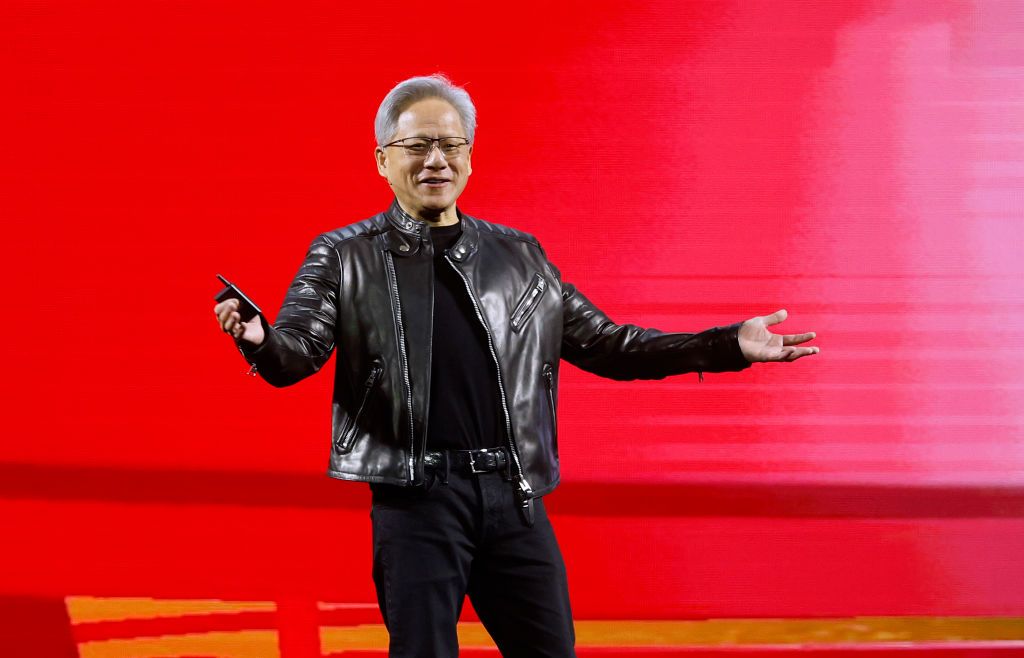
Jensen Huang, the chief executive of Nvidia, said in an interview Monday night that American workers have little to fear from artificial intelligence’s labor-displacing potential, arguing instead that AI will function as an “industrial-scale generator of jobs.” Speaking with MSNBC’s Becky Quick at an event hosted by the Milken Institute, Huang pushed back against what he described as “AI doomers” who warn of mass unemployment.
Quick highlighted the speed of AI adoption and the risk of broader economic disruption, asking whether the current wave could create “a bigger dislocation than we’ve seen in the past that leads to greater inequality” and what policymakers should do in response.
Huang’s response was emphatic: “AI creates jobs.” He added that AI is “the United States’ best opportunity to re-industrialize,” pointing to the buildout of AI-related industrial capacity as a key driver of employment.
Huang said the AI industry is supported by a new class of industrial factories producing the hardware that he described as critical infrastructure for AI businesses. He argued that these facilities, along with the wider AI sector, require workers.
He also distinguished between automating a task and replacing an entire job. Huang said people who expect widespread job replacement “misunderstand that the purpose of a job and the task of a job are related” but not identical. His argument was that even if AI takes over a discrete task within a role, the broader function performed by employees is more likely to persist.
Huang criticized claims that AI will dominate humanity or eliminate large parts of the economy. He said his “greatest concern” is that fear and sensational “science fiction stories” could make AI unpopular in the United States, discouraging people from engaging with it.
He also suggested that some of the most alarming “doomer” messaging may have been amplified by the AI industry itself, with critics arguing that such hyperbole has been used to generate buzz for products that do not yet match the capabilities implied by the rhetoric.
While Huang emphasized job creation, the long-term economic effects of AI remain uncertain. The article notes that reputable financial and academic organizations have suggested that as much as 15% of jobs in the United States could be eliminated over the next several years due to AI.









The crypto bear market remained in force on Wednesday, with bitcoin slipping back toward the $60,000 area. Sharp pullbacks in gold and oil also weighed on the 2025 “debasement trade,” which had supported hard assets amid concerns about government debt and fiat currencies. Meanwhile, tech—particularly the AI boom—continued…