•
•
•
•
•
•
•
•
•
•
•
•
•
•
•
•
•
•
•
•
•
•
•
•
•
•
•
•
•
•
•
•
•


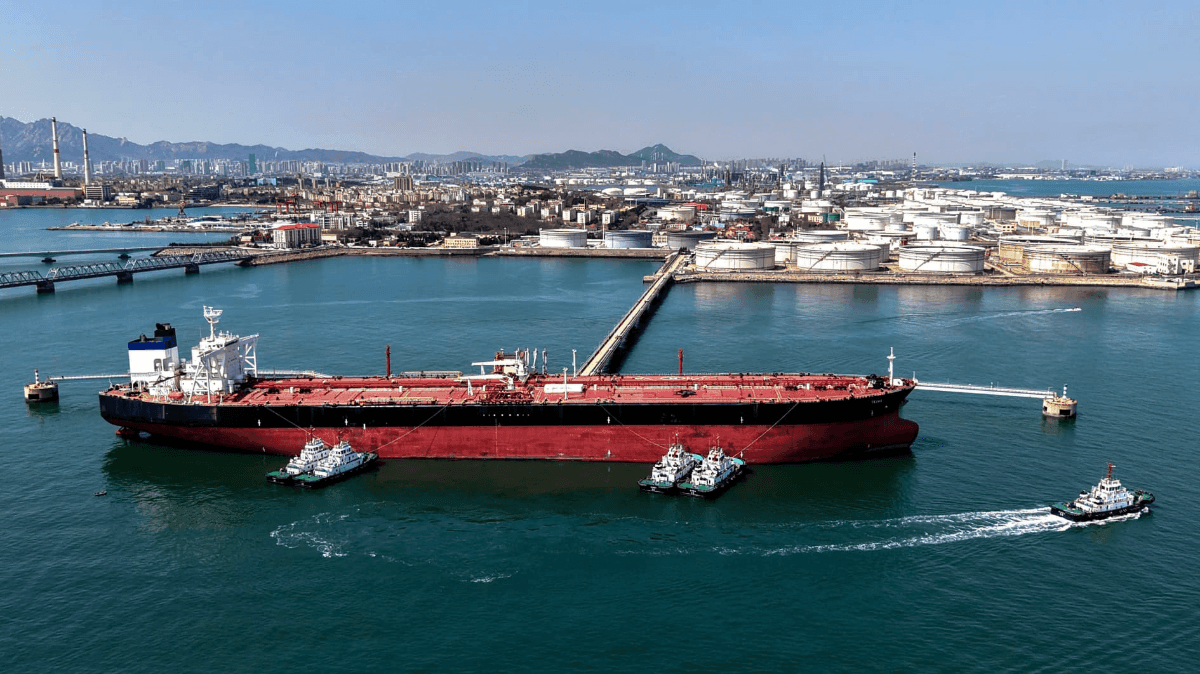
Although China remains heavily dependent on imported energy, this is not necessarily a fatal weakness, according to geopolitical and market analysts. Some observers have argued that supply tightness linked to the Iran conflict could push oil prices higher and that the United States would be less affected because it is a net exporter of oil products. Others contend that China, as the world’s largest importer of crude oil, faces greater risk.
Marko Papic, a geopolitical strategist at BCA Research, said the common view does not match the underlying realities of global oil flows. “The notion that the US could cut off China’s oil supply and disrupt China’s access to crude is completely unrealistic. There is no scenario in which a spike in oil prices benefits the US. On the contrary, President Donald Trump could be more negatively affected by higher inflation than Chinese leaders,” Papic told MarketWatch.
Papic argued that China’s reliance on imports is not a “mortal weakness” because the country can pivot within a diversified supply network. He said China can increase purchases from major suppliers such as Russia and Saudi Arabia, and can also access oil routed through “dark fleet” shipping—vessels carrying sanctioned crude that pass through hubs like Malaysia.
He added that crude oil is a fungible commodity traded on global markets. As a result, oil that Iran or Venezuela sells to China would not remain exclusive to China if access were constrained; it would flow to other markets, and China would seek alternative sources. Papic said a true shock would require an almost impossible scenario in which the entire world stopped selling oil to China.
While China may not be able to buy sanctioned oil at the same discounted prices as before, Papic said the additional cost is not large in aggregate. He also noted that China’s refineries can adjust quickly to process different crude grades, and that centralized government coordination can help the country adapt and flexibly pursue new supply sources.
Papic also cautioned that many people misperceive the United States as a net crude oil exporter. He said the US is a net exporter of refined petroleum products, not crude—an important distinction. In his view, the US remains a net importer of crude oil, and its refineries are mainly designed to process heavy crude, which makes the US somewhat less flexible than China when changing inputs.
He further argued that the structure of the US economy increases the potential downside from higher energy prices. The energy sector accounts for less than 10% of GDP and employs about 5% of the workforce, while consumption is the main driver of the economy, contributing nearly three-quarters of GDP. Papic said that if gasoline prices rise—such as to $6.50 per gallon in California or around $4 per gallon in many other states—households would likely cut spending, creating a major risk for the world’s largest economy.
Jacob Shapiro, director of research at Bespoke Group, similarly argued that the US has “more to lose” than China when energy prices rise.
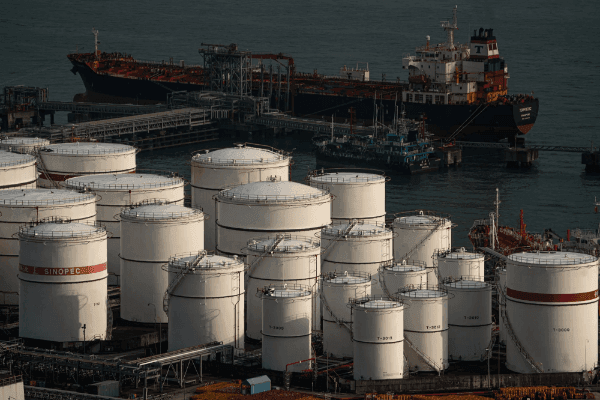
Shapiro pointed to China’s actions during the 2020 oil price collapse. When oil prices fell into negative territory due to the pandemic, China bought and stocked a large amount of crude oil. He said much of this oil is stored in underground tanks and that the scale of China’s stockpile is estimated at about 1.2 billion barrels, equivalent to 104 days of consumption.
By contrast, Shapiro said the US did not capitalize in the same way. Under both the Biden and Trump administrations, the US released strategic petroleum reserves to curb inflation. He argued that in a scenario where China truly cannot import any oil, the US would face the heavier impact.
Shapiro also noted that many goods used in daily life by Americans come from China.
Premium gym chains are entering a “golden era” that is ending or already in decline, as rising operating costs collide with shifting consumer preferences toward more flexible, community-based ways to exercise. Long-term memberships are shrinking, margins are pressured by higher rents and facility expenses, and competition from smaller, more personalized…