•
•
•
•
•
•
•
•
•
•
•
•
•
•
•
•
•
•
•
•
•
•
•
•
•
•
•
•
•
•
•
•
•


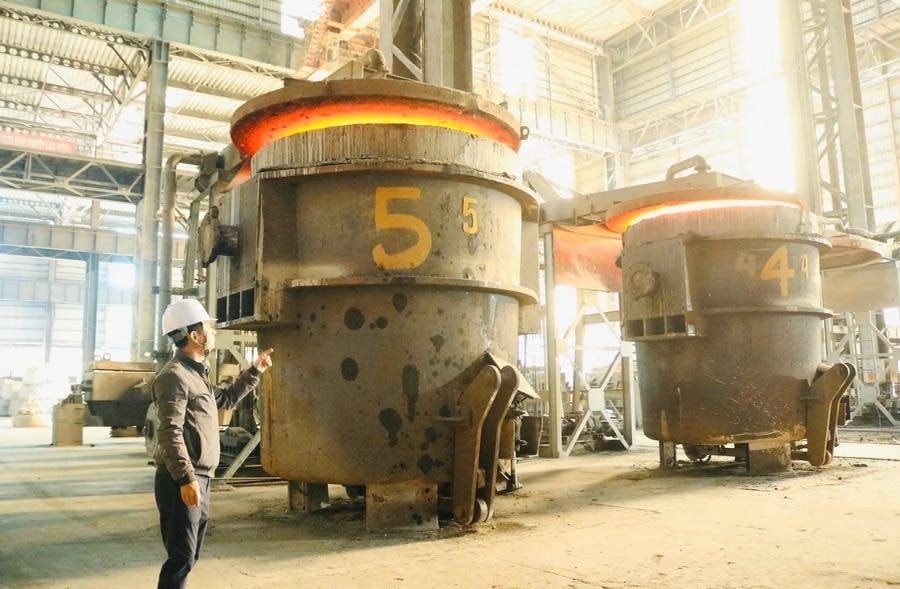
After a long period of suspension, the high furnace line at the Lao Cai steel plant, with an investment of more than VND 6,000 billion, has officially resumed operation. The plant has welcomed 1,082 staff and workers, with an average monthly income of VND 11.5 million. The restart followed the arrival of a new owner, Hanoi Capital Metals Exploration and Processing Joint Stock Company, which began operating on 20 April 2026.
Immediately after the takeover, domestic investors increased the charter capital from VND 1,200 billion to VND 3,000 billion on 21 April 2026. By June 2026, Hanoi Capital is expected to buy back all remaining equity to complete full privatization. The project is expected to contribute about 16% of the value of production in the Ta Loing/Teang Loỏng industrial zone.
In Q1 2026, crude steel production reached nearly 86,000 tonnes, while actual consumption exceeded 95,000 tonnes. Total revenue in the first three months was approximately VND 1,133 billion. The plant’s current capacity remains steady at 1,200 tonnes per day, with plans to gradually raise output to 1,500–1,800 tonnes per day to improve economic efficiency.
Despite the restart, the enterprise is still under financial pressure, reporting a loss of VND 177 billion in Q1 due to higher input costs.
The Lao Cai Steel Plant project was initially invested at over VND 6,000 billion and operated as a joint venture with Vietnam Steel Corporation (VNSTEEL) holding 46.85%, Lao Cai Minerals Company (LAMICO) holding 8.1%, and Kunming Iron & Steel (China – KISC) holding 45%. After initial operation, the project recorded losses totaling VND 1,188 billion by the end of 2016.
Cash-flow strain led to a shutdown from May 2022, which also resulted in wage arrears for about 1,262 workers totaling VND 135 billion.
A turning point came when the Chinese partner exited the joint venture and was replaced by Hanoi Capital Metals Exploration and Processing Joint Stock Company. The new owner pledged to address outstanding financial obligations, including a plan to settle VND 500 billion of tax debt and nearly VND 60 billion of social insurance debt in May 2026. Salary arrears from 2022 are also scheduled for payment to workers.
Vietnam Trung Mineral Mining and Metallurgy Co., Ltd. operates the Quy Xa iron ore mine, one of Vietnam’s largest ore deposits, with estimated reserves of about 120 million tonnes. From 2007 to 2020, the former joint venture mined roughly 20 million tonnes, which is less than 20% of the reserve.
Maintaining stable ore supply from this mine is described as a condition for the plant to optimize costs and target contributing around VND 1,100 billion to the state budget annually when operating stably. However, resolving legal and licensing issues related to Quy Xa remains the major near-term challenge for the new investor.






Premium gym chains are entering a “golden era” that is ending or already in decline, as rising operating costs collide with shifting consumer preferences toward more flexible, community-based ways to exercise. Long-term memberships are shrinking, margins are pressured by higher rents and facility expenses, and competition from smaller, more personalized…




