•
•
•
•
•
•
•
•
•
•
•
•
•
•
•
•
•
•
•
•
•
•
•
•
•
•
•
•
•
•
•
•
•


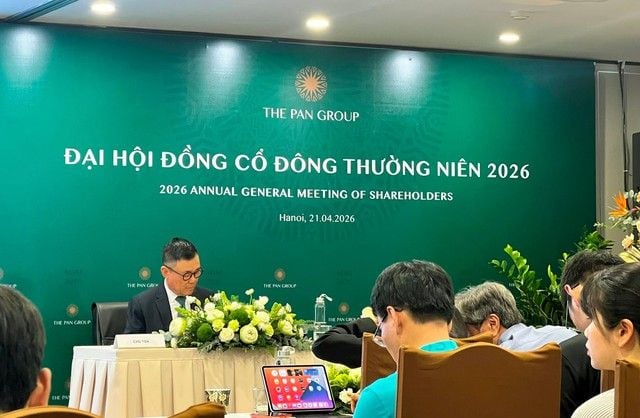
A business owner’s role, the company’s leadership said, is not to trade its own shares but to focus on increasing shareholder value through day-to-day business performance. When asked about value in terms of valuation or shareholder value, they said they can respond, but they cannot comment on stock price movements, which they described as being driven largely by short-term trading trends that form “waves.”
They also emphasized that each shareholder has different objectives—some seek short-term trading, while others accumulate shares over time. As the company grows, they said, value increases year by year. The leadership reiterated that it does not invest in trading its own shares and will concentrate on improving shareholder value based on corporate operations.
The leadership stated that PAN’s total market capitalization is currently more than VND 5 trillion. It also said that selling one non-core subsidiary accounts for more than half of PAN’s market value.
On the question of why the Bibica deal was pursued, the leadership pointed to the divestment of Bibica. It said PAN has fulfilled all commitments since investing, particularly in preserving and developing the Bibica brand sustainably. According to the leadership, when PAN took over, Bibica’s scale and brand position were limited, but after about a decade the business grew significantly and could stand on its own. Continuing to hold, they said, would not leave room for further contributions to Bibica.
PAN leadership described the company as a focused investment firm in agriculture, noting that the confectionery sector is not core. Against that backdrop, it said seeking a partner to transfer Bibica is a necessary step to restructure the investment portfolio.
For the Indonesian partner, the leadership said that while the partner does not yet have a confectionery production plant, it has pledged to continue preserving and developing the Bibica brand. The leadership added that Bibica remains Vietnamese and is not rebranded, and that PAN considers this partner suitable for long-term cooperation.
The leadership said the timing criterion for divestment is to protect shareholder interests—specifically by exiting investments that no longer align with the growth pace and by maximizing proceeds.
It also stated that PAN currently has no specific plans to divest other businesses. However, it maintains flexibility: for investments outside the core area, if a suitable price opportunity arises that delivers superior returns, the company will consider it and present it to shareholders.
On dividend policy, the leadership said that if no new investment opportunities are identified, PAN does not follow the view of distributing “all profits paid out.” Instead, it aims to sustain growth. It said cash flow in the group is managed to create value rather than remain idle; even without investment opportunities, funds will be used for financial activities to ensure profitable returns.
Finally, the leadership said shareholders can trust how funds are managed to optimize efficiency, rather than prioritizing short-term dividends.




Premium gym chains are entering a “golden era” that is ending or already in decline, as rising operating costs collide with shifting consumer preferences toward more flexible, community-based ways to exercise. Long-term memberships are shrinking, margins are pressured by higher rents and facility expenses, and competition from smaller, more personalized…




