•
•
•
•
•
•
•
•
•
•
•
•
•
•
•
•
•
•
•
•
•
•
•
•
•
•
•
•
•
•
•
•
•


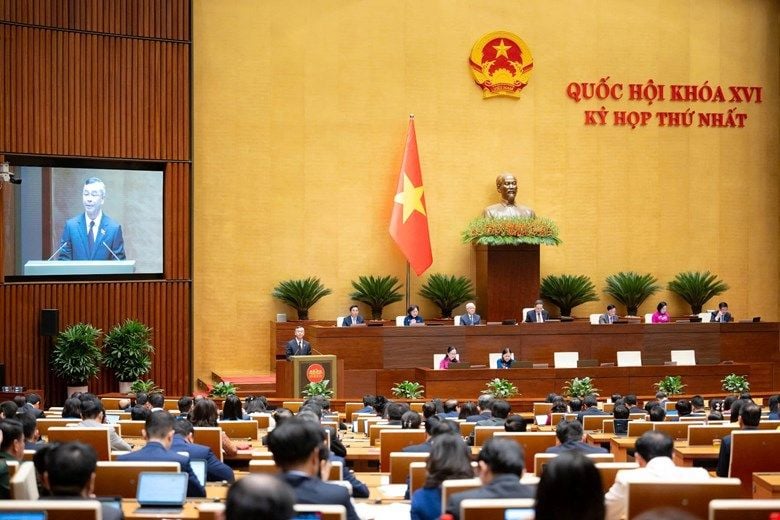
Parliament has approved the removal of the 500 million dong tax-free revenue threshold for household businesses. On April 24, 2026, the National Assembly passed amendments to several laws, including the Personal Income Tax Law, the Value-Added Tax Law, the Corporate Income Tax Law, and the Special Consumption Tax Law, with 466 of 488 deputies voting in favor.
The amended rule provides that individuals who are resident and have production and business activities with annual revenue at or below the government-set threshold will not be subject to personal income tax.
Under the new approach, the threshold of 500 million dong will no longer be fixed in law. Instead, the government will specify the annual revenue threshold in detail, based on macroeconomic indicators and budget balancing considerations.
Finance Minister Ngo Van Tuấn said the revenue threshold used to determine VAT exemption and corporate income tax exemption is dynamic and will be defined by the government. He added that macroeconomic conditions—including fiscal policy, tax policy, growth, interest rates, exchange rates, employment, income, war, supply disruptions, and changes in consumer behavior—affect purchasing power, costs, and the business environment.
The government will assess and analyze impacts in detail when setting the threshold, with the aim of ensuring household businesses can remain viable, transition to enterprises, preserve revenue, and support growth with high social outcomes.
The minister also noted a proposal to raise the threshold to 1 billion dong, to be specified in detailed implementing documents.
Tax authorities’ calculations indicate that about 2.56 million households or individuals currently have annual revenue below 1 billion dong.
Under the proposal, the budget impact would be about 16.65 trillion dong less in 2025 under the lump-sum taxation regime and a non-taxable threshold of 100 million dong per year. It would be about 4.85 trillion dong less compared with the current policy, which already raised the non-taxable threshold to 500 million dong per year.







Premium gym chains are entering a “golden era” that is ending or already in decline, as rising operating costs collide with shifting consumer preferences toward more flexible, community-based ways to exercise. Long-term memberships are shrinking, margins are pressured by higher rents and facility expenses, and competition from smaller, more personalized…