•
•
•
•
•
•
•
•
•
•
•
•
•
•
•
•
•
•
•
•
•
•
•
•
•
•
•
•
•
•
•
•
•


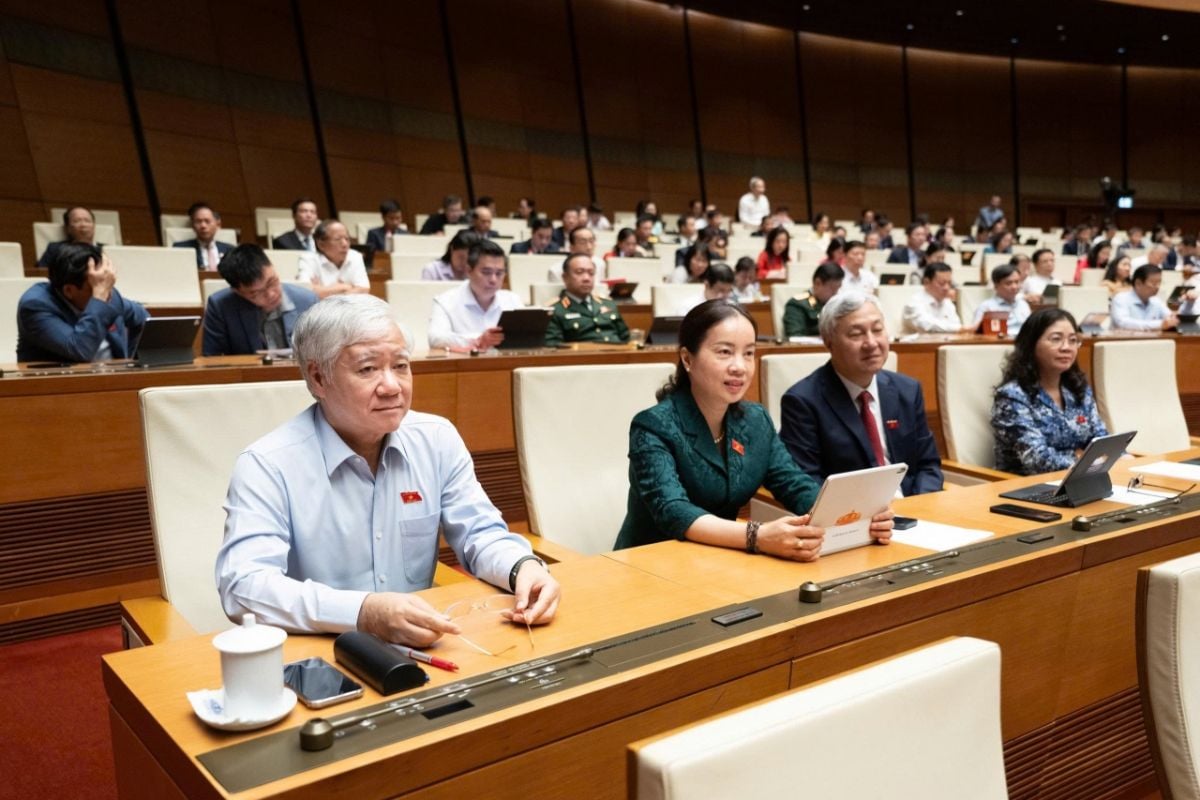
On the morning of April 23, 2026, the National Assembly discussed the draft oversight program for 2027, with MPs calling for a shift in oversight approach toward a more data-driven model focused on development outcomes, clearer accountability, and the unlocking of resources that have been constrained.
MP Thach Phuoc Binh, representing the Delegation of the National Assembly of Vinh Long Province, said oversight of key national projects and strategic infrastructure—including the North–South high-speed railway, Long Thanh International Airport, and ring roads and expressways—should be fundamentally reformed.
He argued that oversight should not be limited to checking disbursement progress or construction. Instead, it should assess overall efficiency and real socio-economic impact, and answer core questions such as whether projects have achieved their initial strategic objectives and whether there is a risk of wasting national resources due to overruns or delays.
He also proposed strict implementation of the draft Resolution’s provisions on clearly defining the responsibility of individuals and agencies after oversight conclusions. In his view, genuine changes in national governance and strengthened public trust require oversight to be linked to a transparent accountability mechanism with strong corrective measures for existing shortcomings.
MP Be Trung Anh, representing the Delegation of the National Assembly of Dak Lak Province, said achieving the goal of “oversight to create development” requires moving to a data-driven oversight model. He linked this to the broader direction of building an “adaptive state,” with a two-tier local government apparatus and the advancement of a digital government, governance by data, and real-time operations.
He warned that if the National Assembly does not change its oversight method, it risks falling into “past oversight” even as the issues are present. He proposed adding adaptive and ad hoc oversight mechanisms, allowing the Standing Committee of the National Assembly to decide on immediate supervision when major issues arise, without waiting for a plenary session.
MP Ta Dinh Thi of Hanoi proposed continuing to deepen decentralization and granting more initiative to parliamentary bodies in conducting early, remote specialized oversight. She also advocated elevating “explanation” as an effective oversight tool to clarify ministerial or departmental responsibilities before problems become entrenched.
She further called for improving the effectiveness of “oversight results” to “hoàn thiện pháp luật” (improve legislation). She noted that many National Assembly resolutions after oversight have yet to be institutionalized.
“Therefore, I propose that post-oversight resolutions include specific targets and binding accountability mechanisms; even in the Resolution on the 2027 Oversight Program, there should be emphasis on monitoring and urging. The Government should present a separate report on addressing oversight recommendations,” MP Ta Dinh Thi stated.
MP Hoang Van Nghia of Quang Ngai Province argued for a strong shift in oversight thinking toward creation and development, and the unlocking of resources. He proposed repositioning parliamentary oversight away from merely scrutinizing and toward building a better legal framework and removing impediments, while strictly controlling power to ensure it serves the public interest.
He also called for strengthening supreme oversight so that Parliament can truly act as a bridge of trust, bringing policy “lifeblood” into the chamber. He said decisions should center on the satisfaction of citizens and businesses, address urgent development issues involving green, fast, and sustainable growth, and reform oversight through policy dialogue and multi-perspective listening.
Premium gym chains are entering a “golden era” that is ending or already in decline, as rising operating costs collide with shifting consumer preferences toward more flexible, community-based ways to exercise. Long-term memberships are shrinking, margins are pressured by higher rents and facility expenses, and competition from smaller, more personalized…