•
•
•
•
•
•
•
•
•
•
•
•
•
•
•
•
•
•
•
•
•
•
•
•
•
•
•
•
•
•
•
•
•


Petrolimex has announced its plan to contribute capital to establish Vietnam Green Energy Infrastructure Joint Stock Company (VGX), a venture focused on electric-vehicle charging services, battery swapping for electric motorcycles, and related support services. VGX will begin with charter capital of 100 billion dong, of which Petrolimex will contribute 35 billion dong, equivalent to 35% of the charter capital.
VGX is a joint venture between Petrolimex, Xuan Cau Holdings and Selex Motors. Petrolimex Chairman Pham Van Thanh said the company was created with a clear mission to develop open energy infrastructure for electric vehicles, including motorcycles, cars and other electric vehicles, serving the public and accessible to all brands.
According to the company’s roadmap, from 2026 to 2027 VGX will lay the foundation in Hanoi, Ho Chi Minh City and other key urban areas. The plan includes building a network of battery-swapping stations for electric motorcycles and fast-charging stations for cars, as well as developing an energy-management technology platform and carbon credits.
From 2028 to 2030, VGX’s network is expected to expand along major transport corridors and integrate renewable energy—particularly solar power and storage—directly at charging and swapping stations.
Pham Van Thanh emphasized that the initiative is not a pilot project, but the start of a new energy ecosystem. He said Petrolimex’s existing fuel stations will gradually evolve into multi-energy hubs, providing fuel, battery swaps, charging services, and rooftop solar power as part of Vietnam’s green energy transformation over the coming decade.
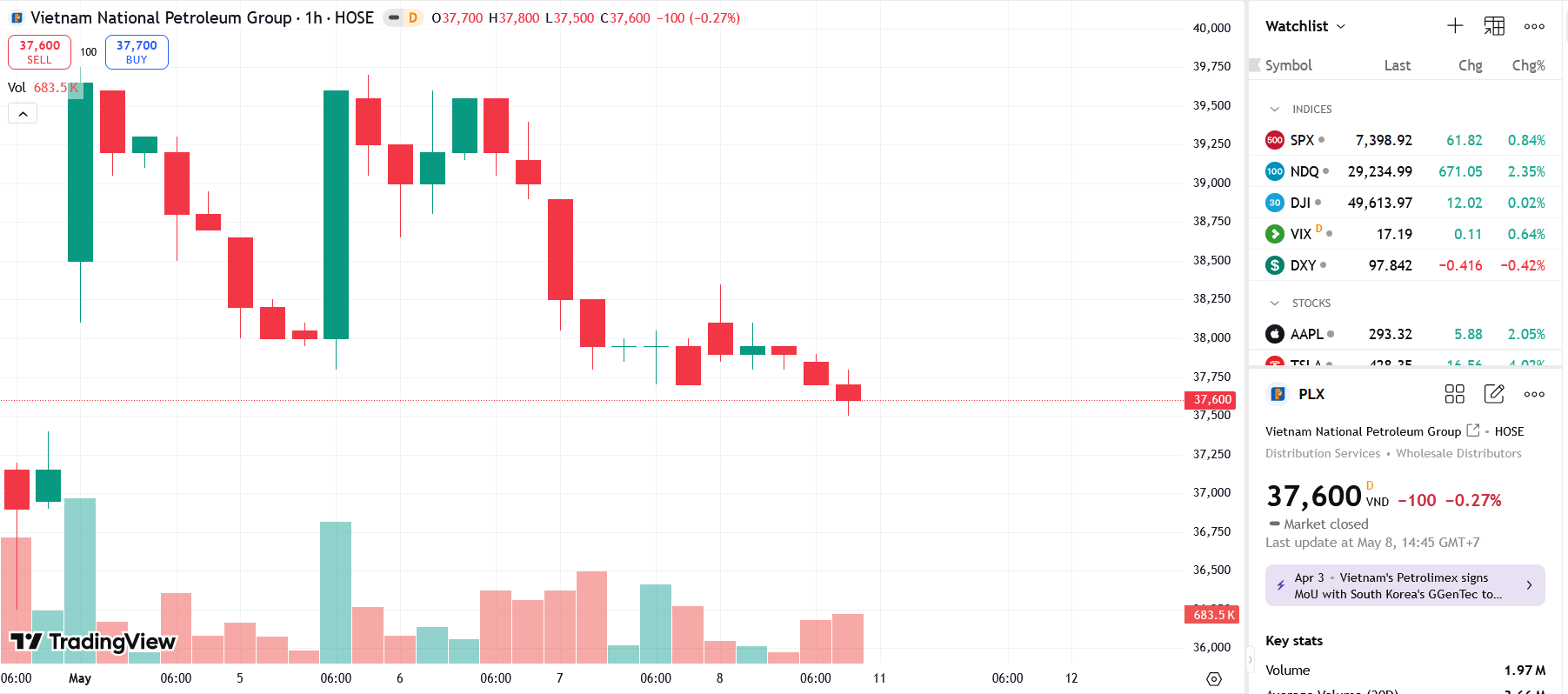
In a separate disclosure, Petrolimex (PLX) reported that net profit after tax on the parent company’s financial statements for Q1 2026 was a loss of 1,147.565 billion dong, compared with a profit of 22.99 billion dong in the same period last year. On a consolidated basis, net profit after tax for Q1 2026 was a loss of 662.477 billion dong, versus a profit of 210.769 billion dong in the prior year, representing a decline of about 414%.
PLX said the group’s after-tax profit fell sharply year-on-year. While profits from other business activities remained stable and increased by 15% year-on-year, fuel activities (gasoline) recorded a loss of 930 billion dong, compared with a loss of 11 billion dong in the prior year.
The company cited two main causes:

Premium gym chains are entering a “golden era” that is ending or already in decline, as rising operating costs collide with shifting consumer preferences toward more flexible, community-based ways to exercise. Long-term memberships are shrinking, margins are pressured by higher rents and facility expenses, and competition from smaller, more personalized…