•
•
•
•
•
•
•
•
•
•
•
•
•
•
•
•
•
•
•
•
•
•
•
•
•
•
•
•
•
•
•
•
•


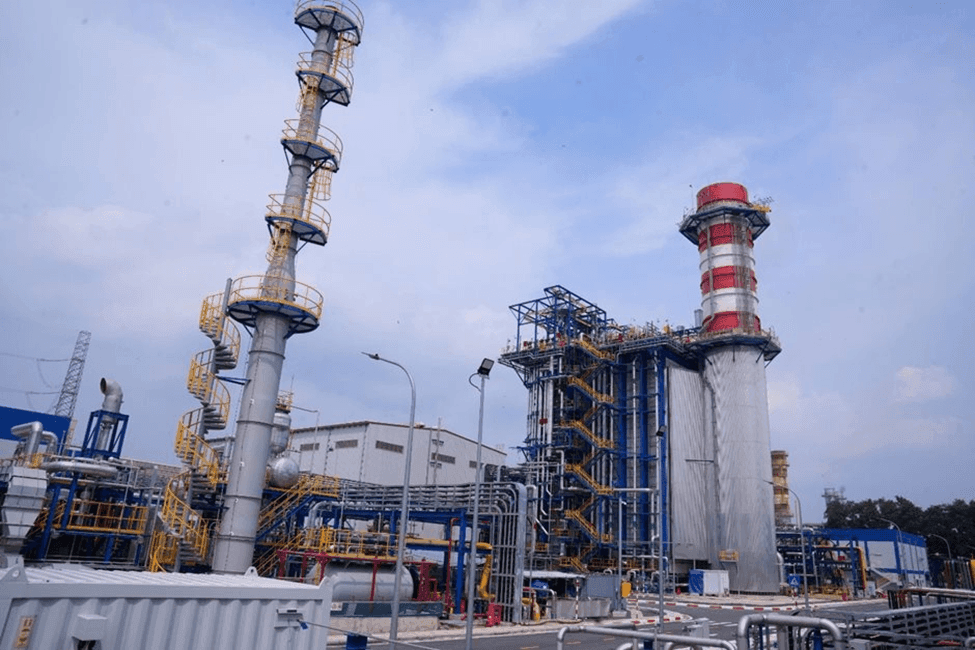
In April and during the first four months of 2026, PetroVietnam (Vietnam Oil and Gas Group) reported positive growth across key production and business indicators, with a focus on ensuring stable crude oil supply to domestic refineries and securing energy products including gasoline, diesel and gas to support market stability and national energy security.
A core pillar of PetroVietnam’s fuel-supply strategy is maintaining high, stable and continuous operation at the Dung Quất and Nghi Sơn refineries. With strong domestic demand for gasoline and diesel and potential volatility in imported markets amid geopolitical developments, stable refinery throughput is intended to reduce dependence on external suppliers.
In parallel, PetroVietnam continued exploration and production activities and advised on policy mechanisms to secure additional crude oil sources. The group noted that sustaining maximum refinery throughput requires stable and competitive crude input.
PetroVietnam said upstream and midstream activities are closely linked. By developing and bringing new oil fields on stream while optimizing output from existing fields, the group aims to stabilize the entire chain rather than focusing on a single segment.
In the first four months of 2026, six key production indicators surpassed their plans. These include:
The group’s outperformance across both energy and chemical fertilizer activities indicates that PetroVietnam is not only maintaining stability in traditional oil and gas operations, but also supplying essential inputs for agriculture and industry.
Crude oil output was a standout contributor. For the first four months of 2026, crude oil production rose 14.3% year-on-year. In Q1 2026, crude oil output across the group reached 2.63 million tonnes, up 10.4%, with domestic crude up 12%.
PetroVietnam said this growth occurred amid energy-market volatility driven by the Middle East conflict, underscoring its ability to organize and optimize field operations.
At the Dung Quất Biofuel Plant, PetroVietnam is producing and supplying ethanol for BSR blending to help control the quality of E10 gasoline for the market.
BSR, in coordination with PVOIL, advanced the development of ethanol gasoline E10 and said it has formed an integrated production–distribution chain, ready for nationwide deployment from May 2026.
In refining operations, BSR maintained high throughput at the Dung Quất refinery at approximately 124–125% of standard capacity on average, described as an optimal operating level that balances safety with output maximization under favorable market conditions.
In Q1 2026, BSR produced more than 1.99 million tonnes of various products, contributing to securing domestic fuel supply, stabilizing the market and supporting national energy security.
In the gas industrial sector, PV GAS delivered strategic cargoes amid market volatility. PetroVietnam cited that the LNG carrier FAT’H AL KHAIR arrived at Thi Vie port with 63,000 tonnes of LNG on March 10, and the Clipper Vanguard arrived with nearly 38,000 tonnes of LPG from Australia on March 20.
PetroVietnam also said PV GAS, together with EVN and PV Power, signed agreements to supply LNG for large-scale gas-fired power projects. The group described this as a step toward building a national LNG-supply system, with PV GAS positioned as a central player across the value chain from import to consumption.
PetroVietnam said PVEP, Vietsovpetro and PVEP-NCS, along with PV Drilling, completed the restart of PV Drilling and is ready to bring the multi-purpose jack-up PV DRILLING IX into commercial operation from April 2026. The group said this signals that the oilfield services supply chain is being reactivated, supporting faster exploration and development progress.
PetroVietnam Chairman Le Ngoc Son said the group’s mandate goes beyond meeting production targets and includes improving governance quality, forecasting capability and flexible operating capacity. He cited unpredictable oil-price dynamics and international geopolitics, and said leadership should develop multi-level operating scenarios to respond promptly to potential events and ensure stable, efficient production and business operations.
With a governance reform mindset emphasizing decisive execution, accountability and practicality, PetroVietnam aims to complete by May and in Q2 2026 the highest possible performance on its tasks, establishing a foundation to deliver the 2026 production and business plan and continue playing a core role in ensuring national energy security.
Premium gym chains are entering a “golden era” that is ending or already in decline, as rising operating costs collide with shifting consumer preferences toward more flexible, community-based ways to exercise. Long-term memberships are shrinking, margins are pressured by higher rents and facility expenses, and competition from smaller, more personalized…