•
•
•
•
•
•
•
•
•
•
•
•
•
•
•
•
•
•
•
•
•
•
•
•
•
•
•
•
•
•
•
•
•


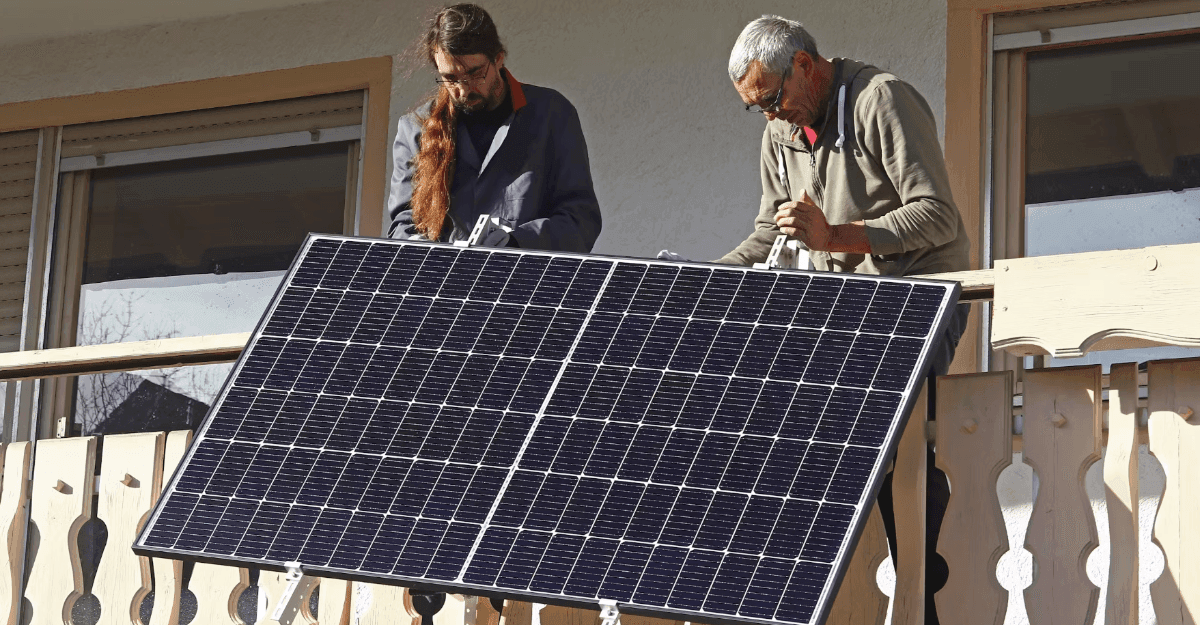
Plug-in solar panels are not a replacement for large-scale renewable energy, but they can deliver clear financial benefits for households and broaden participation in the energy transition. Unlike traditional rooftop solar, plug-in systems can be connected directly to a home outlet using an integrated micro-inverter, avoiding additional wiring or building work. By reducing electricity drawn from the grid, they can lower household electricity bills.
Compared with fixed rooftop systems that typically require professional installation, plug-in panels are smaller—often one or two panels—and can be placed on balconies or outdoor spaces. They plug into a home outlet through a built-in micro-inverter, with no extra wiring required. This setup can reduce grid electricity consumption and translate into lower electricity costs.
Amid rising living costs and energy prices, the UK government has announced a clean energy package aimed at strengthening national energy security. A key element is a plan to popularize plug-in solar across the country, including retail rollouts at major stores such as Lidl and Sainsbury’s within months.
Market reports indicate strong adoption in Germany, where officially registered plug-in solar systems have surpassed 1 million, with realistic estimates as high as 4 million when unregistered installations are included. Growth is also reported in France, Spain, the Netherlands, and the United States. In the UK, EcoFlow—one of the main suppliers—has reported online stock sell-outs even before an official government announcement.
The government said it would coordinate with relevant agencies to update electricity regulations. The UK Institute of Engineering and Technology (IET) advised households to check electrical wiring before installation to ensure safety.
Using the European PVGIS database for solar irradiance, panels facing south at an approximately 40-degree tilt can generate about 820 kWh per year in London, with a load factor of around 12%. Actual output is often lower due to suboptimal installation conditions such as balcony placement, misalignment, or shading.
Solar Power Europe says these factors can reduce output by 30–60% versus an optimal setup. Carbon Brief’s analysis assumes a 45% reduction, which corresponds to a load factor of about 6%.
If a household can directly use 90% of the solar production (typical for plug-in systems), the panels would provide roughly 400 kWh per year. That could meet about 15% of a typical household’s electricity needs. Self-consumption can be improved by running appliances such as washing machines and dishwashers during peak sun hours (10:00–15:00).
With electricity prices forecast for July 2026 at 27 pence per kWh (about 8,500 VND per kWh), annual savings are estimated at about £110. The upfront cost for an 800 W system is around £500, implying a payback period of roughly 5 years. Assuming a 15-year system life, total net savings could reach around £1,100.
However, outcomes are sensitive to usage and price assumptions. If a household uses only 50% of produced energy, annual savings could fall to about £60 and payback could extend to nearly 9 years. If electricity prices rise to 34 pence per kWh (as seen during the 2022 gas crisis), annual savings could increase to about £140, shortening payback to under 4 years. Further cost reductions—such as panels and inverters to around £350 for an 800 W system—would improve user benefits.
At a national scale, if 3 million households adopted plug-in solar—matching Germany’s current trajectory—total annual electricity output would be about 1.2 TWh, representing less than 1% of UK demand. The impact on national emissions would be modest.
Even so, the energy-security effect could be meaningful. The article estimates that if 3 million households save over £330 million per year and the solar output replaces roughly the equivalent of two LNG-carrier imports per year, the contribution to reducing reliance on imported fuels would be significant.
The article argues that the biggest benefit of plug-in solar is enabling participation by groups previously excluded from the energy transition. In the UK, renters account for about one-third of households and typically lack control over rooftop solar installations or heat pumps. People in flats, cramped spaces, or with unsuitable roofs also face barriers.
Plug-in solar changes this by requiring a low initial investment (around £500), avoiding building modifications, not requiring landlord consent, and remaining portable when moving homes. This gives renters, middle-income households, and people in constrained spaces access to clean energy within their own homes, supporting a broader redistribution of decarbonization benefits beyond traditional homeowner advantages.

Premium gym chains are entering a “golden era” that is ending or already in decline, as rising operating costs collide with shifting consumer preferences toward more flexible, community-based ways to exercise. Long-term memberships are shrinking, margins are pressured by higher rents and facility expenses, and competition from smaller, more personalized…