•
•
•
•
•
•
•
•
•
•
•
•
•
•
•
•
•
•
•
•
•
•
•
•
•
•
•
•
•
•
•
•
•


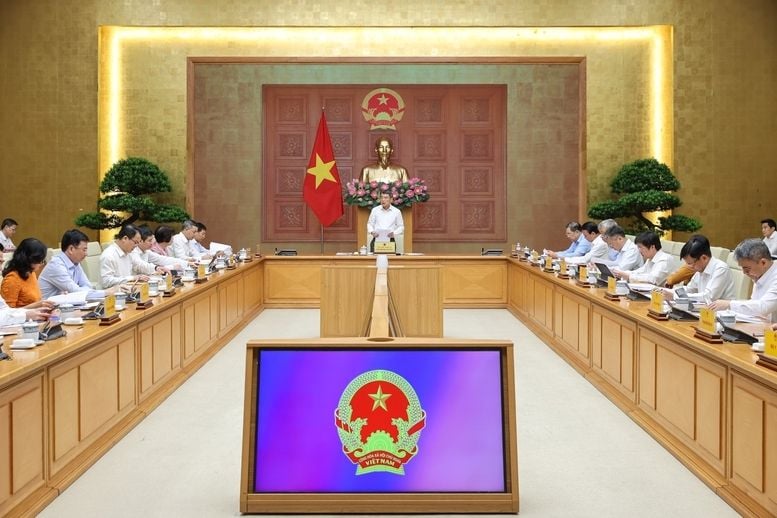
On April 29, 2026, Prime Minister Lê Minh Hưng chaired a working session with the Ministry of Finance on the status of tasks implemented in the first months of 2026 and directions and priorities for the time ahead. During the meeting, on behalf of the Government, Prime Minister Lê Minh Hưng commended and appreciated the Ministry of Finance's efforts after reorganizing its institutional apparatus. In the context of rapidly and unpredictably changing global conditions, the Prime Minister affirmed the need to remain steadfast in achieving high growth. The Prime Minister emphasized the need to shift from a management mindset to serving and creating a favorable environment for production and business. The leadership also noted that to mobilize resources, total capital needed for socio-economic development is about 1.7–2 times higher than the previous term, while the State budget can meet only 20–22%. Therefore, social mobilization channels such as the stock market, bonds, and privatization of state-owned enterprises will play a key role. The Prime Minister called for strong measures to ensure the stock market becomes a truly important funding channel, stating that discipline must be maintained so the market operates openly and transparently, increasing investor and public confidence. To raise stock market capitalization to 120% of GDP by 2028 and capitalize on the opportunity when FTSE Russell confirms upgrade to emerging market status, the Ministry of Finance was instructed to promptly finalize the corporate bond decree, restructure SCIC, and study establishing a national investment fund in Q2 2026. In tax and budget matters, the Prime Minister urged tax policy neutrality, base erosion and profit shifting controls, and measures to curb revenue leakage while nurturing sources of revenue. Specifically, policies increasing the turnover threshold for small businesses to 1 billion VND and effective tax and fee exemptions and reductions to support people and enterprises should be implemented. The Prime Minister also stressed the tasks on revenue and expenditure management, highlighting the leading role of the central budget and tax policy neutrality, and called for improvements to tax provisions, broader bases, closing gaps, tapping remaining revenue potential, and reducing leakage to drive development. In institutional reform, the Prime Minister directed the Ministry of Finance to study merging the State Budget Law and the Public Investment Law, amend related laws such as the Procurement Law and the Customs Law, and accelerate digital transformation and data usage in tax administration and macro management. He also asked for tightened discipline in disbursing public investment, a reduction of at least 30% in the number of central-budget projects for 2026–2030, and legal frameworks to fully address public assets, especially state-owned housing and land in Hanoi and Ho Chi Minh City. The Ministry of Finance is also tasked with finalizing plans to advance the restructuring and privatization of state-owned enterprises for efficiency, continuing to attract foreign investors, and developing a comprehensive reform plan for Vietnam’s financial market aligned with high, sustained growth through 2045. In conclusion, the Prime Minister requested the Ministry of Finance to promptly develop growth scenarios and coordinate closely with other ministries to ensure energy security and adequately prepare national reserve resources to avoid surprises in any scenario.

Premium gym chains are entering a “golden era” that is ending or already in decline, as rising operating costs collide with shifting consumer preferences toward more flexible, community-based ways to exercise. Long-term memberships are shrinking, margins are pressured by higher rents and facility expenses, and competition from smaller, more personalized…