•
•
•
•
•
•
•
•
•
•
•
•
•
•
•
•
•
•
•
•
•
•
•
•
•
•
•
•
•
•
•
•
•


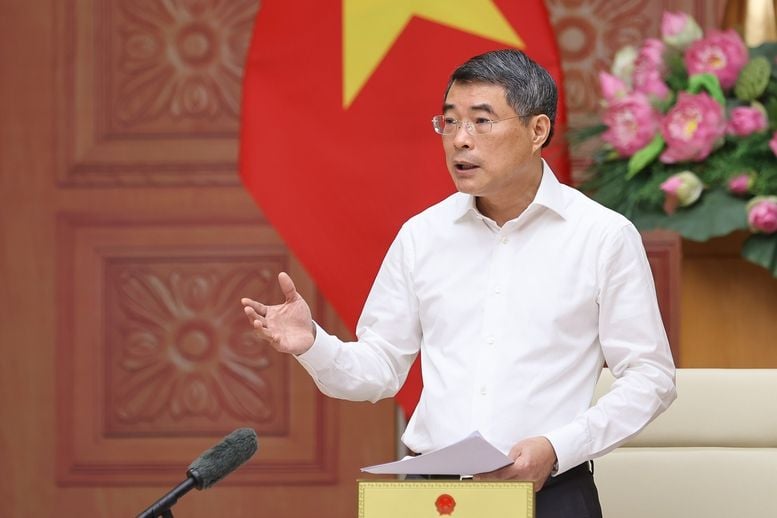
On the morning of April 29, 2026, Prime Minister Lê Minh Hưng chaired a meeting with the Ministry of Finance to review results, remaining issues and limitations, and their causes. The meeting also focused on analyzing growth drivers, economic bottlenecks, and the capacity to mobilize and use resources effectively, alongside measures to deliver the two-digit growth target set out in Conclusion 18-KL/TW of the Second Central Committee.
In his closing remarks, the Prime Minister praised the Ministry of Finance for its efforts and key outcomes, particularly following the reorganization of the agency and the handling of a large workload.
Looking ahead, he urged the Ministry to move from a management mindset to a service approach—creating an environment that supports production and business investment. He also called for stronger forecasting capacity and improved policy responsiveness to new conditions.
To achieve targets, including two-digit growth, the Prime Minister emphasized the need for solutions to mobilize state and social resources, both domestic and international, for socio-economic development. He cited an estimated total capital requirement of about 1.7–2 times that of the previous term, with state budget capital accounting for roughly 20–22%.
He also stressed maintaining market discipline and transparency in the stock market, tightening tax management to reduce revenue leakage, nurturing revenue sources, and expanding the tax base. The Prime Minister further directed the Ministry to accelerate digital transformation, apply data in management and operations, and reform processes, while finalizing the institutional framework for market development.
Among the core tasks, the Prime Minister directed the Ministry to develop and implement the Project on building an independent, autonomous economy integrated with international integration, scheduled for completion in Q3 2026. He also asked the Ministry to coordinate with the Policy and Strategy Center to draft a resolution on the national development model in the new period, based on science, technology, innovation, and digital transformation, for the Central Party’s Third Conference.
In Q2, the Ministry was tasked with finalizing the formulation, adjustment, and approval of planning within the planning system to ensure coherence with the two-digit growth target. The Prime Minister also called for completing laws addressing state assets and reviewing and improving sector standards and technical-economic norms.
The meeting highlighted revenue and expenditure tasks, including the leadership role of the central budget and neutrality in tax policy. The Prime Minister directed the Ministry to study and refine provisions on various taxes, widen the tax base, curb erosion of revenue sources, exploit remaining revenue potential, and foster revenue to support development.
He also instructed effective implementation of tax relief policies to support businesses and people, including raising the threshold for household businesses not subject to tax to VND 1 billion. He further called for savings in regular expenditures and an increase in development investment.
On the stock market, the government stressed the need for strong measures to develop it into a genuine mid- to long-term funding channel. The Prime Minister directed the prompt amendment and completion of the decree on corporate bonds, and the completion and enforcement of related regulations to promote the development of the International Financial Center.
The Ministry of Finance was also asked to complete plans to accelerate state-owned enterprise restructuring and privatization, propose solutions to continue attracting foreign investors, and develop a comprehensive reform proposal for Vietnam’s financial market aligned with sustained growth through 2045.
To improve the investment climate, the Prime Minister urged strict and timely implementation of guidelines to reduce administrative procedures, business conditions, compliance time and costs, and procedures and sectors under the Ministry of Finance’s management.
The Prime Minister instructed the Ministry to implement conclusions of the General Secretary and President on national stockpiles. He also called for strengthening analytical and forecasting capacity to proactively prepare resources for stockpiling and avoid surprises under any scenario. In coordination with the Ministry of Industry and Trade, the Ministry of Finance was asked to study and build a national strategic fuel reserve to ensure energy security.
At the first session of the Sixteenth National Assembly, amendments to several provisions of the Personal Income Tax Law, Value-Added Tax Law, Corporate Income Tax Law, and Special Consumption Tax Law were passed. The government was tasked with defining the threshold for tax-exempt turnover for individuals and households.
In the draft decree under consideration by the Ministry of Finance, the tax-exempt turnover is planned to be raised to VND 1 billion per year, double the current regulation. The Tax Authority also released an important notice.





Premium gym chains are entering a “golden era” that is ending or already in decline, as rising operating costs collide with shifting consumer preferences toward more flexible, community-based ways to exercise. Long-term memberships are shrinking, margins are pressured by higher rents and facility expenses, and competition from smaller, more personalized…