•
•
•
•
•
•
•
•
•
•
•
•
•
•
•
•
•
•
•
•
•
•
•
•
•
•
•
•
•
•
•
•
•


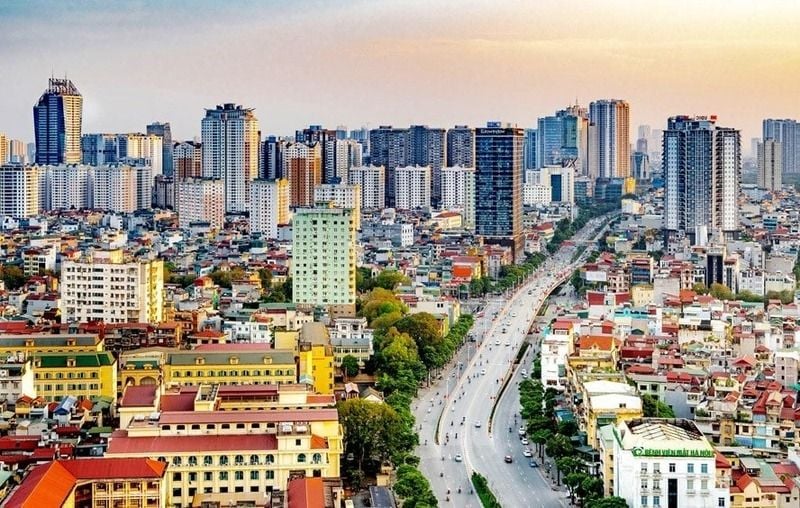
The Ministry of Construction is seeking public feedback on a draft report adjusting Vietnam’s master plan for the urban and rural system for the 2021–2030 period, with a vision to 2050. The draft outlines expected changes in urbanization, spatial development priorities, and the evolving roles of urban and rural areas.
Under the draft, Vietnam’s urbanization rate is expected to exceed 50% by 2030. The urban system should develop with higher quality, efficiency, and sustainability, with priority given to compact urban development, transit-oriented development (TOD), and the efficient use of space.
For rural areas, the draft calls for comprehensive development aimed at improving incomes and living standards, while completing rural centers and essential infrastructure in a basic way.
By 2050, the urbanization rate is targeted to reach 70–75%, with rural areas developing in harmony with cities.
The draft report also reviews implementation of the Urban and Rural System Plan under Decision No. 891/QD-TTg (2024), noting progress in both scale and quality. It states that Vietnam’s urban and rural systems have strengthened their roles in socioeconomic development.
According to the draft:
The draft says that from 2025 onward, the urban and rural system will undergo changes that fundamentally alter the traditional approach to planning.
The urban system is expected to move away from developing as separate points and instead form large urban regions, clusters, and chains linked to national and interregional economic corridors.
Rural areas, the draft states, will no longer be treated as spaces separate from urban areas. Instead, they are expected to become increasingly integrated with urban development.
The draft emphasizes that new development drivers are reshaping the functions of urban and rural spaces.
Cities connected to strategic infrastructure—such as seaports, airports, international border gates, logistics centers, and economic corridors—are described as becoming hubs for trade, diffusion, and development leadership.
Meanwhile, many rural areas, particularly after commune-level administrative restructuring, are described as shifting from purely agricultural spaces toward multi-functional areas. These spaces are expected to combine urban attributes with production, ecology, and development reserves.
Despite rapid urbanization, the draft highlights several issues in development quality and spatial organization:
The draft points to urbanization shaping urbanized areas, transitional urban–rural zones, and integrated development areas—especially within commune-level administrative units after restructuring. It says these areas mix urban and rural characteristics, but their roles, functions, and management approaches are not clearly defined in the current planning system.
Based on current conditions and the new development context, the Ministry of Construction assesses that by 2030 (with a vision to 2050), Vietnam’s urban and rural system is likely to develop along several directions:
The draft states that large cities will form expanding urban regions integrating multiple constituent cities, while provincial-level central cities and sub-regions will strengthen their roles in regional networks. It also anticipates specialized urban spaces related to industry, logistics, tourism, seaports, and airports.
Urbanization is expected to continue expanding and forming urban–rural transition zones, spreading toward peri-urban areas, along development corridors, and toward rural areas with favorable conditions.
Premium gym chains are entering a “golden era” that is ending or already in decline, as rising operating costs collide with shifting consumer preferences toward more flexible, community-based ways to exercise. Long-term memberships are shrinking, margins are pressured by higher rents and facility expenses, and competition from smaller, more personalized…