•
•
•
•
•
•
•
•
•
•
•
•
•
•
•
•
•
•
•
•
•
•
•
•
•
•
•
•
•
•
•
•
•


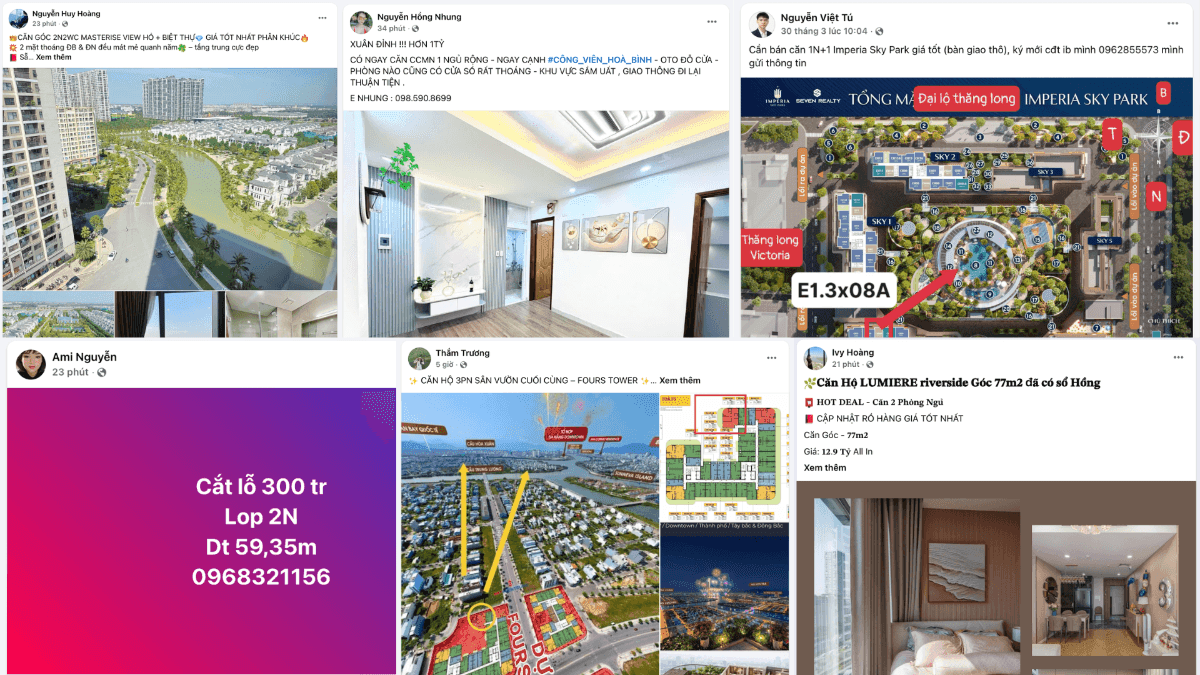
As Vietnam's real estate market enters a recovery phase, the sector is witnessing a paradox: although transaction momentum has warmed, brokers remain under pressure. Income has not kept pace with the effort expended, and brokers’ standing is being challenged by fundamental changes in customer behavior and new regulatory requirements.
The “era” of brokerage built on information asymmetry is gradually ending. “Dark corners” where profits were generated from opaque planning information or price gaps are narrowing. As information becomes less of a privilege, traditional approaches—such as mass telesales, fake listing advertisements, or reliance on shallow personal networks—are proving less effective.
The spread of fake information is increasing customers’ verification costs, contributing to defensive and suspicious attitudes toward broker pitches. The article notes that up to 80% of customers decline calls after hearing about a real estate project. As trust erodes, brokers must spend multiple times more time and effort proving product authenticity rather than focusing on core value advisory.
Real estate information marketed by brokers is also spreading across social networks, but conversion rates remain low.
In advertising channels, cost pressure on digital platforms continues to rise due to competition, while the quality of leads remains unstable. Many brokers must spend tens of millions of dong per month on advertising, yet low conversion rates reduce profits.
The article highlights that new laws require brokers to hold a professional license and to operate within a company or brokerage. While intended to increase market transparency, the rules also act as a stringent filter. Traditional individual brokers seeking to survive this “narrow gate” must pivot—shifting from selling houses to selling “data” and “trust.”
In a market increasingly demanding standardization and transparency, those who do not upgrade their operational capabilities may be gradually eliminated for failing to convert opportunities into results.
The market cleansing is described as an inevitable step as technology and data take center stage and digital transformation accelerates. Technology is no longer treated as a luxury tool; it is positioned as an operating system to standardize trust.
Mr. Nguyen Manh Khoi, Deputy Director of the Department of Housing and Real Estate Market Management under the Ministry of Construction, said real estate businesses must base operations on digital technology. He also emphasized the need for connectivity among investors, and for associations and customers to connect on a platform to ensure seamless information exchange.
To address bottlenecks, the article points to the upcoming OneHub—a technology platform developed from the One Mount digital ecosystem—expected to accelerate transformation in real estate and brokerage. It is described as a data backbone designed to push brokers toward transparency standards.
By inheriting One Mount’s technology credentials, data, and AI, OneHub is presented as an “intelligent assistant” to digitize the full professional process and reduce reliance on manual, traditional tasks. The article argues that as the playing field becomes fairer—where each house is verified and each transaction is protected—the brokerage profession can be elevated to a new level.
Experts cited in the article say the current situation is not only cycle volatility, but also a screening process starting from mindset and operational approach. Those who cling to older thinking may fall out of step with digitalization, while those who adapt early and work with modern ecosystems can scale and increase income sustainably.
The article concludes that repositioning brokerage value in the digital age requires standardization through transparent algorithms and the ability to maximize value delivered to clients. As technology functions as an operating system to unlock data flows, information barriers are expected to be reduced, enabling a new generation of brokers to operate professionally, efficiently, and precisely in each transaction.
Premium gym chains are entering a “golden era” that is ending or already in decline, as rising operating costs collide with shifting consumer preferences toward more flexible, community-based ways to exercise. Long-term memberships are shrinking, margins are pressured by higher rents and facility expenses, and competition from smaller, more personalized…