•
•
•
•
•
•
•
•
•
•
•
•
•
•
•
•
•
•
•
•
•
•
•
•
•
•
•
•
•
•
•
•
•


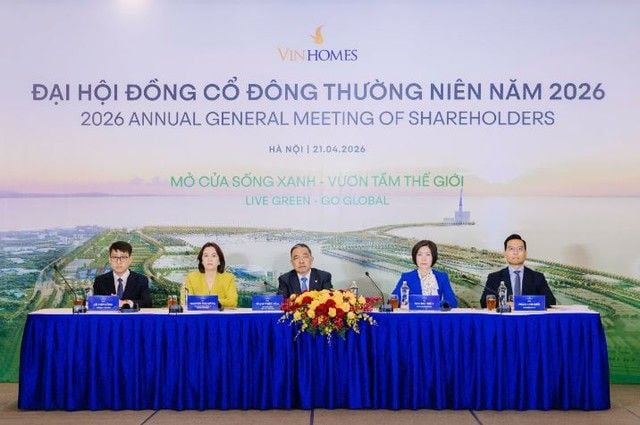
Vietnam’s real estate developers are entering 2026 with a broadly optimistic outlook, with many companies targeting double-digit profit growth and, in some cases, aiming to multiply earnings. The plans highlight a common theme: revenue and profit performance will depend heavily on legal readiness, construction progress, and the timing of project handovers.
Vingroup’s Vinhomes (VHM) plans for 2026 revenue of 285,000 billion VND and after-tax profit of 60,000 billion VND. Compared with previously disclosed figures, the profit target was raised by 10,000 billion VND and revenue by 35,000 billion VND.
For sales and pre-sales, Vinhomes expects 2026 figures of 300,000–350,000 billion VND, up sharply from 2025. Management cited large projects including Can Gio, Green Bay, Hau Nghia – Duc Hoa and the Ocean Park mega-cities as key drivers. The company expects 30–40% of 2026 revenue to come from units already sold and awaiting handover.
Vinhomes will also continue expanding its portfolio of mega-scale urban areas. Vinhomes Green Paradise covers 2,870 hectares and is intended to develop into a resort ecological urban area in the southern region. In the north, Vinhomes Global Gate in Quang Ninh covers more than 4,100 hectares and is being advanced toward a large-scale urban-tourism-services model.
Khang Dien Joint Stock Company (KDH) forecasts 2026 revenue of 4,200 billion VND, down about 10% from 2025. However, after-tax profit is expected to reach 1,500 billion VND, up 44%.
The plan is built around accelerating the Gladia by the Waters project (11.8 ha in Thu Duc City, in partnership with Keppel, Singapore). This year, Khang Dien will continue developing the low-rise segment and expects to launch the high-rise segment with 616 units in Q3 2026 when conditions permit. By the end of 2025, the low-rise segment of this project had generated over 4,000 billion VND in revenue for KDH.
Khang Dien is also developing the 11A housing project in Binh Chanh and expanding the Le Minh Xuan industrial park to secure supply for coming years.
Dat Xanh Group (DXG) targets 2026 revenue of 5,000 billion VND, with after-tax profit attributable to the parent company of 268 billion VND. This represents increases of 19% and 16% respectively versus the prior year.
DXG plans to accelerate development of projects with proper legal status, including The Privé, Gem Sky World, and other key projects in the new Ho Chi Minh City area. The company also plans a comprehensive restructuring, asset M&A, and land-bank acquisitions amid market reconfiguration.
Meanwhile, CEO Group (CEO) expects consolidated revenue of 3,000 billion VND and after-tax profit of 300 billion VND, up 124% and 50% respectively from 2025.
To achieve these targets, management plans to focus on completing legal procedures, accelerating construction progress, and bringing key projects to market and operation, including Novotel Cam Ranh Resort; Tiên Lãng airport-area industrial park (Zone B) in Haiphong; CEOHome Hana Garden (Me Linh, Hanoi); and Sonasea Van Don Harbor City.
Nam Long Group (NLG) targets 2026 revenue of 7,630 billion VND, up 35%, while after-tax profit allocated to the parent company is expected to reach 720 billion VND, up 3% from 2025. Management expects 2026 revenue to come mainly from handovers at core projects including Southgate, Can Tho 43ha, Anzen Hai Phong, and EhomeS Can Tho.
At the AGM on 25/4, CFO Chan Hong Wai said the profit growth target is modest because actual profit does not reflect immediate sales momentum and depends on handover timing. He noted that the year’s handovers come from deals made 2–3 years earlier. Although Nam Long has intensified sales, extended payment terms of 24–36 months are expected to shift revenue recognition and profits into later years such as 2027–2028 rather than 2026.
Several developers are also setting ambitions to multiply profits. Taseco Real Estate Investment (Taseco Land, TAL) plans consolidated revenue of 11,063 billion VND and consolidated after-tax profit of 2,513 billion VND, up roughly 3x and 3.7x versus 2025.
To realize these targets, TAL will implement projects including the Dong Van III Industrial Park, Thanh Hoa Project No. 4, Nguyen Binh project, Nam Thai (low-rise), Long Bien, ALC Ha Long and Luong Son. It will also study new projects such as Thainguyen Walking Street, Duy Tien, Trung Van (low-rise), and Me Linh (social housing).
Saigon Residential Investment Group (SGR) forecasts 2026 revenue of 1,133 billion VND and pre-tax profit of 550 billion VND, up about 4.3x and 5.6x from 2025.
SGR also outlined a longer-term plan for 2026–2030, with peak revenue in 2029 of 9,475 billion VND. Profit is expected to grow steadily to over 1,800 billion VND by 2030.


Premium gym chains are entering a “golden era” that is ending or already in decline, as rising operating costs collide with shifting consumer preferences toward more flexible, community-based ways to exercise. Long-term memberships are shrinking, margins are pressured by higher rents and facility expenses, and competition from smaller, more personalized…




