•
•
•
•
•
•
•
•
•
•
•
•
•
•
•
•
•
•
•
•
•
•
•
•
•
•
•
•
•
•
•
•
•


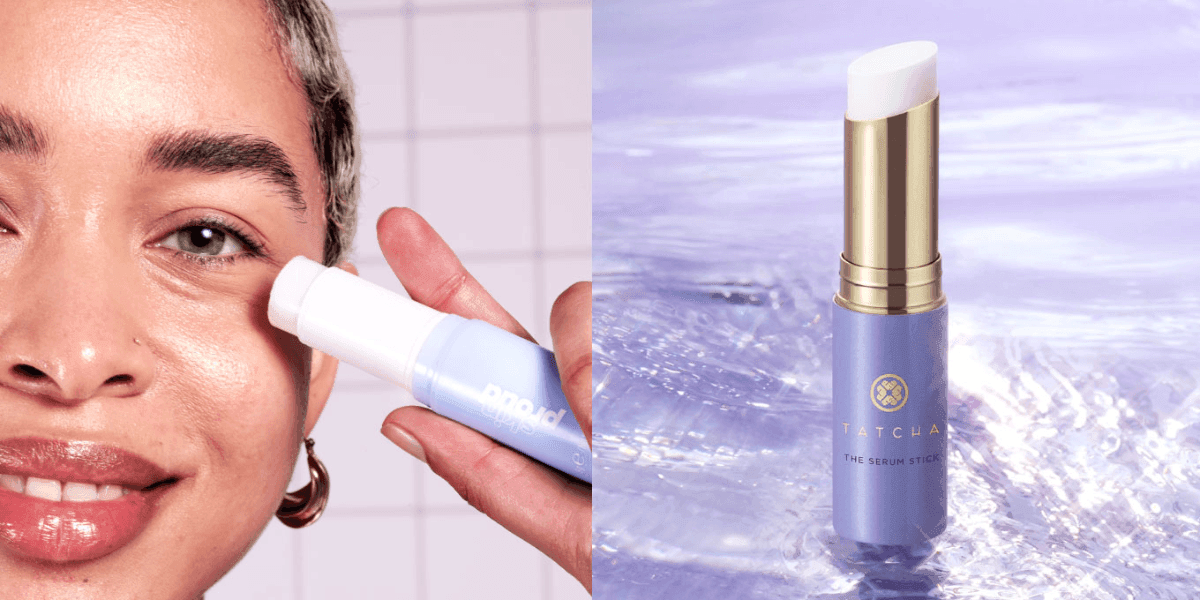
Rise of stick-format skincare products Beyond the familiar formats of skincare products—tubes, bottles, and pump dispensers—a slimmer, more elegant format is quietly spreading: stick-format skincare. Sunscreen, moisturizers, eye-treatment products, and serums—all now have a compact stick version in the palm of your hand, lightweight, no cotton pads, no messy liquids. This shift is not accidental. It is the result of many consumer values nurtured over years: the desire for simplicity, sustainability awareness, the need to move flexibly, and real effectiveness. Stick skincare meets all of these criteria at once. MARKET IS ENTERING A NEW CYCLE The global skincare market is growing robustly. Depending on the research source, the global skincare market was valued at roughly $155 billion to $193 billion in 2025, with forecasts suggesting the momentum will continue into the next decade. In that broader picture, the stick-format format is growing faster than the industry average. The global stick-format packaging market is growing at a CAGR of 6-8% per year, driven by strong demand across multiple beauty segments. In 2024, leading packaging manufacturers reported a sharp uptick in stick-format orders, particularly for panstick designs and slender sticks. The product categories have expanded beyond lip balms and roll-ons—traditional early applications of stick cosmetics—to become a multi-product trend including facial care, sun protection, specialized treatments, and even solid perfumes. From startups such as Fussy, Hero Cosmetics and MONSIEUR J to established names like ISDIN and Oceanly, many brands have developed stick-format skincare products. This shows that stick skincare is no longer a test, but a product strategy firmly established. CONVENIENCE IS THE TOP PRIORITY Essentially, stick-format skincare solves a problem that consumers do not always realize they have: the inconvenience of use. No more pumping to the middle and clogging. No more squeezing the tube to release the last bit. No need for a spatula. Just pick up the stick, apply, and go about your day. The portability is part of the core value, but there is something bigger: a product designed to accompany real-life rhythms. The stick fits in a sports bag, a carry-on, or a jacket pocket. No worries about liquids through airport security. No risk of spills on bathroom shelves or in luggage. For consumers who view skincare as a problem to solve, removing one more variable matters. Beyond skin, stick-format packaging also carries sustainability. Designing a single component easily produced in a single-material form—this is the gold standard of recyclable packaging. Brands are increasingly launching sticks in aluminum cases, FSC-certified paper, or post-consumer recycled plastics. Some have implemented refill systems, allowing users to keep the outer shell and simply replace the inner core. FORECAST ON POTENTIAL Looking at the period from 2025 to 2026 and beyond, the industry forecasts continued expansion into facial, lip, cheek, and body stick formats, along with the emergence of more specialized stick applications in hair styling and advanced skincare. Brands are investing in new wand designs and hybrid formats that combine the convenience of a stick with the sensorial experience of traditional creams. In addition to skincare, stick packaging also carries sustainability. The skincare market—projected to grow at a CAGR of about 5-8% per year depending on segment—continues to provide favorable conditions for all players. In that wave, the stick format is catching wind from many directions at once: consumer demand for simplicity, retailer pressure to optimize shelf space, packaging reform trends, and a generation of shoppers for whom sustainability is a baseline rather than a feature. All of this does not guarantee that every brand entering the stick skincare category will succeed. Formulation quality remains the top determinant, and this format is not universally suitable for all product types. But as a signal of where consumer priorities are headed—efficacy, intention, and responsibility—stick skincare could be one of the clearest trends on beauty shelves.
Premium gym chains are entering a “golden era” that is ending or already in decline, as rising operating costs collide with shifting consumer preferences toward more flexible, community-based ways to exercise. Long-term memberships are shrinking, margins are pressured by higher rents and facility expenses, and competition from smaller, more personalized…