•
•
•
•
•
•
•
•
•
•
•
•
•
•
•
•
•
•
•
•
•
•
•
•
•
•
•
•
•
•
•
•
•


According to the Bloomberg Billionaires Index, as of March 2026 the Lee family’s total wealth was about $45.5 billion, more than doubling from roughly $20.1 billion a year earlier. The family is now Asia’s third-richest, up from tenth place last year.
This month, the heirs are expected to finalize the final payment of the 12 trillion won inheritance tax, about $8.1 billion, ending a tax process that lasted about five years.
Samsung Group is Korea’s largest chaebol, a family-controlled conglomerate in which control typically remains with the founding family despite the group’s many listed companies and large scale.
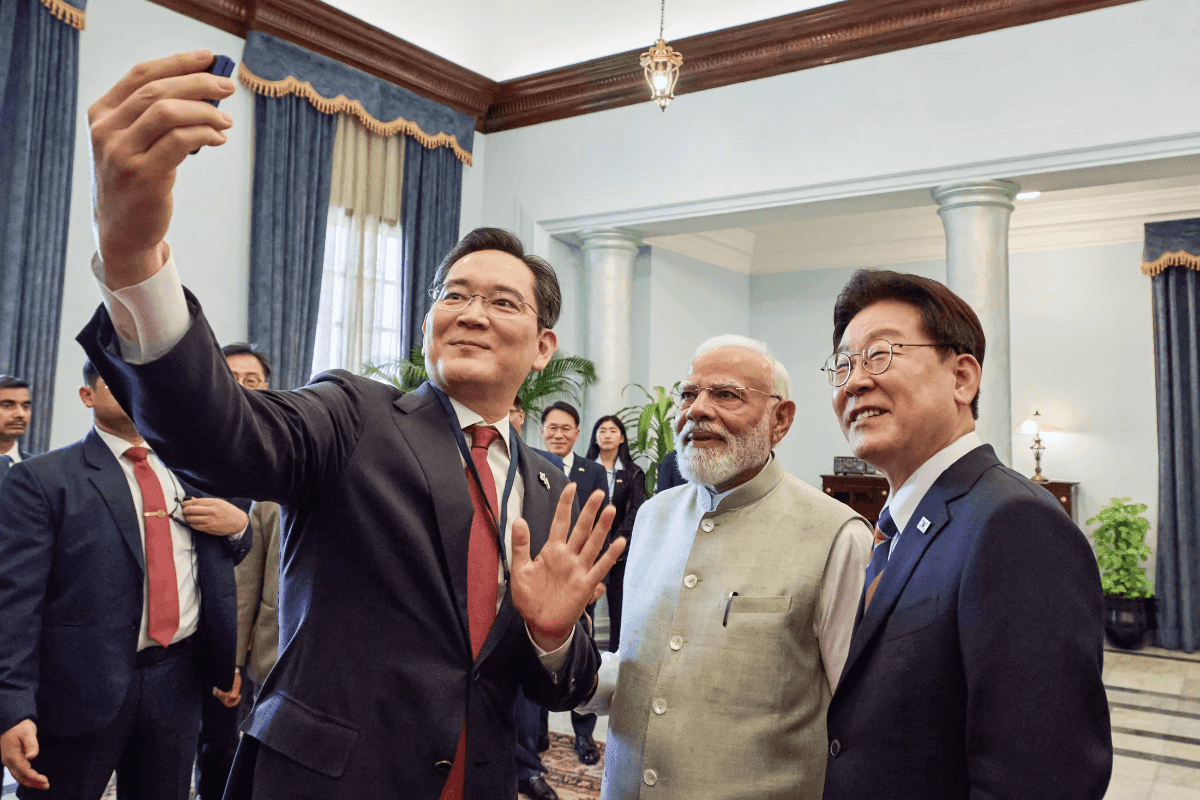
Lee Jae-yong, chairman of Samsung Electronics, has recently appeared in photos with South Korea’s President and India’s Prime Minister during a visit to New Delhi. Over the past year, he has undertaken state visits to India, Vietnam, China, the United Arab Emirates, and the United States.
Bloomberg estimates that the combined revenue of seven key Samsung affiliates, including Samsung Electronics, accounted for about 19.3% of Korea’s GDP in 2025, up from 15.1% a decade earlier.
Samsung’s influence on the Korean economy has continued to rise as the stock market has surged. Samsung Electronics’ stock has risen sharply in recent times, accounting for about a quarter of the Kospi and having surged 126% in the past year—the strongest one-year gain in 20 years.
Bloomberg notes that Lee Jae-yong’s personal wealth rose to $26.9 billion in the past year, restoring him as Korea’s richest person after falling from the top spot last year.
At last month’s annual shareholders meeting, Jun Young-hyun, co-CEO of Samsung Electronics, said the wave of investment in AI infrastructure is fueling an unprecedented semiconductor cycle. He added that demand for AI memory chips is expected to continue rising in 2026.
The stock rally and a positive outlook for the semiconductor sector have helped the Lee family avoid selling more shares to meet the inheritance tax.
In 2022, Lee Jae-yong was pardoned by the president in a bribery case and subsequently took control of Samsung, the conglomerate founded by his grandfather in 1938.
Within the Lee family, members have taken different approaches to handling the large inheritance tax. Lee Boo-jin and Lee Seo-hyun, along with their mother, Hong Ra-hee, have sold portions of their stakes in recent years. By contrast, Lee Jae-yong has largely borrowed money, using his shares and other assets as collateral to fulfill the tax obligation.
According to Jung In Yun, CEO of Fibonacci Asset Management Global, many controlling shareholders of large Asian companies tend to prioritize voting power over short-term liquidity.
Long-term, the big question remains whether the next generation of the Lee family can maintain control of Samsung given Korea’s continued high inheritance taxes.




Premium gym chains are entering a “golden era” that is ending or already in decline, as rising operating costs collide with shifting consumer preferences toward more flexible, community-based ways to exercise. Long-term memberships are shrinking, margins are pressured by higher rents and facility expenses, and competition from smaller, more personalized…