•
•
•
•
•
•
•
•
•
•
•
•
•
•
•
•
•
•
•
•
•
•
•
•
•
•
•
•
•
•
•
•
•


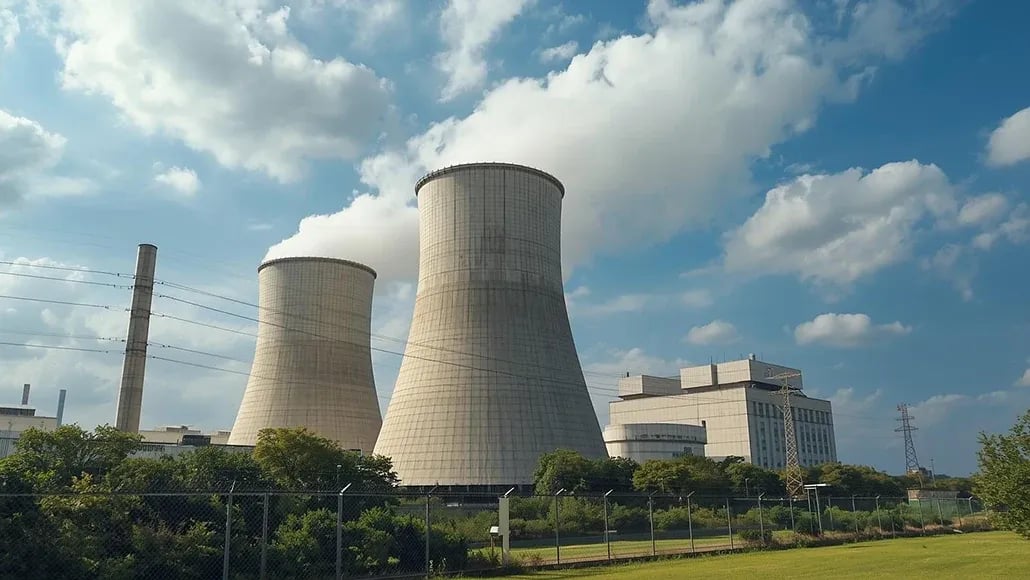
Initial analyses indicate that Saskatchewan’s nuclear program could generate thousands of high-skilled technical and professional jobs, while also creating major opportunities for local businesses in oil and gas, mining, manufacturing, and related sectors. On May 11, the Vietnam Economy/VnEconomy magazine, in coordination with the Vietnam Atomic Energy Institute (VINATOM), held the international conference “Small Modular Nuclear Power: Strategic Solutions for Vietnam’s Energy Security.”
At the conference, Breann Whitby, Acting Director of Nuclear Policy at Crown Investments Corporation of Saskatchewan—a state-owned corporation owned by the provincial government—shared a practical perspective on energy policy and the deployment of small modular reactors (SMRs) in Saskatchewan. She argued that nuclear energy can support economic growth, job creation, and energy security, and that these lessons could serve as references for Vietnamese localities pursuing green energy self-sufficiency.
Whitby said developing and deploying SMRs is not only about adding clean electricity, but can also support multiple objectives in Saskatchewan’s growth strategy. These include climate change response measures to improve local resilience, a target to reach a population of 1.4 million by 2030, and other socio-economic development goals.
Saskatchewan has partnered with multiple governments and organizations to advance nuclear energy development. In 2019, Saskatchewan, Ontario, and New Brunswick signed a memorandum of understanding to promote SMR development in Canada. In April 2021, Alberta joined the initiative. In 2022, four jurisdictions harmonized a joint strategic plan and roadmap for SMR deployment, describing SMRs as a safe, reliable, zero-emission electricity source for a growing economy and population, while also enabling the export of Canadian nuclear knowledge, technology, and expertise to global markets.
A key milestone highlighted by Whitby is Saskatchewan’s Energy Security Strategy and the Saskatchewan First Supply Plan, announced in October 2025. These documents are presented as a long-term roadmap toward a reliable, cost-effective electricity system. The strategy follows an all-sources energy approach, positions coal as a bridge to transition to nuclear electricity, and affirms the commitment to build a provincial electricity system operated by nuclear power.
Whitby also outlined Saskatchewan’s position in the global nuclear industry. Saskatchewan is currently the world’s second-largest uranium producer, accounting for roughly 24% of global uranium output in 2024, and is the only Canadian province that produces uranium.
She said Saskatchewan’s development strategy for peaceful nuclear energy through 2035, with a vision to 2050, aims to develop and apply nuclear energy safely, securely, and efficiently to support economic and social development, improve living standards, protect the environment, and reinforce national energy security, while contributing toward the net-zero emissions pledge by 2050.
Whitby noted that in November 2023, Cameco Corporation—based in Saskatchewan and one of the world’s largest uranium fuel providers—acquired a 49% stake in Westinghouse Electric Company. In 2025, the Global Institute on Energy, Minerals and Society, a collaboration model among the University of Saskatchewan, the University of Regina, and Saskatchewan Polytechnic, was established with a nuclear-focused mandate.
According to leaders of Saskatchewan’s state-owned enterprise, expanding the nuclear industry is expected to create significant opportunities for local businesses, workers, and suppliers. Preliminary analyses indicate the Saskatchewan nuclear program could require 2,500 to 3,500 technically skilled workers, with skilled trades (such as electricians and pipefitters) expected to represent the largest share. Engineers, project managers, and nuclear operators are also expected to be in high demand.
The nuclear industry is also expected to open opportunities for local suppliers by leveraging existing capabilities in oil and gas, mining, and manufacturing. The government is supporting multiple projects to develop local, Canadian, North American, and global nuclear supply chains, enabling provincial firms to participate more deeply in the value chain.
The conference also discussed potential cooperation between Vietnam and Canada in nuclear power deployment, noting that Canada’s 80 years of nuclear operation experience extends beyond technology to include an industrial ecosystem, uranium supply, training, and operating capacity—factors presented as making Canada a suitable partner for Vietnam.
Speakers said Vietnam is approaching the “nuclear power deployment era” and that, with appropriate financial mechanisms, Vietnam can balance the interests of the state, consumers, and international investors, turning a large capital requirement into a long-term growth driver for small-scale nuclear power development.
The event also referenced Vietnam’s role in radiation and nuclear safety.

Premium gym chains are entering a “golden era” that is ending or already in decline, as rising operating costs collide with shifting consumer preferences toward more flexible, community-based ways to exercise. Long-term memberships are shrinking, margins are pressured by higher rents and facility expenses, and competition from smaller, more personalized…