•
•
•
•
•
•
•
•
•
•
•
•
•
•
•
•
•
•
•
•
•
•
•
•
•
•
•
•
•
•
•
•
•


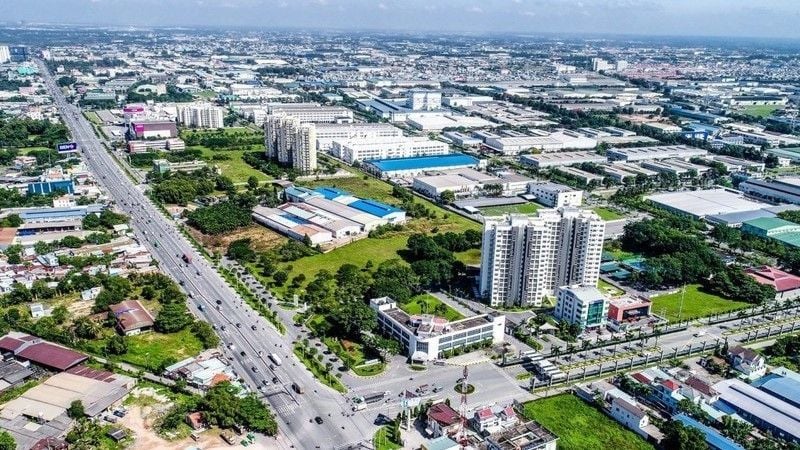
In a context where cash flow is increasingly calculated with care, financial factors are becoming important criteria for buyers when deciding to own real estate. The market records a clear shift: projects with flexible payment policies that reduce upfront capital pressure and maintain steady cash flow are gaining the upper hand. Not outside that trend, the 60-month payment structure for Artisan Park's shophouses has just been announced, creating a notable difference. The financial puzzle here goes beyond simply supporting buyers; it is designed as part of a strategy to seize growth momentum. Real estate ownership calculus for 2026: From 'able to buy' to 'buying efficiently' According to data from the Vietnam Real Estate Market Assessment Institute (VARS IRE), from late October 2025 to date, the lending rate environment for home purchases has risen sharply, placing significant pressure on borrowers. Many banks apply post-discount rates at 12-14% per year, at times up to 16%. The rise in financing costs is changing the criteria for both end buyers and investors, from 'can buy' to 'buy efficiently'. Flexible payment policies that allow extending financial obligations over time are becoming key factors in controlling personal cash flow pressure. Against this backdrop, projects with long-term financing structures that optimize cash flow, such as Artisan Park's shophouses, are viewed by many investors as an advantage, helping buyers balance ownership goals with cash flow generation. '5-year payment structure: Optimizing ownership and cash flow' The 60-month payment schedule, equivalent to five years, is a structure that has attracted market attention. Specifically for Artisan Park, in 2026 buyers start with a deposit and sign a sale agreement, roughly 10%, then pay an additional 10% after five months. The extended schedule not only eases buyers' cash flow but also creates room to capture asset value appreciation as the area develops, while input capital remains optimized. By Q2 2027, at the provisional handover milestone, buyers pay an additional 10% (total payments 30%), followed by seven 5% installments spaced every six months through 2027-2030. In 2027-2030, the payment schedule is further divided into seven installments of 5%, keeping financial pressure at a reasonable and stable level. By Q2 2031, at the official handover, buyers pay 30% and the remaining 5% is completed when they receive the pink book (land title). This payment structure is highly valued by investors for its ability to balance cash flow in the medium and long term. 'With infrastructure information expected to be implemented in the next 4-5 years, I assess the growth potential of the product as quite clear. This is one of the few projects that can generate cash flow and also appreciate in value in line with the area’s development cycle,' said Le Đình Quang, a Ho Chi Minh City investor. 'Đón đúng nhịp tăng trưởng hạ tầng và động lực kinh tế mới' (Aligning with infrastructure growth and new economic drivers) In 2026, Ho Chi Minh City’s Beltway 3 is expected to close the entire route and connect with the Ho Chi Minh City–Long Thành Expressway, Provincial Roads 25B and 25C to facilitate access to Long Thành International Airport. By 2028, Beltway 4 along with the Ho Chi Minh City–Thu Dầu Một–Chơn Thành Expressway will be in operation. Simultaneously, the Bình Dường–Suối Tiên metro line is prioritized for completion in 2030. With this progress, by the end of 2030 buyers will have completed about 65% of the asset value when the metro line is in operation and most of the key infrastructures have formed. This demonstrates the upside potential can be captured during the cash flow allocation process, rather than only after completing financial obligations. Beyond transport infrastructure, the scientifically planned urban development direction in Bình Dường is being materialized starting in 2026. Notable large-scale projects include the Digital Technology Park (15.4 ha), an R&D complex (approximately 100 ha), the Administrative Center and Innovation Complex (103 ha), the BWID Smart Logistics (70 ha) and the Riverside High-Tech Park (about 600 ha). This sequence of milestones opens the prospect of forming a new value baseline, as potential arises not only from connected infrastructure but also from economic drivers reshaping the development space. The region is projected to see average price growth of around 5% per year (varying by phase). Regarding sustainable price growth, CBRE Vietnam’s Võ Huỳnh Tuấn Kiệt commented: 'Products that can operate flexibly, allowing multiple uses such as living, business, or subdividing to extract value will help diversify income streams and increase asset efficiency.' Currently, Artisan Park’s commercial ecosystem is gradually forming with brands such as Chacee, ACT Coffee, DAMU, and others in interior design, mechanical engineering, building materials, and investment consulting. The most recent addition is the Chinese Community Center, which adds an educational component to the ecosystem. In a market reconfiguring toward efficiency and cash flow safety, projects that combine long-term financial structures with clear growth potential like Artisan Park are among the products attracting investor attention in Bình Dương. Keywords: Shophouse Artisan Park
Premium gym chains are entering a “golden era” that is ending or already in decline, as rising operating costs collide with shifting consumer preferences toward more flexible, community-based ways to exercise. Long-term memberships are shrinking, margins are pressured by higher rents and facility expenses, and competition from smaller, more personalized…