•
•
•
•
•
•
•
•
•
•
•
•
•
•
•
•
•
•
•
•
•
•
•
•
•
•
•
•
•
•
•
•
•


On May 1 (local time in Vietnam), the world silver price was trading at 73.4 USD per ounce, down 0.24% from the previous session. At this level, silver is in the lowest range in about a month.
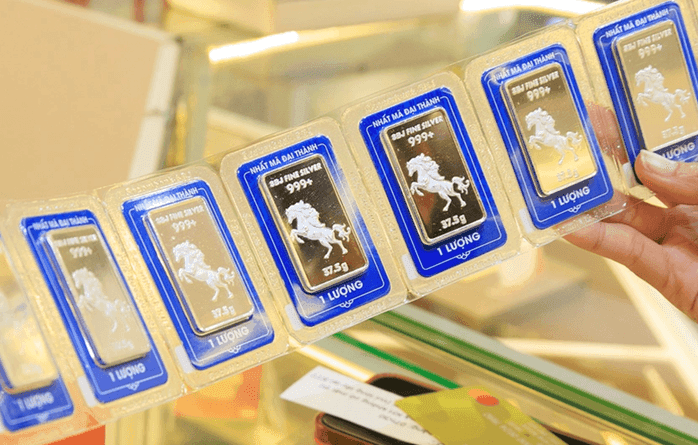
The decline in global silver prices has prompted domestic silver brands to adjust their bid-ask prices. Currently, bullion prices at Sacombank-SBJ Precious Metal, Ancarat, and Phu Quỳ are quoted at around 2.7 million VND per tael for buying and 2.8 million VND per tael for selling, up slightly from the previous session.
Wholesale silver (kg) prices of various brands are also around 74.9 million VND per kg for buying and 77.3 million VND per kg for selling, which is reported as the lowest level in about a month.
In April, the silver price in Vietnam rose to as high as 83.4 million VND/kg and then fell to 73.4 million VND/kg.
The domestic price movement has led many investors to consider whether to buy silver for accumulation now, particularly with expectations that gold prices may rise later this year. Silver price typically moves in tandem with gold.
Analysts noted that silver not only meets accumulation demand but also receives support from industrial use, including solar panels and electric vehicles. This “dual-demand” is described as something safe-haven assets like gold do not provide.
They added that if gold prices continue to rise, silver could potentially outperform gold due to its higher volatility.
A representative of Sacombank-SBJ said that amid volatility in asset markets, precious metals such as gold and silver are often considered options for portfolio allocation. However, the effectiveness of storage depends on timing and individual financial goals.
The representative also emphasized that choosing products from reputable units helps ensure quality and liquidity. In addition to storage demand, silver is used in industrial production at large scale, particularly in green energy.
Looking ahead, the representative said silver may serve both industrial production needs and as a new accumulation option when gold prices rise and supply becomes scarcer.







Premium gym chains are entering a “golden era” that is ending or already in decline, as rising operating costs collide with shifting consumer preferences toward more flexible, community-based ways to exercise. Long-term memberships are shrinking, margins are pressured by higher rents and facility expenses, and competition from smaller, more personalized…


