•
•
•
•
•
•
•
•
•
•
•
•
•
•
•
•
•
•
•
•
•
•
•
•
•
•
•
•
•
•
•
•
•


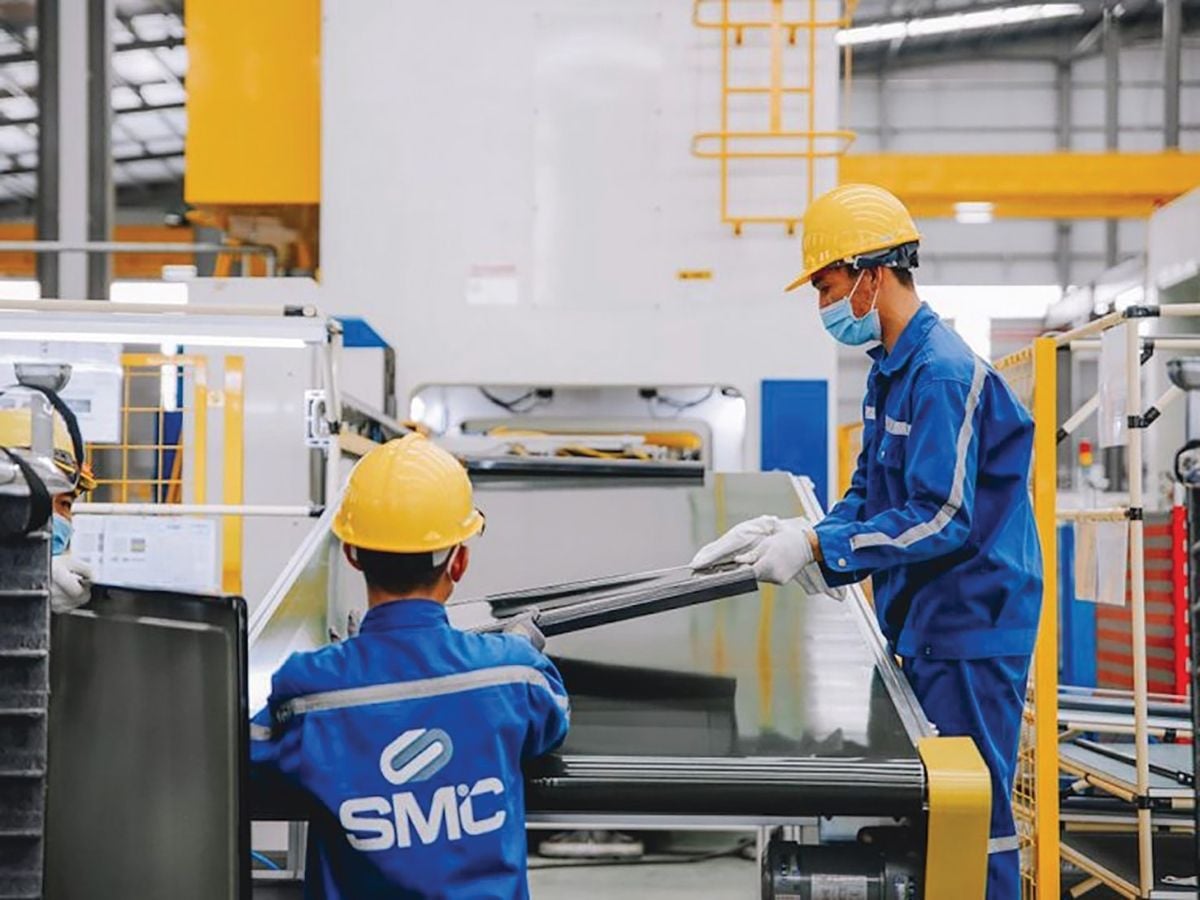
SMC leadership said the biggest current challenge is financial, with capital imbalance arising from large past receivables. CTCP Đầu tư Thương mại SMC (SMC) disclosed its consolidated Q1 2026 financial results: net revenue of 1,072 billion VND, down 42% year-on-year; gross profit of 23 billion VND, down 47%. In the period, finance income declined 18% to nearly 5 billion VND, while financial costs doubled to 45 billion VND, mainly due to interest expenses. By contrast, profit from associates turned from negative to positive, recording 8 billion VND. Notably, other income surged to 79 billion VND, with gains from liquidation or sale of fixed assets accounting for 75 billion VND. Thanks to these factors, SMC reported net profit after tax of over 18.5 billion VND, up 880% versus 2025. As of March 31, 2026, total assets were about 4,200 billion VND, down around 200 billion from the start of the year. Long-term prepayments to suppliers rose nearly sixfold to 693 billion VND. Liabilities stood at 3,200 billion VND, with short-term borrowings exceeding 1,700 billion VND. Per notes to the financial statements, SMC is investing 77 billion VND in HBC (Hoa Binh Construction) and has recognized a 36 billion VND provision; the company also set aside 182 billion VND for bad debts, out of total receivables of 302 billion VND. SMC was established in 1988, originally as Building Materials Shop No. 15 under the Southern Wholesale Building Materials Center. In 2004, it was equitized and began operating officially as CTCP Đầu tư Thương mại SMC. Two years later, the company listed on HoSE under ticker SMC. Its core activities include trading, Coil Center processing, and steel product manufacturing, with a domestic focus serving construction firms and major developers. SMC was once a leading steel trading firm with USD-level revenues, but business results declined from 2022 due to a sharp fall in steel prices and difficulties in collecting receivables from the construction and real estate sectors. At the recent AGM, management highlighted financial constraints as the biggest current challenge, including capital imbalance from large past receivables. The company has addressed much of these receivables with some partners by converting them to collateral, which shifted some current assets to long-term assets, creating short-term liquidity pressure and requiring more time to resolve fully. Market color: SMC’s stock traded around 13,000 VND per share.
Premium gym chains are entering a “golden era” that is ending or already in decline, as rising operating costs collide with shifting consumer preferences toward more flexible, community-based ways to exercise. Long-term memberships are shrinking, margins are pressured by higher rents and facility expenses, and competition from smaller, more personalized…