•
•
•
•
•
•
•
•
•
•
•
•
•
•
•
•
•
•
•
•
•
•
•
•
•
•
•
•
•
•
•
•
•


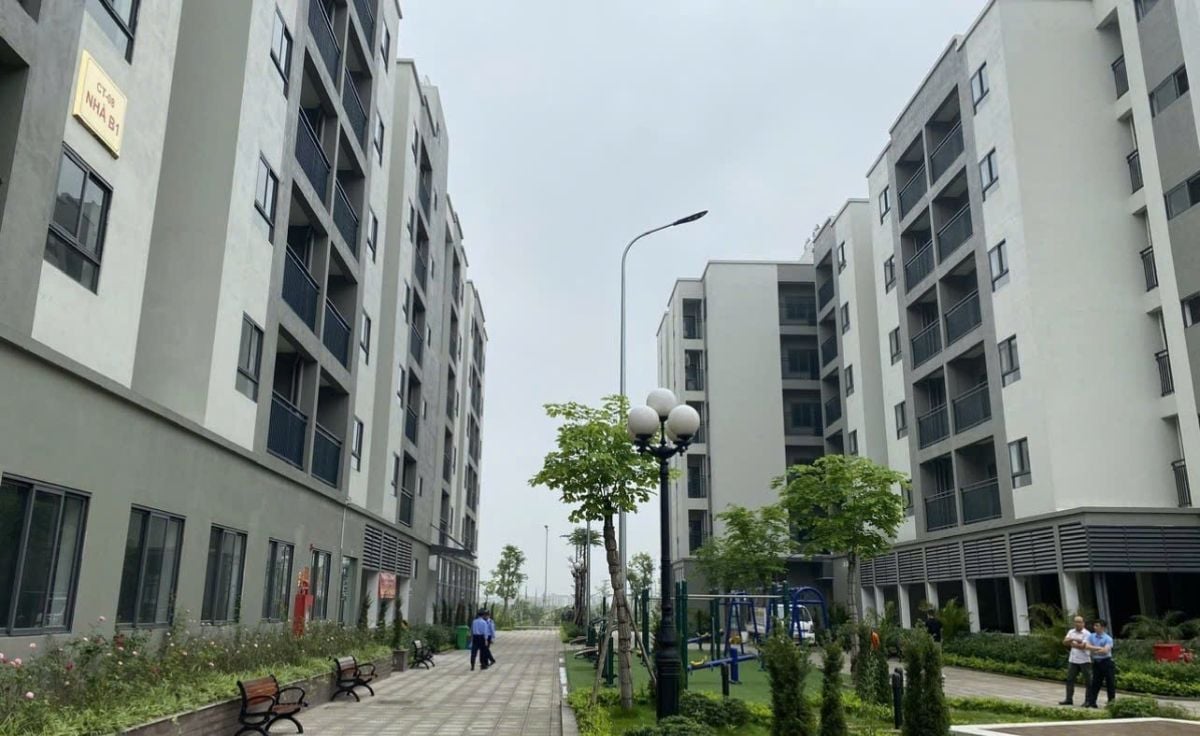
In the first four months of the year, the country commenced construction on 40 social housing projects, totaling more than 36,590 units, equivalent to 23% of the annual plan. Cumulatively, 786 social housing projects with more than 725,000 units are under way, reaching 72.5% of the goal to build at least 1 million social housing units in the 2021–2030 period.
Against a backdrop of rising housing demand among low-income groups, workers, and urban laborers, many localities are accelerating social housing projects to increase supply and strengthen housing security.
In Hung Yen province, authorities approved the investment policy and assigned the investor to implement two social housing projects in Lac Dao and Phung Cong communes.
In Hue City, the province approved the investment policy and assigned the investor to carry out a social housing project on plot XH1 in Zone E – An Van Duong New Urban Area, Thanh Thuy ward. The project covers 38,081 m2 of land with total investment of 2,073 billion VND. Construction is planned to start in Q3 2026, with completion and operation expected in Q3 2030.
According to the Ministry of Construction, in the four months of the year the country started 40 projects with more than 36,590 units, about 23% of the annual plan. Cumulatively, 786 social housing projects with more than 725,000 units are in progress, reaching 72.5% of the target in the 2021–2030 plan.
Promoting social housing is expected to improve workers’ access to housing, particularly as urban real estate prices in major cities remain high.
Data from Cushman & Wakefield Vietnam indicates that over the past decade, Hanoi’s apartment market expanded strongly: total supply rose 2.9 times and the average primary sale price increased by 288%, corresponding to a compound annual growth rate (CAGR) of about 11%. The firm noted that the price uptrend persists partly due to a shortage of housing at affordable price points for most buyers.
For the landed housing segment, supply and price dynamics differ but price levels continue to rise significantly. In the same period, total supply rose 1.4 times; the average primary price rose by 257%, corresponding to a CAGR of 13%. Although the pace of supply expansion is slower than that of apartments, the segment still shows strong price growth.
To address rising urban housing costs, Hanoi is also advancing social housing to expand supply and improve access for residents. The city has announced 39 social housing projects identified for construction in the 2026–2030 period.
Hanoi also issued Decision No. 51/2026/QD-UBND, which sets out cases where homeowners living far from work can receive social housing support. Under the regulation, people with legally owned homes but living at least 20 km from their workplace may be eligible to buy or rent-buy social housing if they meet the conditions.
Experts said expanding supply and adjusting access policies can improve urban residents’ housing security. However, they warned that the segment needs coordinated development to ensure living standards and sustainable long-term operation.
Speaking at a recent real estate event, Dr. Nguyen Cao Lanh of Hanoi University of Construction said demand for social housing comes not only from those with urgent needs but also from broader urban populations over the long term. He argued that development should shift from a standalone approach to a systemic ecosystem model.
“Social housing cannot be treated as a single project; it must be organized as an ecosystem with the participation of multiple actors. This ecosystem includes policy, land, capital, design, operation, and the role of residents. The State should provide direction and set a legal framework; local authorities should implement; enterprises should execute; and professionals and the community should contribute to refining the operating model,” he stressed.
From an implementation perspective, Mr. Tran Cong Tuong of Thu Do Urban Development and Investment JSC said social housing development should not stop at providing affordable housing, but should also aim to create a livable environment with sustainable long-term operation.
One of the biggest challenges, he said, is balancing cost with practical value. While dividing apartments can improve access for residents, it can also raise construction costs and complicate management and operation—requiring holistic optimization rather than focusing on a single factor.
Premium gym chains are entering a “golden era” that is ending or already in decline, as rising operating costs collide with shifting consumer preferences toward more flexible, community-based ways to exercise. Long-term memberships are shrinking, margins are pressured by higher rents and facility expenses, and competition from smaller, more personalized…