•
•
•
•
•
•
•
•
•
•
•
•
•
•
•
•
•
•
•
•
•
•
•
•
•
•
•
•
•
•
•
•
•


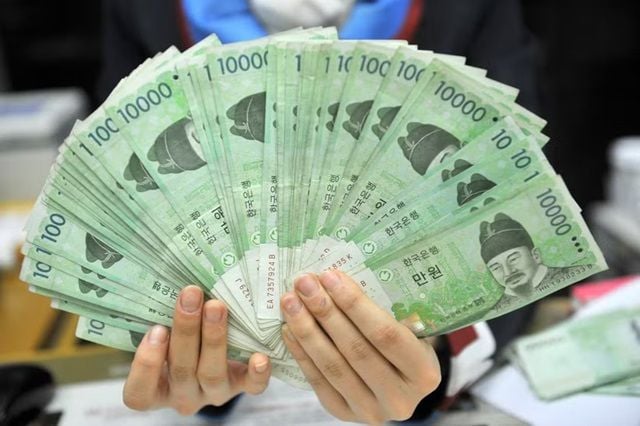
South Korea should pursue an expansionary fiscal policy in the latter half of the year and during the 2027 budget process, President Lee Jae Myung said, while rejecting what he called the “populist belt-tightening trap.”
Speaking at the Cabinet meeting and an emergency economic review at the presidential office in Seoul, Lee argued that timely and strong fiscal spending would help stimulate domestic demand and support economic activity.
Lee criticized calls for austerity budgets as “irresponsible,” saying public debt should not be used as a justification for the government to stay out of addressing people’s difficulties.
He said the economy’s biggest challenge is liquidity, adding that consumption should be treated as a growth engine rather than a form of savings. Lee defended fiscal stimulus measures, including consumer vouchers for households.
At the same time, Lee said the government does not plan to spend wastefully and will not continue borrowing if the economy recovers and grows steadily.
Lee said that in a “time of crisis,” the government should mobilize resources to lay the groundwork for a leap in the economy through proactive public investment. He asked government agencies to develop growth strategies for the second half of the year and to draft the 2027 budget in an expansionary direction.
To support the case for fiscal expansion, Lee cited analysis from the Seoul-based Institute for Fiscal Reform. The institute’s assessment, based on IMF projections, is that South Korea’s net debt to GDP this year will be around 10%, compared with a G20 average of 89.6%.
Lee added that if expansionary fiscal policy boosts growth and raises nominal GDP faster, the debt-to-GDP ratio could decline even if total debt increases. He argued that if the process improves productivity and potential growth, government revenues would widen, creating a “positive feedback loop” between growth and fiscal stability.
Kim Yong Beom, chief of the Presidential Policy Office, also signaled support for expansionary fiscal policy, citing expectations of stronger tax revenues linked to a semiconductor boom.
Kim said that if momentum in the chip industry continues through 2027, Korea’s tax revenues could reach record levels from corporate taxes on Samsung Electronics and SK Hynix, wages of semiconductor workers, and spillovers from a trade surplus.
He argued that the key issue is whether the policy framework can adapt flexibly to major changes in the semiconductor industry, rather than being constrained by traditional fiscal and economic approaches.
Under the plan, Korean ministries must submit 2027 budget proposals to the Ministry of Planning and Budget by the end of May. After consultations with ministries and local authorities, the government will present the draft budget to the National Assembly in September.






Premium gym chains are entering a “golden era” that is ending or already in decline, as rising operating costs collide with shifting consumer preferences toward more flexible, community-based ways to exercise. Long-term memberships are shrinking, margins are pressured by higher rents and facility expenses, and competition from smaller, more personalized…



