•
•
•
•
•
•
•
•
•
•
•
•
•
•
•
•
•
•
•
•
•
•
•
•
•
•
•
•
•
•
•
•
•


In Vietnam, the state economy is a key component of the socialist-oriented market economy, with resources held, managed and directed by the State to achieve socio-economic development goals, macroeconomic stability, and national security and defense. Since 1945, the state economic sector has been identified as playing a leading role. However, despite commanding significant social resources, its efficiency and leadership role have not matched the scale of resources allocated to it.
The Politburo issued Resolution No. 79-NQ/TW on January 6, 2026 on developing the state economy. The resolution is positioned as a strategic basis for developing the state economy toward modernization, stronger leadership, and deeper integration, with targets set for 2030 and 2045 for state-owned enterprises (SOEs), state-owned banks, national resources, and SOE governance.
Although SOEs carry substantial social responsibilities—such as addressing market failures and protecting public interests—an overall assessment indicates that SOE business performance and labor productivity remain low. The sector has not generated strong spillovers to the private sector, and the leadership role is not clearly defined. To remove barriers and bottlenecks and enable the state economy to play a leading role (not necessarily by dominating every sector), the focus needs to shift beyond production toward governance and strategic development.
The resolution emphasizes that the state economy will continue reform and institutional improvement, with fair risk sharing identified as a key factor. This is intended to support a shift from administrative management to national asset governance; from a “grant-and-favor” mindset to management based on a strategic investment portfolio; and toward autonomy and responsibility, using efficiency as the key metric.
Three core reforms are outlined:
In governance, the state economy should be managed and valued as public assets that are identified, digitized, and valued under market principles, based on a unified national balance sheet covering capital, land, infrastructure, and resources.
The resolution also calls for operating under market mechanisms where all enterprises are truly equal before the law, with privileges abolished. Enterprises should follow a common framework for taxes, investment, procurement, land, environmental requirements, and corporate social responsibility.
The state economy should focus on sectors where the private sector is not ready or able to participate, including core technology, big data, semiconductors, renewable energy, digital infrastructure, strategic infrastructure, and the green and circular economy. Priority areas include innovation, digital transformation, strategic infrastructure investment, and maintaining a level playing field.
Banking is described as the “lifeblood” of the economy, operating within a two-tier system of state governance and monetary-banking activity. Vietnam’s banking system is positioned as crucial for macroeconomic stability and, specifically, for the state economy—especially in a volatile domestic and international environment.
For the State Bank of Vietnam (SBV), balancing macroeconomic goals—economic growth, inflation control, external balance, and employment—is challenging in practice. SBV will continue implementing monetary policy actively, flexibly, and effectively, coordinating in a synchronized, harmonious and tight manner with expansionary fiscal policy focused on priority areas and other macroeconomic policies. The aim is to prioritize macro stability, inflation control, and support for growth.
In the 2025–2030 period, SBV defines its monetary policy focus as completing the framework to international standards, increasing transparency and accountability, strengthening financial-miscal resilience, enhancing banking system resilience, and leveraging market-based tools.
Credit policy is to be steered toward safety and efficiency, directing credit to processing, manufacturing, production and exports; supporting national key projects; limiting credit to high-risk sectors; and promoting green credit to improve capital allocation efficiency and support sustainable growth. The policy also encourages firms to issue sustainable financial instruments such as green bonds, sustainability bonds, and ESG-aligned equity.
SBV’s supervision and regulatory role is highlighted as essential for system safety. Measures include enhancing the legal framework; increasing transparency; improving Basel III capital adequacy standards and risk governance; tightening proactive accountability; standardizing macro data and statistics to international standards; improving analysis, forecasts and policy formulation; leveraging technology for analysis and forecasting; improving early risk warnings; modernizing payment infrastructure; and incorporating data from non-bank financial institutions, P2P lending platforms, and the National Credit Information Center to assess customers’ financial capacity more accurately.
The 2024 Law on Credit Institutions allows controlled experimentation (sandbox) in banking in line with international standards, including Basel, IOSCO and IFRS. Vietnam has also established an international financial center with new financial products operating in Ho Chi Minh City and Da Nang to connect domestic exchanges with international markets, aiming to build a comprehensive financial ecosystem.
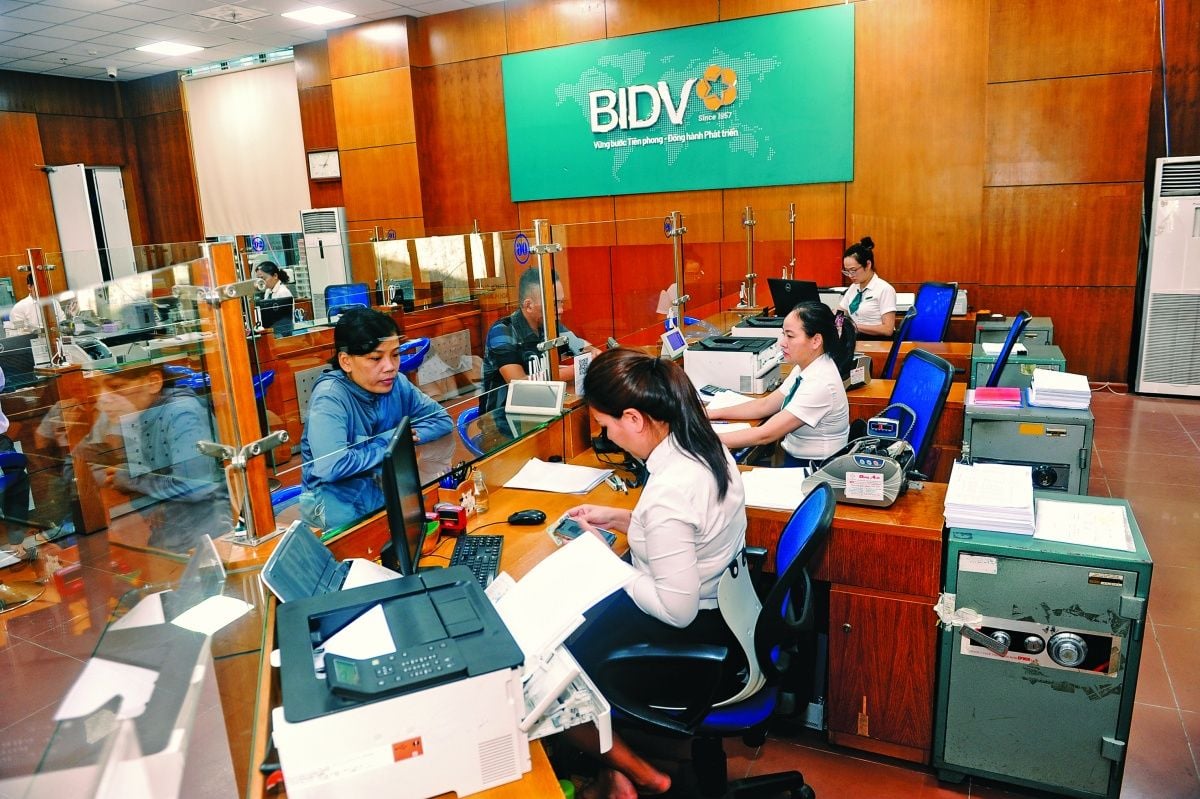
Resolution 79-NQ/TW identifies state-owned commercial banks as pivotal. It sets an expectation that at least three SOEs will be among the 100 largest banks in Asia by assets. These banks are expected to lead through superior governance, technology, scale and market influence to regulate the system.
To quickly fulfill this role, SOEs are directed to focus on three priorities:
The article reflects the views of PGS.TS. Nguyễn Thị Mùi and PGS.TS. Lê Hoàng Nga (Thời báo Ngân hàng).

Premium gym chains are entering a “golden era” that is ending or already in decline, as rising operating costs collide with shifting consumer preferences toward more flexible, community-based ways to exercise. Long-term memberships are shrinking, margins are pressured by higher rents and facility expenses, and competition from smaller, more personalized…