•
•
•
•
•
•
•
•
•
•
•
•
•
•
•
•
•
•
•
•
•
•
•
•
•
•
•
•
•
•
•
•
•


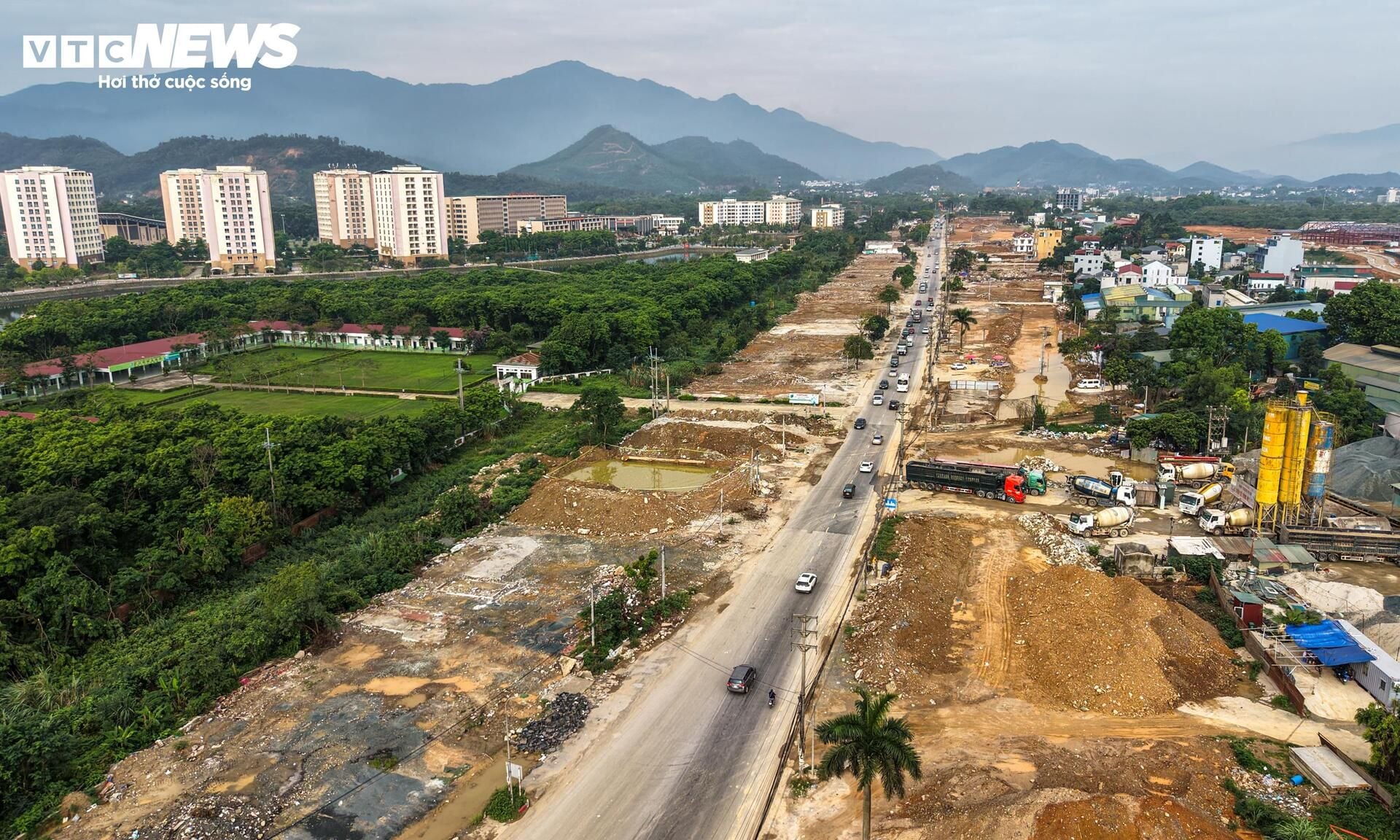
The investment project to construct the road linking Đại lộ Thăng Long with the Hanoi – Hòa Bình Expressway is a special-grade road project that began in October 2023. The route is about 6.7 km long, connecting from the Đại lộ Thăng Long Interchange with National Highway 21 in Hoa Lạc commune to the Hanoi – Hòa Bình Expressway in Yen Xuân, and is expected to help complete the western gateway transportation infrastructure of Hanoi.
According to the design, the route includes four stream-crossing bridges and grade-separated intersections, and five underpasses: one through-structure underpass serving the main expressway and four civilian underpasses. The total investment is more than 5.2 trillion VND, funded by the Hanoi city budget and central government support, with land clearance costs around 2.7 trillion.
In a recent progress check, Hanoi Party Secretary Trần Đức Thắng described this project as important for the development of the western part of the capital. He directed the investor and construction units to focus manpower and equipment to strive to open the route before June 30, 2026.
At present, on several sections the roadbed has been raised and the main route is taking shape after more than two years of construction. Along the route, many excavators, rollers, and trucks are operating continuously to transport earth and materials for the project.
At some locations, the pavement has been narrowed to facilitate construction, causing travel difficulties for residents. Some areas have generated dust due to frequent truck activity, and some sections remain unfenced.
According to the project management board, to date more than 93 hectares of the total about 101 hectares of land have been handed over, about 92%. However, some households and related entities have not yet agreed to relocate assets or hand over land due to pending compensation approvals.
Currently, land clearance remains blocked in three areas: the K5 fuel depot and Camp C5, residential areas in Tan Bình village at the Yen Bình junction, and the Yen Bình–Miễu intersection.
When completed and put into operation, the highway is expected to help complete Hanoi’s western traffic network, reduce pressure on existing routes, and enhance connectivity between the capital and Hà Nội Province and other localities in the Tây Bắc region.
Dai lộ Thăng Long is Vietnam’s longest boulevard, nearly 30 km long and about 140 m wide, opened in 2010 to celebrate the 1,000-year anniversary of Thăng Long – Hà Nội. It was designed to urban expressway standards, with a central expressway lane and two side service lanes, accommodating multiple lanes and linking the city center with new urban areas, the Hòa Lạc high-tech park, and western provinces. After more than 15 years of use, this road has become a key growth axis, easing central-city crowding and promoting economic and social development in the western part of the capital.
Premium gym chains are entering a “golden era” that is ending or already in decline, as rising operating costs collide with shifting consumer preferences toward more flexible, community-based ways to exercise. Long-term memberships are shrinking, margins are pressured by higher rents and facility expenses, and competition from smaller, more personalized…