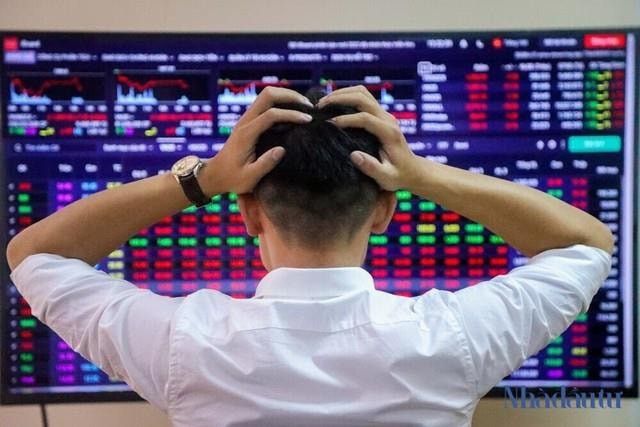
When stock markets fall sharply, a common question for many investors is: what is the right time to buy? However, Dragon Capital’s analysis suggests that pinpointing the exact
market bottom is less important. Rather than assuming investors can buy at the bottom, the firm tested 75 different investment-start times to evaluate whether the outcome truly depends on choosing the exact timing. The scenarios included investors starting before the bottom, exactly at the bottom, or after the bottom.
The analysis covers three periods of major market swings in Vietnam. In 2018, after reaching a historic high of 1,211 points, US–China trade tensions caused the VN-Index to fall about 26% in six months, with little clear signal for when the bottom would come. In 2020, the COVID-19 pandemic delivered a shock as the VN-Index fell from 1,204 to 662 points in six weeks. In 2022, internal market difficulties such as corporate bond turmoil, pressure in real estate, and rapidly rising interest rates pushed the VN-Index down about 40% in eight months, making it hard to determine the end of the downcycle.
For each phase, Dragon Capital assumed 25 investors started investing at 25 different times, spanning 12 months before to 12 months after the bottom. All used the same strategy: a regular monthly investment of 10 million VND, kept constant, with no changes to reflect market moves.
The results show that after 12 months of regular investing, the DCDS fund outperformed the VN-Index in 83% of cases. As the investment horizon extended, that share rose to 95% after 24 months and reached 100% after 36 months. A similar pattern appears when data are split by crisis phase: after 24 months, DCDS performance exceeded the VN-Index in about 84–100% of cases; after 36 months, all cases outperformed the index.
The results did not differ significantly across groups of investors who started before, at, or after the bottom. In the “before bottom” group, all 36/36 cases outperformed the VN-Index after 24 months. In the “at bottom” group, all 3/3 cases outperformed the index. Even starting after the bottom, when many investors waited for more market stability to participate, DCDS outperformed the VN-Index in 32/36 cases, about 89%.
Lesson after three episodes of VN-Index declines: according to Dragon Capital, data from the three major phases show that a systematic periodic investing approach (DCA) during volatile periods tends to deliver better results than the market index itself.
In 2018, the VN-Index fell about 26% in six months with multiple technical rebounds. Early investors implementing DCA often had their accounts in negative territory for weeks. Yet, in the following roughly two years, all 25 cases starting near a bottom outperformed the index after 24 months, and 64% outperformed after 12 months, reflecting the characteristics of a prolonged downturn where short-term signals can be noisy.
The COVID-19 period was different. The VN-Index fell as much as 45% in six weeks—the fastest and deepest drop in Vietnam’s market history until a strong rebound and new highs about 18 months later. Notably, investors who began DCA three to six months before the bottom performed better than those starting exactly at the bottom, because they had accumulated more fund certificates at low prices during the decline. When the market reversed, this asset base allowed them to benefit fully from the rebound. After 12 months, all cases outperformed the VN-Index; after 24 months, the share outperformed rose to 84%
In 2022, the market entered another correction largely driven by internal factors such as the corporate-bond crisis, real estate weakness, and rising interest rates. The VN-Index fell about 40% in eight months; investor sentiment deteriorated, and timing the end of the downcycle was especially difficult. Nevertheless, after 24 months of regular investing, all 25 observed cases outperformed the VN-Index. At 36 months, only 17 cases had data due to some investors starting later in the cycle, but all 17 still registered positive results.
Looking across all three phases, the data show a fairly consistent point: after roughly two years of steady investing, the difference in starting time becomes largely insignificant. Investors do not need to perfectly time the bottom; maintaining disciplined regular investments is more important.
As Dragon Capital notes, during a market downturn, regular dollar-cost averaging can accumulate more assets at lower prices, and when the market recovers, those assets benefit from the uptrend. With about 95% of accounts on Vietnam’s stock market held by individual investors who tend to react strongly to short-term volatility, steady investing can become a meaningful advantage over time.