•
•
•
•
•
•
•
•
•
•
•
•
•
•
•
•
•
•
•
•
•
•
•
•
•
•
•
•
•
•
•
•
•
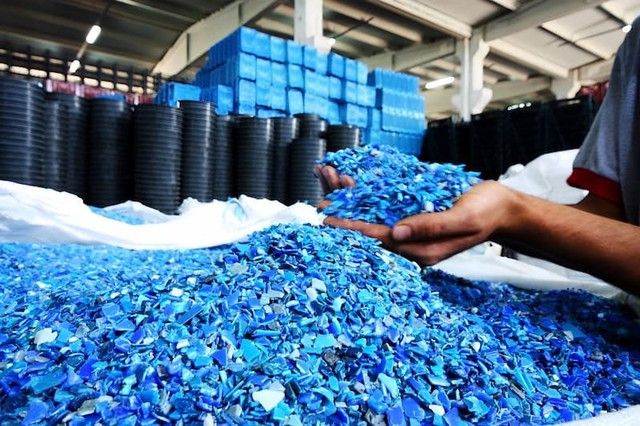
Vietcap expects PVC prices to enter a recovery cycle, with potential upward pressure on global PVC prices as domestic producers in China adjust to new policy measures. The brokerage said any price gains are likely to be gradual, given weak Chinese demand and relatively ample supply in the market.
In March 2026, China’s Ministry of Industry and Information Technology issued a plan to upgrade aging chemical and petrochemical infrastructure for 2026–2029. PVC was listed among key sectors subject to restrictions on unfair competition.
Under the plan, older plants must undergo mandatory upgrades to meet stricter environmental and energy-use standards, with non-compliant facilities potentially forced to shut down.
Vietcap described this as a structural turning point for the PVC industry, comparable to the restructuring underway in China’s steel sector. By reducing underperforming capacity, the market could eventually move toward a PVC price recovery after a prolonged period of oversupply. However, Vietcap expects the recovery to be gradual because capacity reductions take time and China’s market fundamentals remain weak.
Another policy change is China’s removal of a 13% export tax rebate for PVC from April 2026. Vietcap said the measure reduces the profit cushion for domestic PVC producers.
To offset costs, Chinese enterprises are likely to raise export prices, though Vietcap noted they may not be able to fully pass the entire 13% tax onto selling prices. Because China is a major PVC supplier, higher export prices could lift global PVC prices and affect downstream producers such as Bình Minh Plastic Co., Ltd. through higher input costs.
Vietcap said the supply-demand balance for Chinese PVC remains non-ideal even as price support forms. Inventory stays high and structural oversupply persists.
On capacity, China’s PVC production capacity rose by about 7% in 2025 and is expected to be flat in 2026. On demand, construction-sector demand—the key outlet for PVC—remains sluggish following years of weakness in China’s property market.
Vietcap also pointed to an operational linkage that discourages capacity cuts. In China’s chlorine-alkali electrolysis process, caustic soda and chlorine are produced together in nearly fixed ratios. Because chlorine is hazardous and difficult to store, producers must route it into downstream processes quickly. PVC is one of the most important outputs, consuming around 40% of total chlorine production in China.
As a result, producers tend to keep PVC lines running even when PVC is unprofitable, as long as the caustic soda margin covers the loss. Vietcap warned that this cushion is weakening as caustic soda margins fall, which could lead to clearer PVC capacity restructuring later.
Beyond China, Vietcap said the PVC market is also influenced by the Middle East conflict. Geopolitical tension has pushed up ethylene-based PVC feedstock prices. At the peak, these feedstock prices rose 87% versus late 2025, with year-to-date gains of around 27%.
To protect margins, Bình Minh Plastic and other industry players adjusted selling prices from late March to early April. Vietcap reported PVC prices rose by about 15%, HDPE by 30%, and PPR by 15%.
Vietcap forecast that Bình Minh’s gross margins in Q2 2026 could remain positive, supported by cheaper feedstock stockpiled by the company to cover production for the first half of the year. Higher selling prices relative to low inventory costs are expected to support near-term profits.
However, pressure is expected to intensify in the second half of 2026 as low-cost inventory is depleted and new feedstock arrives at higher prices. Bình Minh may also need to increase trade discounts to defend volumes amid cooling input costs and rising competition.
Under Vietcap’s base case, Middle East tensions may ease around mid-2026. If that occurs, the geopolitical impact on PVC prices would likely be short-term and largely reflected in 2026 pricing.
In contrast, Vietcap said China’s policy changes—removing old capacity, tightening environmental standards, and scrapping the export tax rebate—could sustain upward pressure on PVC prices after 2026.
Overall, Vietcap said Bình Minh’s near-term outlook remains relatively positive due to low-cost inventories and the ability to adjust selling prices. Once new feedstock costs fully flow through to the cost of goods sold, margins are likely to revert toward normal levels in the second half of 2026.
The crypto bear market remained in force on Wednesday, with bitcoin slipping back toward the $60,000 area. Sharp pullbacks in gold and oil also weighed on the 2025 “debasement trade,” which had supported hard assets amid concerns about government debt and fiat currencies. Meanwhile, tech—particularly the AI boom—continued…