•
•
•
•
•
•
•
•
•
•
•
•
•
•
•
•
•
•
•
•
•
•
•
•
•
•
•
•
•
•
•
•
•


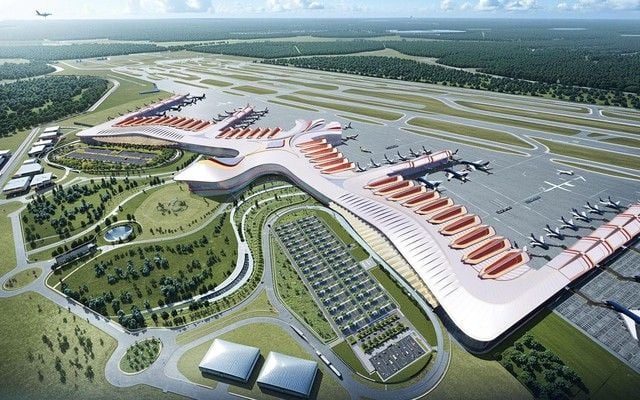
Airports are no longer just transportation infrastructure; they are increasingly positioned as catalysts for tourism growth, trade expansion, and rising investment appeal.
Dubai International Airport has held the global top spot for international passenger traffic for years. In 2019, it served more than 86 million passengers, and by 2025 that figure had risen to about 95.2 million, reflecting sustained growth tied to the airport’s aviation-led development model.
Beyond passenger volumes, Dubai’s airport ecosystem supports related sectors including duty-free retail, real estate, logistics, and tourism, contributing around 27% of GDP.
In Phuket, upgrading the airport to welcome wide-body aircraft flying directly from Europe and the Middle East has helped reduce reliance on transshipment and strengthen direct links to key international markets. In 2025, the airport served about 17.4 million passengers, supporting growth momentum and helping Phuket contribute nearly 20% of national tourism revenue.
Across countries, these examples reinforce the role of airports as growth levers—especially when direct international connectivity is available.
Vietnam, however, faces a different challenge: many regions with strong potential have not yet fully developed because they have not opened the “sky gateway” for direct flights.
Con Dao illustrates the issue. The airport meets 3C standards with capacity of about 400,000 passengers per year and has no direct international routes. Despite the island’s conditions to attract international visitors, requiring multiple travel legs makes it harder to reach as a premium destination compared with mass-market locations.
If upgraded to 4E, capacity could reach about 3 million passengers per year—more than seven times the current level. With the gateway opened, the article says new potential could be unlocked.
Phan Thiết (Mui Ne) has a coastline and favorable climate, but its development is constrained by a lack of a civilian airport. Tourists currently rely mainly on road travel from Ho Chi Minh City, taking 4–5 hours, which limits convenience and the pace of luxury tourism development.
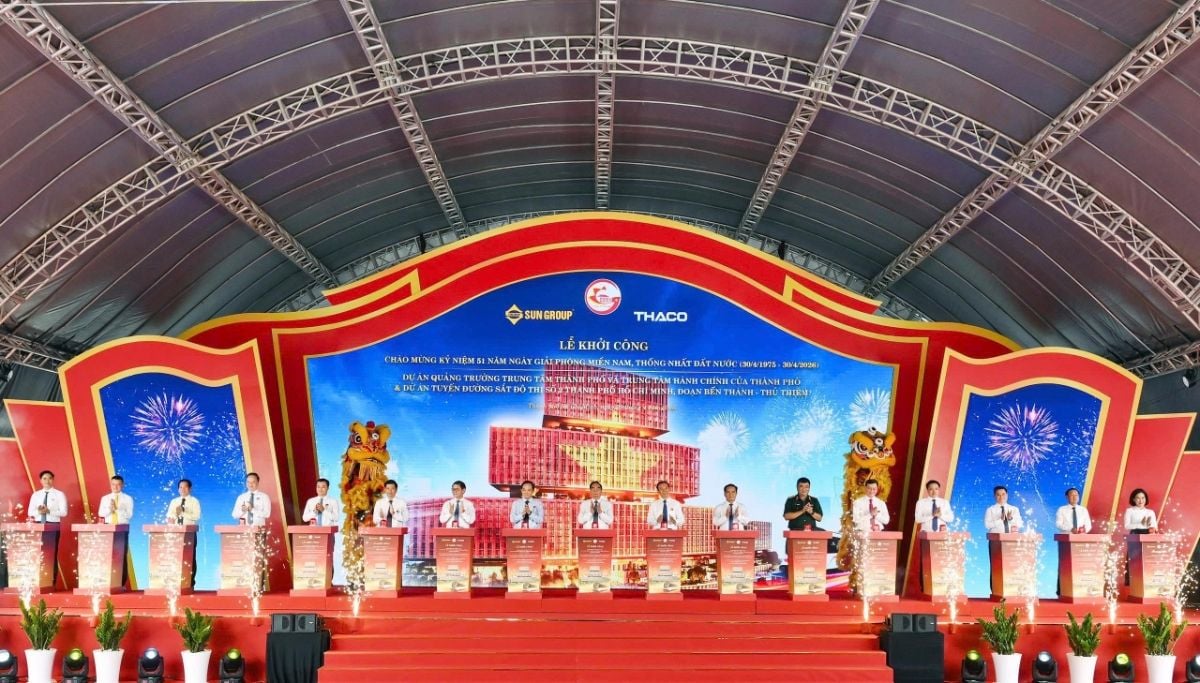
Groundbreaking for the Phan Thiết airport is scheduled for 27/4/2026, with expectations that it will help address this bottleneck. The article also states that Sun Group has committed to completing the airport construction within a record two years.
With limited public investment resources, the private sector—exemplified by Sun Group—is increasingly taking on a role in creating and operating aviation infrastructure in a differentiated direction, aimed at unlocking new development opportunities for regions.
Examples cited include Van Don International Airport and Phu Quoc, which the article describes as built, upgraded, and operated by Sun Group. As infrastructure improves, destinations such as Phu Quoc are expected to be positioned to receive wide-body aircraft, expand the direct international flight network, and support major events such as APEC 2027.
The article argues that airports can evolve from simple gateways into catalysts for attracting capital to luxury tourism and services, gradually turning Phu Quoc into a new aviation-tourism hub in the Asia–Pacific region.
Van Don Airport is described as a lever to elevate the status of Quang Ninh’s tourism.
Sun Group is also said to be collaborating with Changi Airports International (CAI) to operate to five-star standards and to pioneer a “destination airport” model in Vietnam—where travelers can transit and also visit, shop, entertain, and experience art at the airport.
The article links this destination-airport approach to Sun Group’s closed-loop tourism–hospitality–entertainment ecosystem, spanning Sun PhuQuoc Airways, resorts, and theme parks. It says the model is designed to extend stays, increase spending, and create a multiplier effect for local economic growth.
It also notes that Sun Group plans an aviation conglomerate model involving Sun Air and Sun PhuQuoc Airways, and that Sun PhuQuoc Airways is presented as a key component in optimizing travelers’ experiences.
Rather than waiting for destinations to reach a fixed guest threshold before investing in infrastructure, the article says Sun Group proactively designs airports to activate passenger flows and financing. It describes the strategy as integrating aviation with tourism and services to coordinate passenger flows and position airports as a “heart” of regional economies.
The article states that demand for aviation infrastructure investment by 2030 is expected to reach “hundreds of trillions of VND,” and argues that private sector participation like Sun Group is important for supplementing capital and bringing operating models aligned with destination outcomes.
In summary, the article concludes that where there is a gateway to the sky, there is a doorway to growth—positioning airports as a starting point for a new growth trajectory that can lift local economies and expand their presence on the international stage.



Premium gym chains are entering a “golden era” that is ending or already in decline, as rising operating costs collide with shifting consumer preferences toward more flexible, community-based ways to exercise. Long-term memberships are shrinking, margins are pressured by higher rents and facility expenses, and competition from smaller, more personalized…