•
•
•
•
•
•
•
•
•
•
•
•
•
•
•
•
•
•
•
•
•
•
•
•
•
•
•
•
•
•
•
•
•


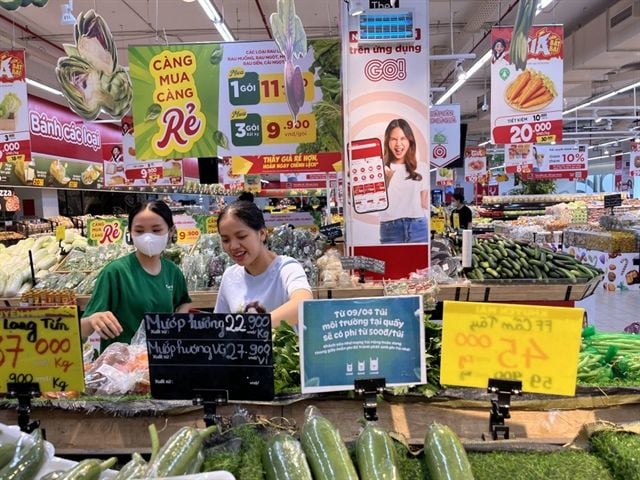
Green consumption initiatives are gaining momentum as major retail groups and food suppliers expand efforts to reduce single-use plastic and promote more sustainable shopping and production practices.
As Saigon Co.op marks its 30th year, the group said the milestone is a pivotal moment to modernize and become greener. Under the “30 years - A Green Commitment” campaign, four pillars guide the initiative: green shopping, green behavior, green benefits, and green community.
The campaign focuses on reducing single-use plastic bags, using the message: “Each family is a green ambassador.” In supermarkets, Saigon Co.op has introduced self-packaging areas and provides paper bags and alternatives to non-biodegradable bags so customers can choose more environmentally friendly packaging.
To encourage adoption, members using green packaging on Thursdays receive 5,000 dong (equivalent to 25 reward points). Each green shopping trip also contributes to a community project delivering clean water to saline-affected regions.
“We are committed to putting consumers at the center, with community and green values as the foundation for sustainable development,” said Mr. Nguyen Ngoc Thang, Deputy General Director of Saigon Co.op.
Central Retail Vietnam, which operates GO!, Tops Market, and mini go!, said its nationwide stores have completed the transition to 100% biodegradable bags. Biodegradable bags cost 500 dong per bag. The company said the charge is intended to encourage customers to bring their own bags or use free paper bags at the store.
Central Retail reported that in the first two months of 2026, it converted about 280 tons of single-use plastic bags to biodegradable bags.
Lotte Mart said most consumers were initially surprised by the bag fee of 300 dong per bag, but adjusted after explanations. To encourage reusable bag use, members shopping from 300,000 dong and bringing reusable bags receive 3,000 points.
Lotte Mart noted the program is under ongoing monitoring and periodic evaluation to obtain accurate data on bag reductions. Early results, it said, show a clear downward trend alongside rising use of reusable bags. The company aims to replace all non-biodegradable bags with biodegradable materials in the long term and has introduced other initiatives including electronic receipts and environmental bags.
“A green transition is within reach and will reduce plastic waste and spread sustainable consumption habits,” a Lotte Mart representative said.
Vietnam High-Quality Vietnamese Goods Association expert Nguyen Van Phuong said green consumption is increasingly evident, with consumers linking green consumption to eco-friendly products, health benefits, and sustainable production processes.
He added that the green shift is not limited to supermarkets and is spreading to major food suppliers. Orion representatives highlighted a focus on “gentle packaging,” green farming, and crop rotation.
In the North, Orion described a two-season rice and one-season potato model for potato production. It uses irrigation water from rice fields to suppress pests. Residues from the potato crop, the company said, help protect the next rice crop, creating what it described as a safe production cycle. Orion also said by-products are maximized for recycling: potato peels and wash water are processed to recover starch, and substandard potatoes are pressed for oil and used as animal feed.
“Fully utilizing by-products helps save costs and minimizes environmental emissions,” Orion’s representative said.
Supermarkets are also rolling out multiple programs to encourage green consumption. Minh Phat Packaging said it faces challenges including competition with non-biodegradable bags and difficulties obtaining eco-label certification. The company urged authorities to provide practical support such as tax incentives and favored lending, along with a stable supply of recycled materials and faster green-certification procedures. It also called for prioritizing green packaging in public procurement and promotional programs.
While green consumption awareness is steady, adoption of the behavior remains gradual, according to Nguyen Van Phuong, Vice President of the Ho Chi Minh City Enterprise Association. He urged city authorities to promote a circular economy and green supply chains to help firms overcome future barriers.

Premium gym chains are entering a “golden era” that is ending or already in decline, as rising operating costs collide with shifting consumer preferences toward more flexible, community-based ways to exercise. Long-term memberships are shrinking, margins are pressured by higher rents and facility expenses, and competition from smaller, more personalized…