•
•
•
•
•
•
•
•
•
•
•
•
•
•
•
•
•
•
•
•
•
•
•
•
•
•
•
•
•
•
•
•
•


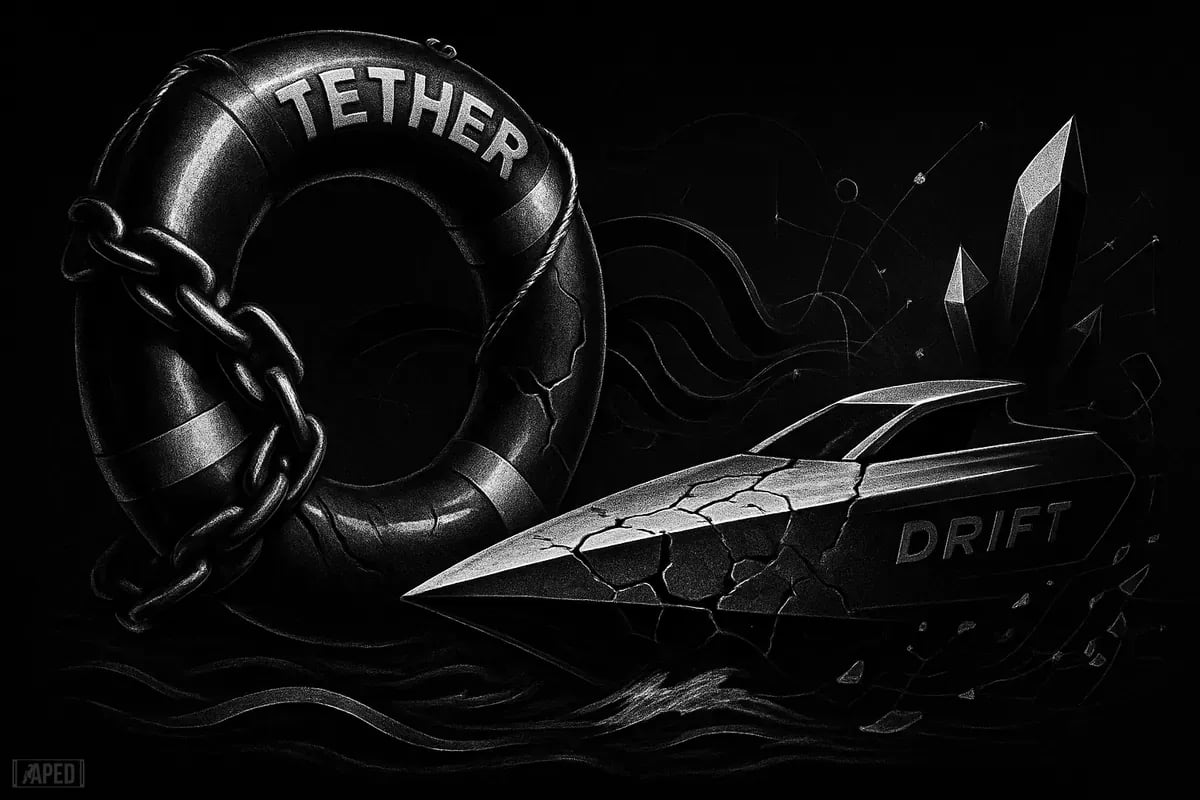
Drift’s recovery framework is not a straightforward bailout in which all affected users are made whole immediately. Instead, the plan combines upfront external support with a revenue-linked reimbursement model, under which users are expected to recover balances over time as the exchange returns to generating fees.
Tether’s contribution is capped at $127.5 million, described as the core of the rescue package. Reports on the total recovery size vary slightly, with figures ranging from $147.5 million to $150 million. The central point across accounts is consistent: Tether is the anchor backer, while Drift’s own operating revenue is expected to close part of the remaining gap.
This structure shifts the burden away from a pure treasury recapitalization and toward platform performance. If trading volumes return and liquidity improves, reimbursements can accelerate. If activity remains thin, the recovery timeline would likely stretch out.
Drift halted operations on April 1 after confirming an active exploit. Early loss estimates were around $285 million, a figure that is well above the current recovery pool. That gap helps explain why the plan is being framed as staged and dependent on renewed activity rather than immediate full restitution.
No firm date has been published for a complete return to normal operations. Traders are therefore assessing a relaunch that is moving forward while still leaving open questions about final reimbursement timing, whether market makers will remain, and how quickly open interest can rebuild after a major trust event.
A key strategic element is Drift’s decision to replace USDC with USDT as its primary settlement asset once trading resumes. On Solana, USDT is expected to sit at the center of Drift’s trading infrastructure.
The move represents a shift in stablecoin alignment. Drift’s change gives Tether more than financial exposure; it also increases its influence at the settlement layer embedded in the platform’s turnaround. Drift has not publicly tied the stablecoin change to a single stated cause, but the timing after the exploit makes it a focal point for how the venue plans to restore confidence and liquidity.
While the approach could appeal to users who prefer the broad liquidity profile of USDT, it also introduces concentration risk by tying both rescue financing and core settlement infrastructure to a single issuer.
Beyond the headline figure of $127.5 million, traders are expected to focus on relaunch mechanics rather than public messaging. Key signals include whether meaningful liquidity returns to the order books, whether fee generation is strong enough to support reimbursements, and whether users accept USDT-centric collateral and settlement without operational friction.
Transparency is another critical checkpoint. A revenue-linked recovery plan requires clear reporting on how much has been reimbursed, over what period, and against what revenue base. Without that information, the market risks relying on incomplete signals after a reported $285 million exploit.
Tether’s backing provides Drift with a path back to market, but it is not presented as a clean reset. The platform is relaunching with a partial recap, a performance-based reimbursement model, and a switch from USDC to USDT. That combination may keep the recovery thesis intact, but it does not eliminate execution risk.
If trading activity does not return, the reimbursement engine would stall. If liquidity comes back and revenue generation resumes, Drift would have a basis to work through the damage. If not, the rescue package may function more as a bridge to a slower unwind than a full comeback.








Premium gym chains are entering a “golden era” that is ending or already in decline, as rising operating costs collide with shifting consumer preferences toward more flexible, community-based ways to exercise. Long-term memberships are shrinking, margins are pressured by higher rents and facility expenses, and competition from smaller, more personalized…




