•
•
•
•
•
•
•
•
•
•
•
•
•
•
•
•
•
•
•
•
•
•
•
•
•
•
•
•
•
•
•
•
•


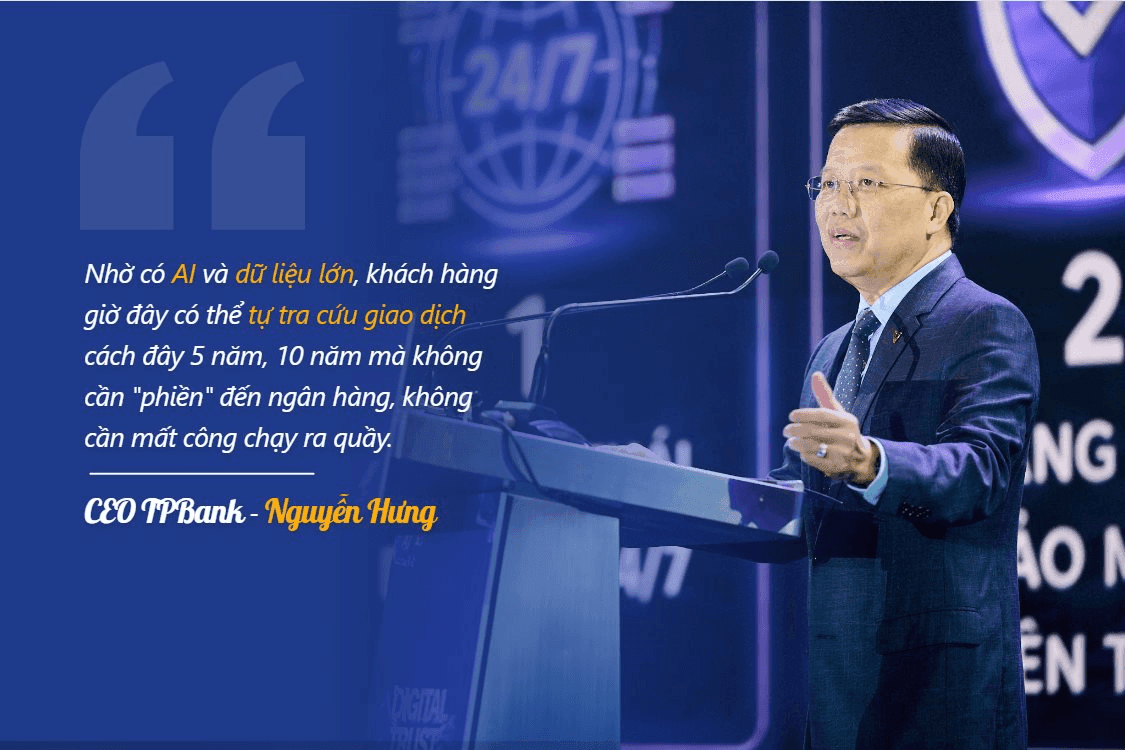
At the Digital Trust in Finance 2026 forum on May 12, Nguyen Hung, CEO of TPBank, discussed how the banking sector is transforming digitally, the opportunities presented by artificial intelligence (AI), and the growing risks from increasingly sophisticated fraud schemes.
He said that in the past, a “reputable bank” was often associated with physical images such as headquarters, premium facilities, professional staff, and secure vaults. In the digital era, however, customers use cash less frequently and rely on smartphones for payments and identity verification, noting that “everything is on it: money, cards, even citizen IDs thanks to VNeID.”
Mr. Hung described how banking processes have changed from paper-based operations—where records were stored for 10 to 40 years and cross-checking was required—to digital channels. He said that paper workflows created inefficiency because “the previous person did it, the next person wouldn’t know what to do,” while reconciliation was burdensome.
He added that the industry has moved rapidly toward digital transactions, with 90–95% of transactions now occurring through digital channels, and TPBank reaching as high as 99%.
While banks still maintain hundreds of branches and thousands of staff to serve customers who prefer in-person interactions, he said that most customers can now complete financial tasks themselves. With AI and big data, customers can retrieve transaction information from five to ten years ago without visiting a branch, with records that are transparent and evidenced.
Mr. Hung said that convenience has come with new risks. Transactions that once took days or weeks to settle can now complete in seconds, allowing fraud to occur at much higher speed. He noted that fraud is increasingly carried out by large organized groups, while authorities must work to prevent schemes that criminals continuously redesign.
Based on data analysis, he said that most money taken through fraud after entering an account is moved within 40–45 seconds. Within a few minutes, funds can move through dozens of banks before being converted into digital assets or withdrawn as cash.
He also cited an example involving TPBank, which received a subpoena from a New York court after a dispute with a US professor who sued the bank. Although TPBank demonstrated adherence to procedures and international norms, the case illustrated that even highly educated individuals can become involved in fraud schemes.
Mr. Hung said AI is essential for managing the scale and speed of modern banking. TPBank handles about 5 to 7 million transactions per day, translating into thousands of transactions every minute. Without AI-driven risk alerts and blocking of suspicious activity, he said human operators would not be able to manage the workload.
He also highlighted productivity gains. TPBank receives hundreds of requests daily from police authorities. Previously, he said 5–7 staff members were needed to respond manually, creating backlogs. With AI, the bank can read documents, check balances, and prepare forms within minutes.
Mr. Hung emphasized that AI is a double-edged sword. While it can improve convenience, it can also “fabricate” events that sound plausible but are not real. He said an additional concern is that AI is increasingly being used by criminals.
He referenced advanced AI tools such as WormGPT, which he said can autonomously scan for zero-day vulnerabilities in financial systems at speeds beyond the capacity of many security professionals.
Mr. Hung said maintaining public trust in digital finance is a major challenge. He stated that banks should not operate in isolation, and that TPBank is working to embed banking services into partner ecosystems while bringing partners’ embedded utilities into banking applications.
He added that as customers install multiple banking apps on their phones, disruptions or slowdowns can quickly drive users away. He said most customer complaints relate to bank performance, meaning banks and fintechs must protect customers through continuous, safe operation and asset protection during incidents.
Premium gym chains are entering a “golden era” that is ending or already in decline, as rising operating costs collide with shifting consumer preferences toward more flexible, community-based ways to exercise. Long-term memberships are shrinking, margins are pressured by higher rents and facility expenses, and competition from smaller, more personalized…