•
•
•
•
•
•
•
•
•
•
•
•
•
•
•
•
•
•
•
•
•
•
•
•
•
•
•
•
•
•
•
•
•


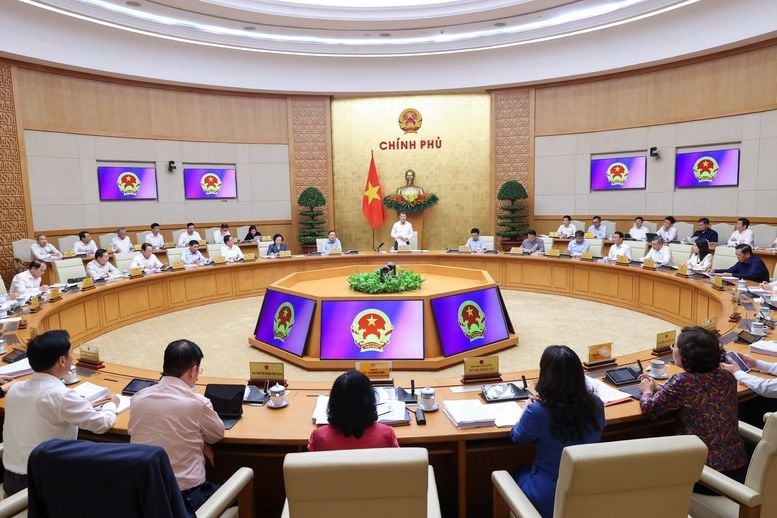
The Government, in Resolution 122/NQ-CP issued at the Government's regular April 2026 meeting, directs: to review and evaluate one year of implementing the two‑tier local government model; to urgently complete the rearrangement of the neighborhood blocks, hamlets, villages, and public-sector units in line with central guidelines; and to strive to cut at least 30% of conditional business lines, with 100% of business conditions deemed unnecessary to be removed. The Resolution notes that the global situation is expected to remain volatile, with geopolitical tensions and conflicts, slow global growth, and continued volatility in financial and monetary markets. Domestically, difficulties and opportunities are mixed, but challenges are more numerous, requiring proactive policy action to achieve the 2026 targets and maintain macroeconomic stability, inflation control, and major balance supports. Ministers, heads of agencies, and local authorities are urged to take responsibility, show resolve, and implement the tasks decisively. Urgently develop detailed regulations for 14 laws and resolutions, actively implement tasks from the Party’s Conclusions and five-year plans on economic and social development, finance, and public debt, with particular attention to 44 tasks with deadlines in the second quarter of 2026; translate these into action groups at the ministerial, agency, and local levels with clear leadership assignments and monthly progress reports; assess resources and ensure feasibility and financial security. Proactively draft and implement detailed regulations for the 14 laws and resolutions passed by the XVI National Assembly in its first session, ensuring that implementing regulations take effect in tandem with the laws; accelerate drafting and issuing to implement those laws already in force as of May 1, 2026 and detailing regulations for others with effect from July 1, 2026; review and update sectoral legal frameworks to align with the Government Organization Law and the Local Government Law, aiming for full enforcement by March 1, 2027. Concentrate resources to conduct a comprehensive review of the legal system, with oversight from the Government, monthly reporting to the Ministry of Finance, and accountability by the heads of ministries and local authorities for the outcomes in their jurisdictions. Be prepared with policy responses and rapid decision‑making; avoid complacency and surprise; actively manage monetary policy in concert with fiscal policy and other instruments to control inflation, stabilize macroeconomics, and ensure financial system safety. In budget management and investment, implement the guidance on tightening and streamlining expenditures; optimize disbursement of the 2026 capital plan to achieve full annual utilization, with transparent cost–effectiveness assessments of projects from needs assessment through implementation and post‑completion operation; monitor imports/exports and support exporters; promote agricultural production with market expansion, especially seasonal crops; ensure reliable energy supply and efficient use of electricity and fuels; advance the development of core and strategic industries, domestic value chains, and the International Financial Center in Vietnam to attract high-quality investment; implement measures to stimulate domestic consumption and public demand as outlined in the government’s policy package. Complete the sắp xếp of neighborhoods, hamlets, and villages and the public-sector units; implement conclusions and actions from Party directives and the Government’s action plan to strengthen local governance; address recommendations from central oversight bodies before the one-year review of the three-tier government; reduce conditional business sectors by at least 30% and eliminate unnecessary business conditions; implement land-law related reforms and unlock stalled projects; accelerate institutional reform, reduce administrative procedures, and drive efficiency across the public sector; achieve a 50% reduction in administrative processing times and half the 2026 compliance costs by Q3 2026, with continued reductions thereafter. Advance environmental protection, cultural policy, social welfare, and health; strengthen human resource development with a focus on high-quality talent to support growth; reinforce national defense and security, improve governance and anti‑corruption measures, and deepen international integration; enhance policy communications to guide public opinion and counter misinformation. Read more.

Premium gym chains are entering a “golden era” that is ending or already in decline, as rising operating costs collide with shifting consumer preferences toward more flexible, community-based ways to exercise. Long-term memberships are shrinking, margins are pressured by higher rents and facility expenses, and competition from smaller, more personalized…